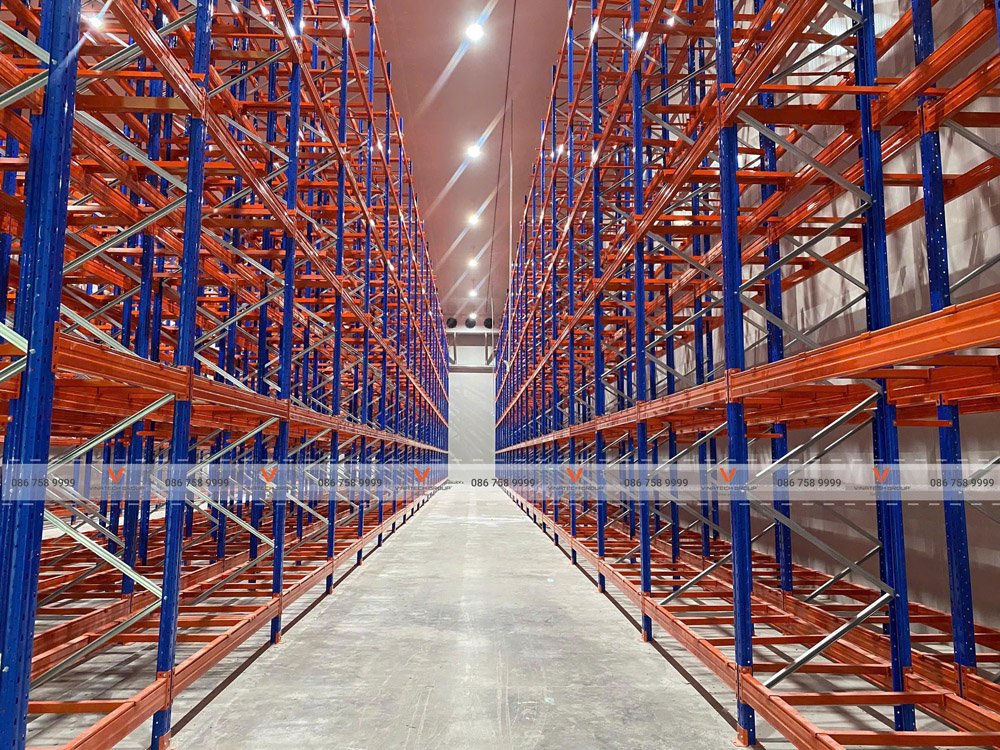
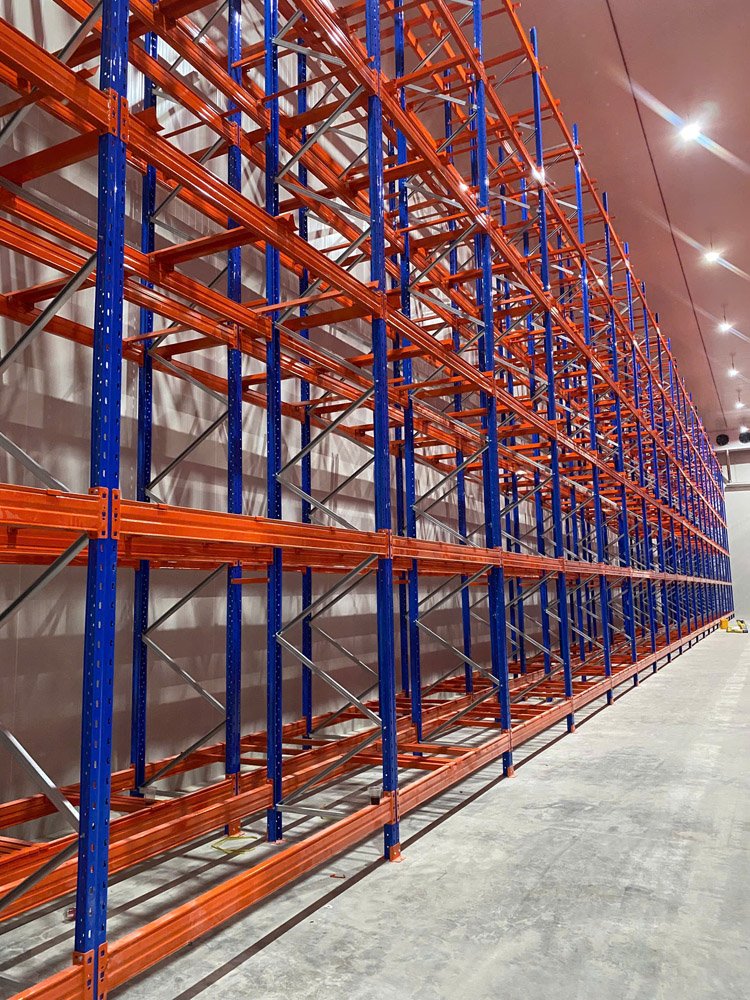
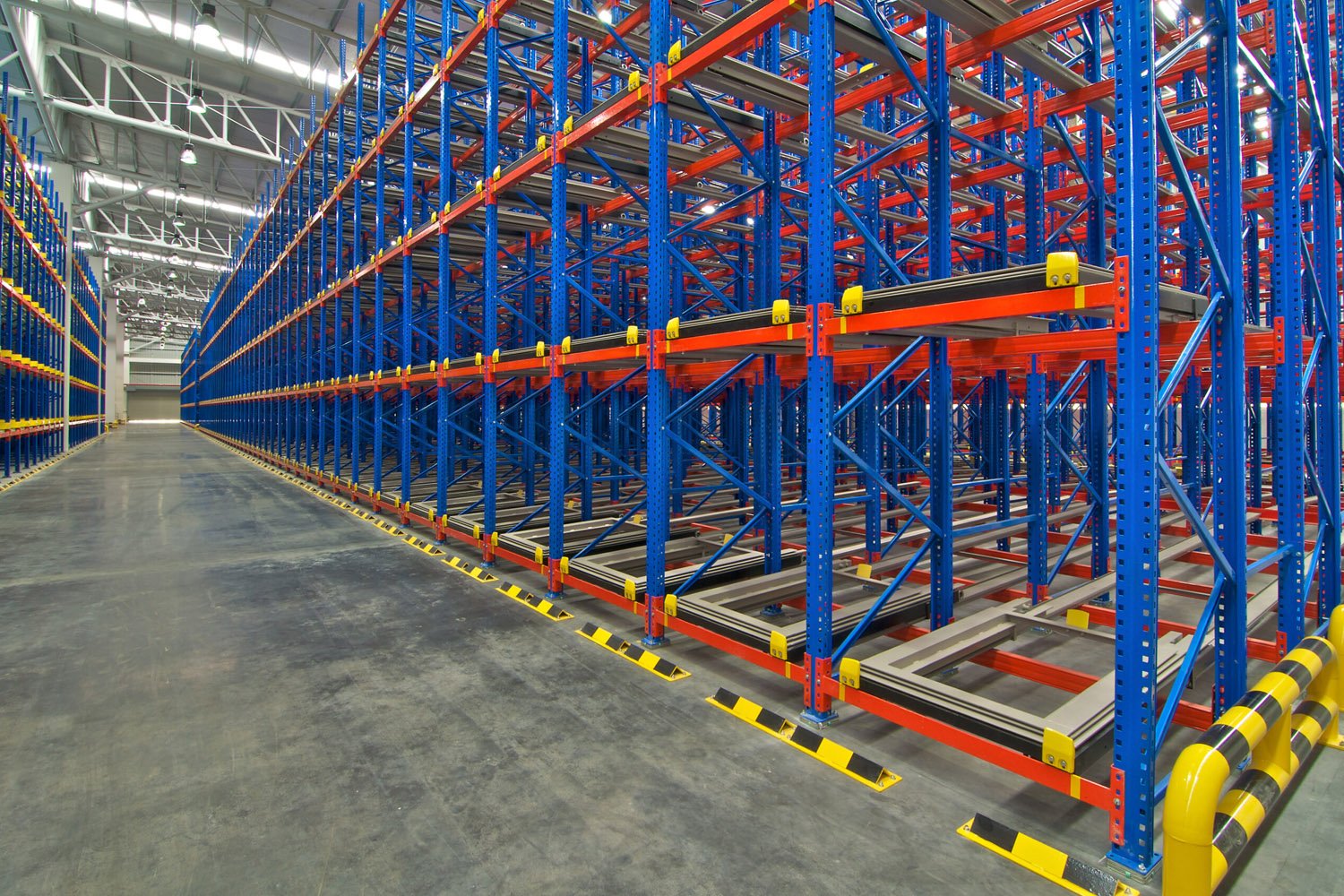
What is a Double Deep Racking?
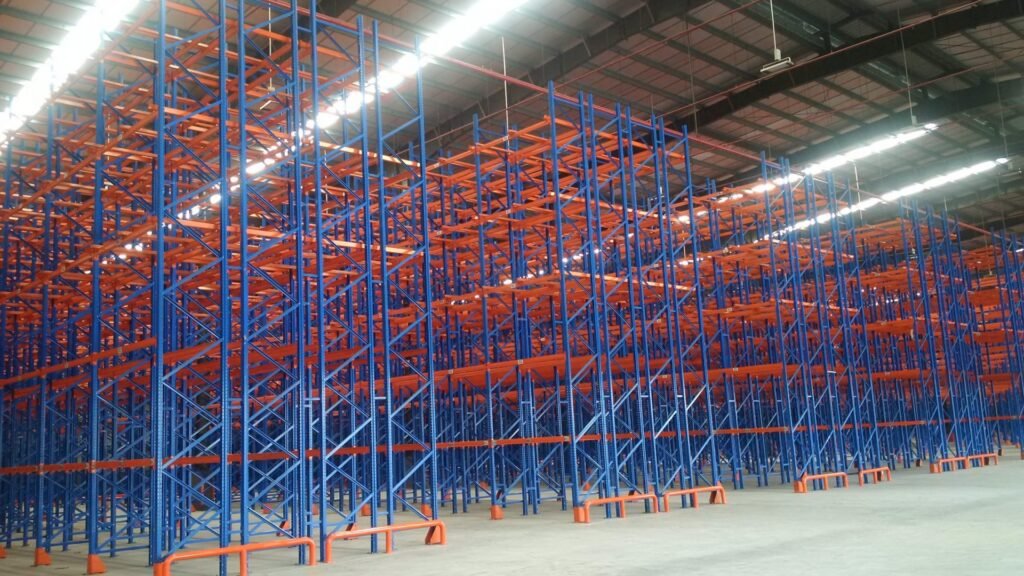
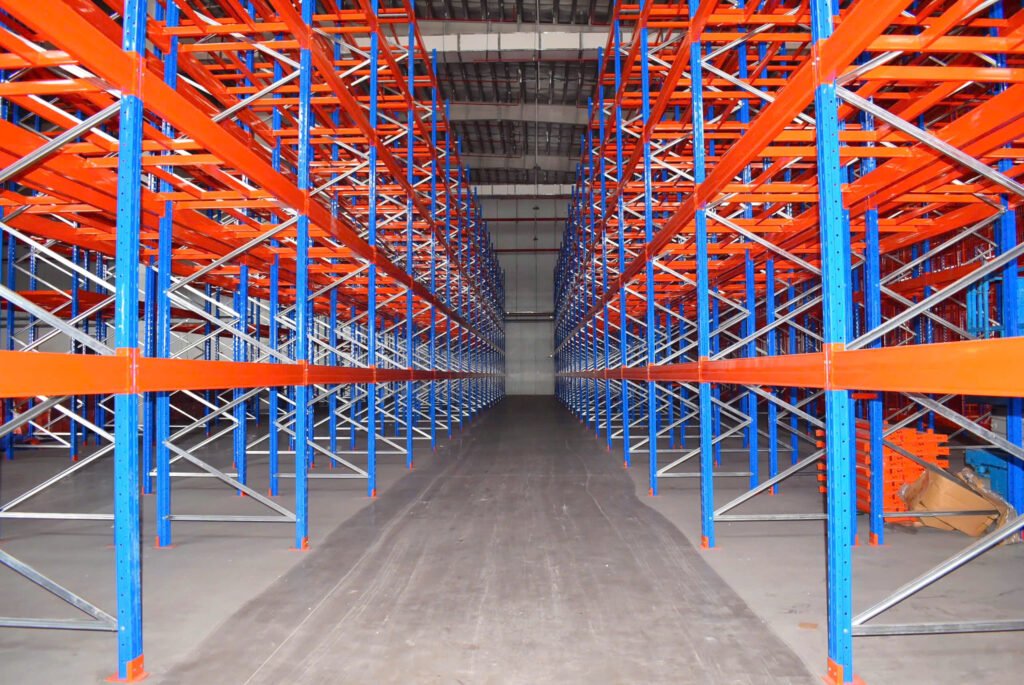
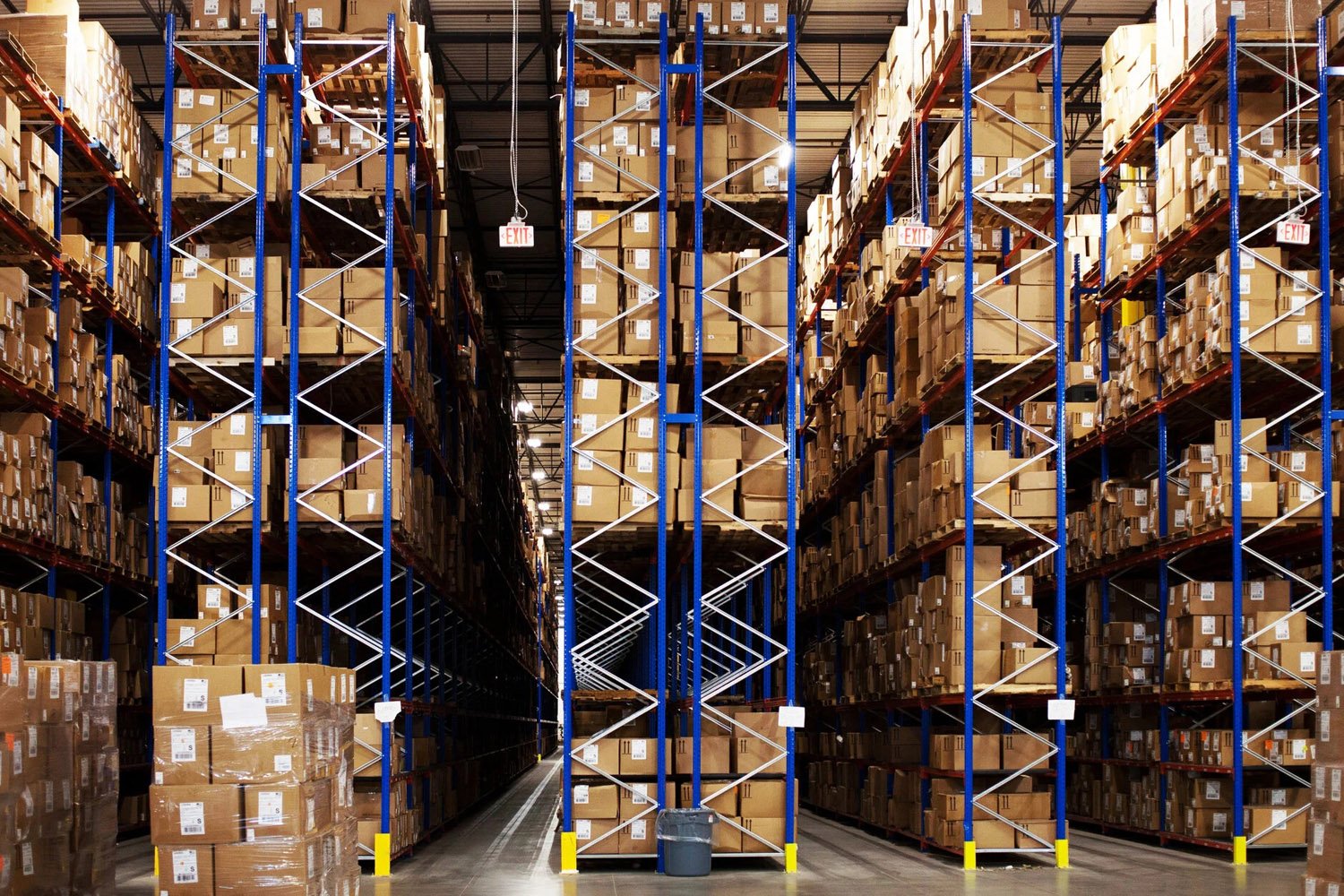
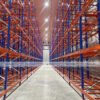
Double Deep Racking is a high-density pallet storage system where pallets are stored two positions deep on each side of an aisle. Compared to standard selective racking, this configuration significantly reduces the number of aisles required, allowing warehouses to store up to 30-40% more pallets within the same floor area.
Double Deep Racking Specifications:
- Load capacity: 3,000 kg per level
- Beam length: 1,500 mm – 4,000 mm
- Rack depth: 1,200 mm – 4,500 mm
- Maximum height: up to 10 m
- Space utilization: 80-85%
- Product accessibility: 100%
- Pallet capacity: 2-4 pallets per level
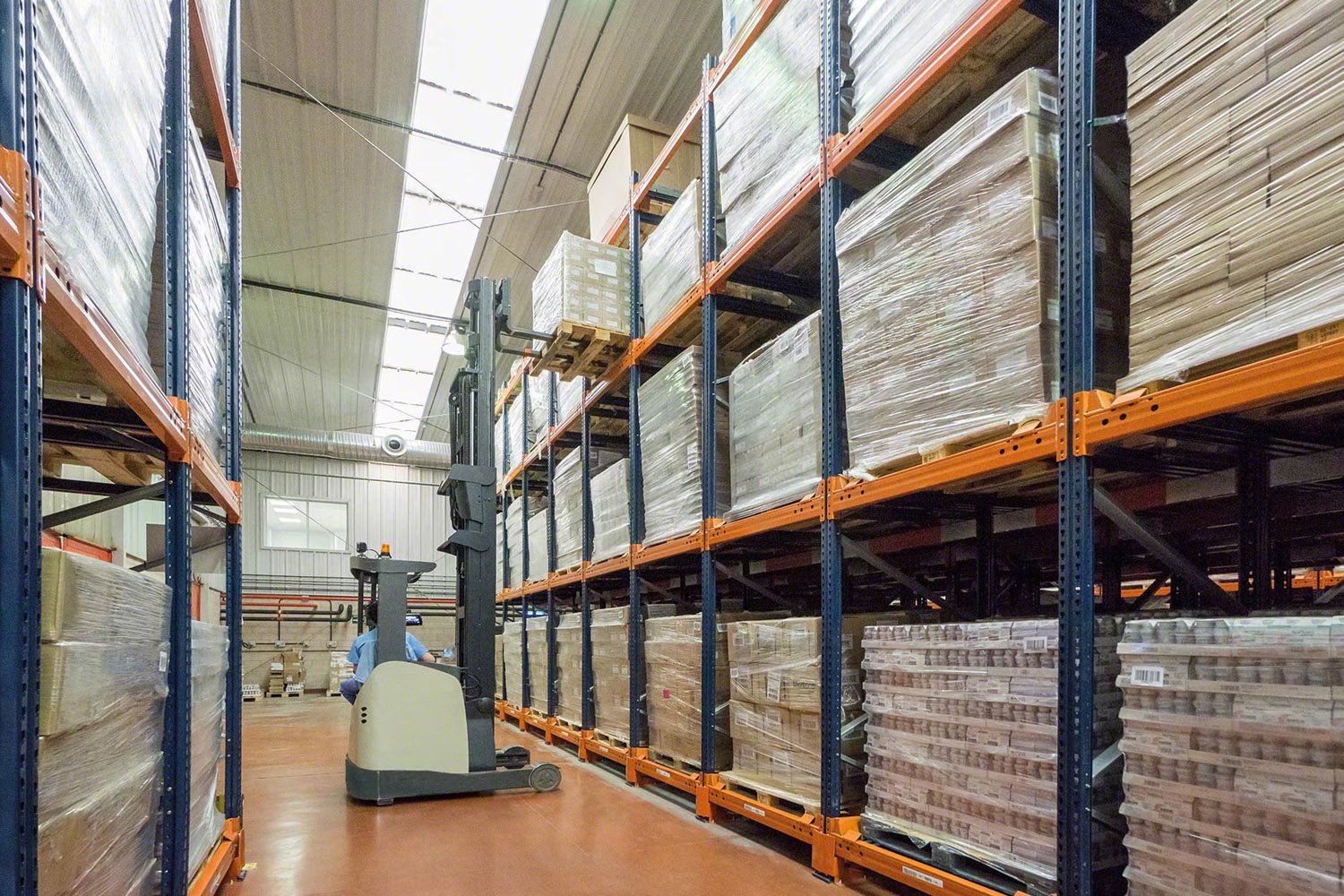
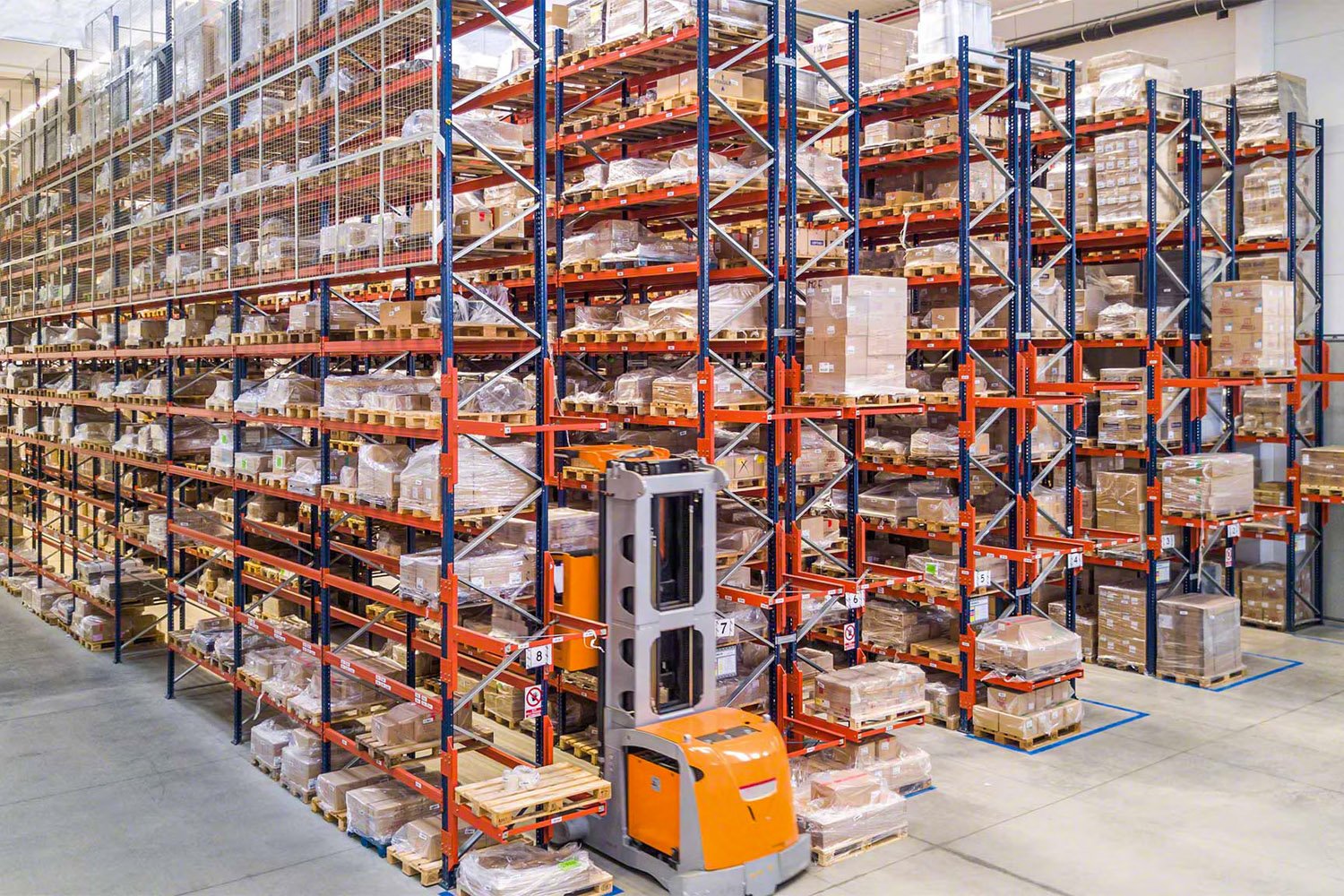
To access the rear pallet, this system requires a specialised forklift with an extended reach mechanism, such as a telescopic or pantograph attachment. Because the front pallet must be moved to access the rear pallet, the system operates on a Last-In, First-Out (LIFO) inventory principle, making it a perfect fit for specific operational needs.
How Double Deep Pallet Racking Works
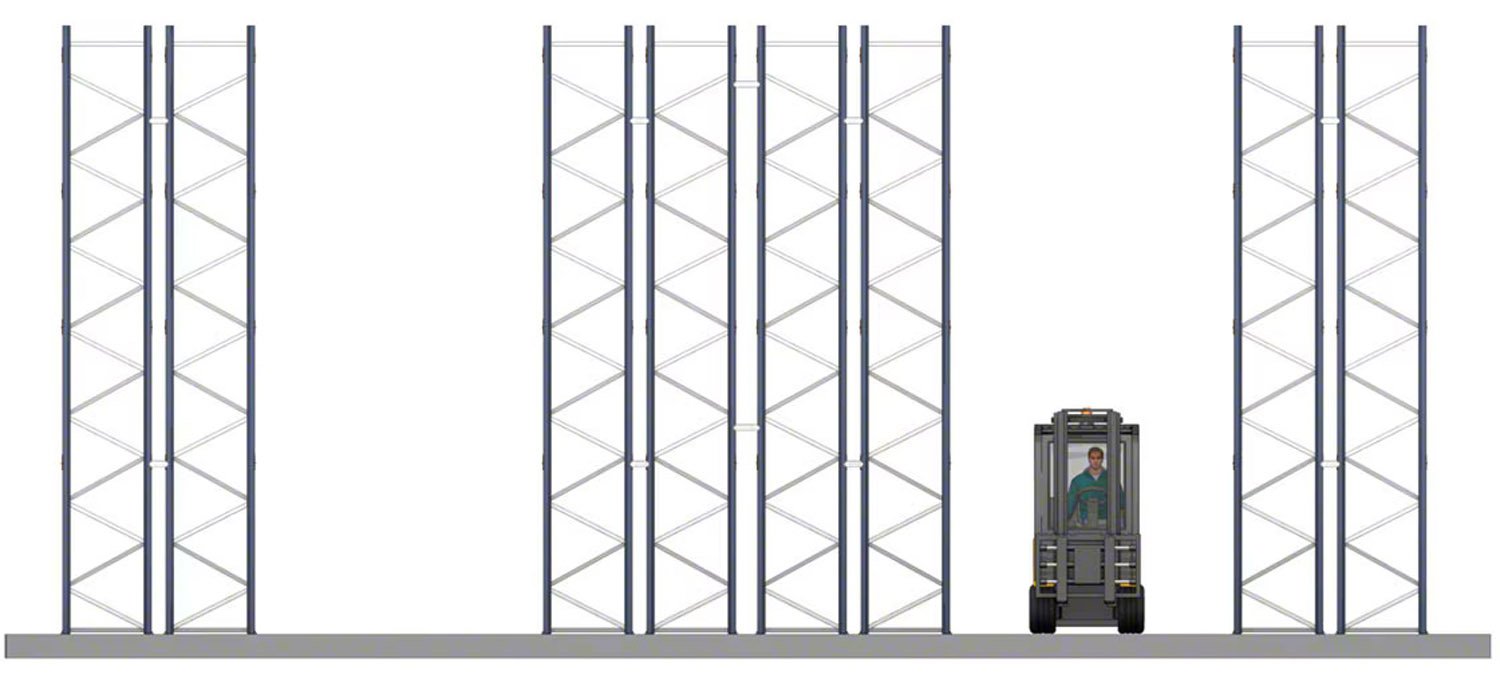
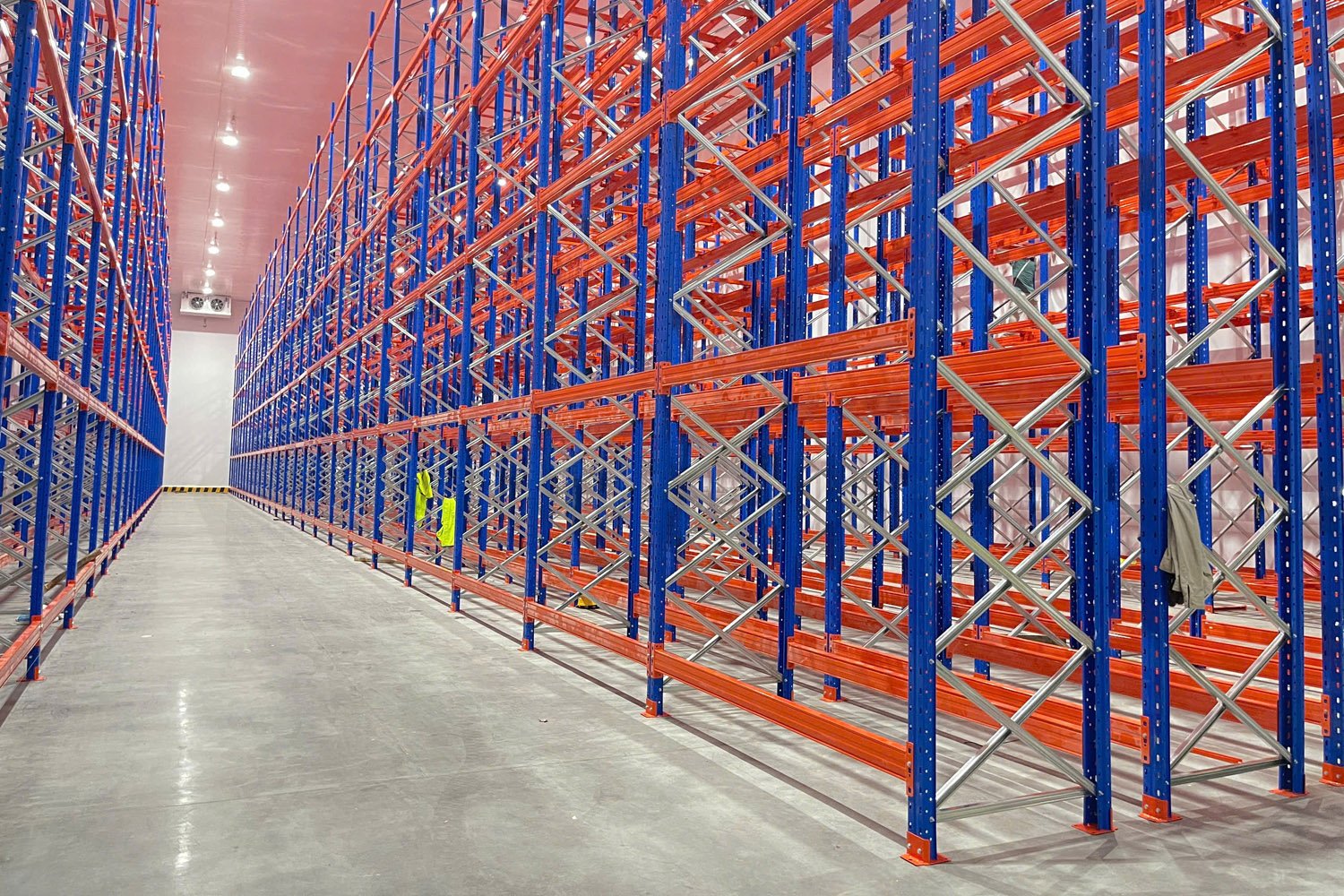
In a Double Deep Pallet Racking System, pallets are stored two positions deep on each rack level, effectively placing one pallet directly behind another. The front pallet is accessed first, while the rear pallet is retrieved only after the front position is cleared.
Specialized Forklifts for Double Deep Access
To operate efficiently, the system relies on specialized reach trucks or Double-Deep forklifts equipped with extended forks. These trucks are engineered to safely access the second pallet position without increasing aisle width, allowing warehouses to maintain narrow aisles while still reaching deeper storage lanes.
Reduced Aisles and Higher Storage Density
Because each aisle now serves two pallet positions per rack face instead of one, the total number of aisles required is significantly lower than in selective racking systems. This design directly increases storage density, enabling warehouses to boost pallet capacity by up to 30-40% within the same building footprint, an especially valuable benefit in high-cost warehouse and distribution markets across the U.S.
Modular and Scalable Rack Structure
Despite the increased rack depth, the rack structure remains modular and scalable. Beam levels can be easily adjusted to suit different pallet heights, and the system can be expanded or reconfigured as inventory profiles evolve. This flexibility allows warehouses to balance high-density storage with long-term adaptability, without committing to complex or fully automated solutions.
Double Deep vs Selective Racking
To see how Double Deep Racking compares with traditional Selective Pallet Racking, let’s take a closer look at the key differences between the two systems in the comparison table below.
| Criteria | Selective Pallet Racking | Double Deep Racking |
| Storage Density | Low-Medium | High |
| Aisle Requirement | Many | Fewer |
| Forklift Type | Standard reach | Double-reach |
| Inventory Access | 100% direct | Limited (LIFO) |
| Cost | Lowest | Medium |
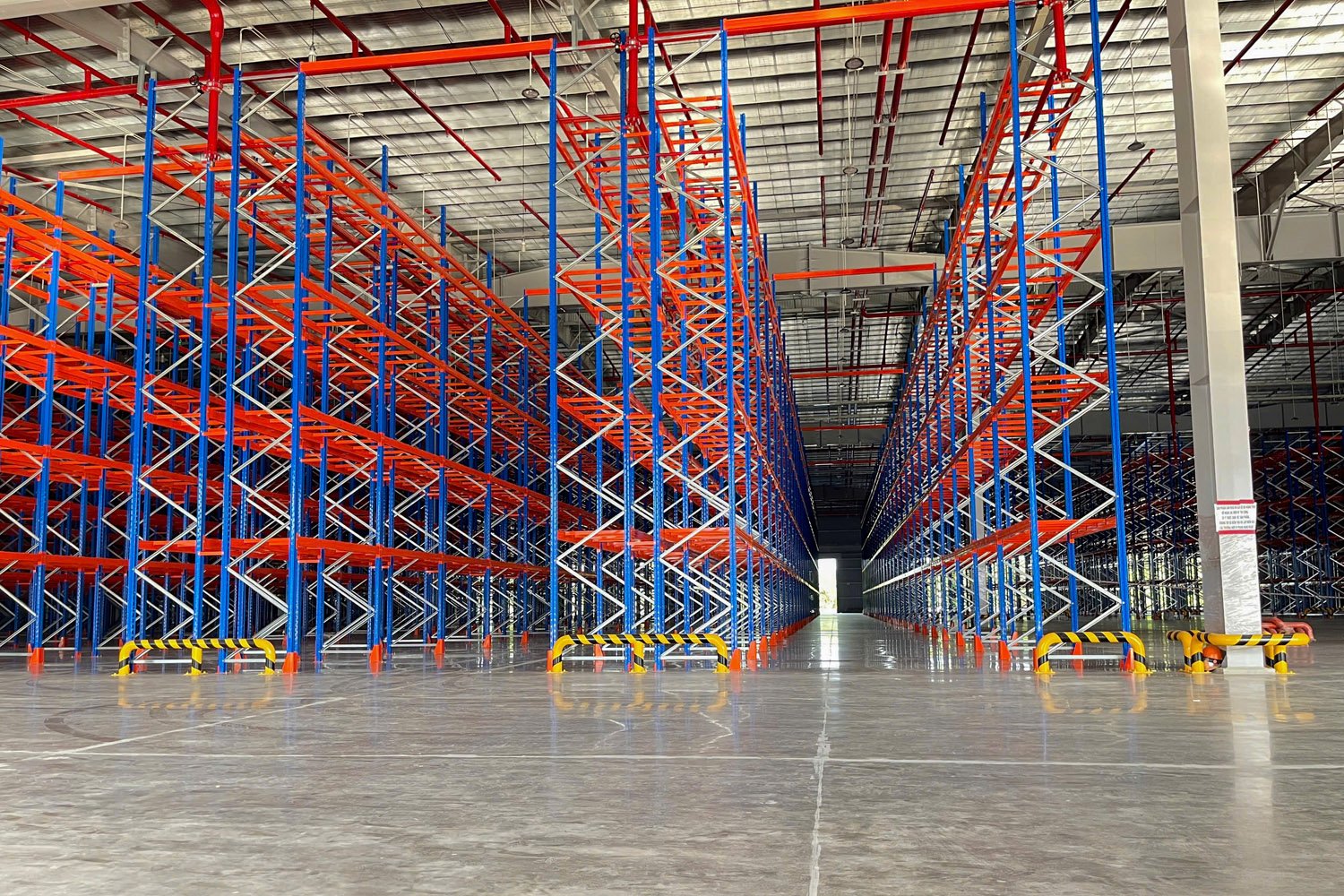
Double Deep Racking offers a clear advantage in storage density and space optimization, making it an ideal choice for warehouses looking to maximize pallet capacity with fewer aisles, as long as operations can accommodate LIFO inventory flow and the use of double-reach forklifts.
Key Benefits of Double Deep Warehouse Racking
Double Deep Warehouse Racking delivers a practical balance between space efficiency, investment cost, and operational flexibility.
Increased Storage Density
One of the most significant advantages of Double Deep Warehouse Racking is its ability to dramatically increase storage density. By reducing the number of aisles required, warehouses can allocate more floor space to pallet storage rather than vehicle travel, resulting in better overall cubic utilization.
This benefit is especially valuable in high-cost U.S. real estate markets, where expanding warehouse footprints is expensive or impractical. With Double Deep Racking, facilities can increase pallet capacity by up to 30-40% within the same building, extending the useful life of existing infrastructure.
Cost-Effective Capacity Growth
Double Deep Racking delivers a more economical cost per pallet position compared to traditional selective racking. By increasing storage density within the existing footprint, it enables warehouses to grow capacity without the significant capital outlay associated with facility expansion or relocation.
Optimized for High-Volume SKU Storage
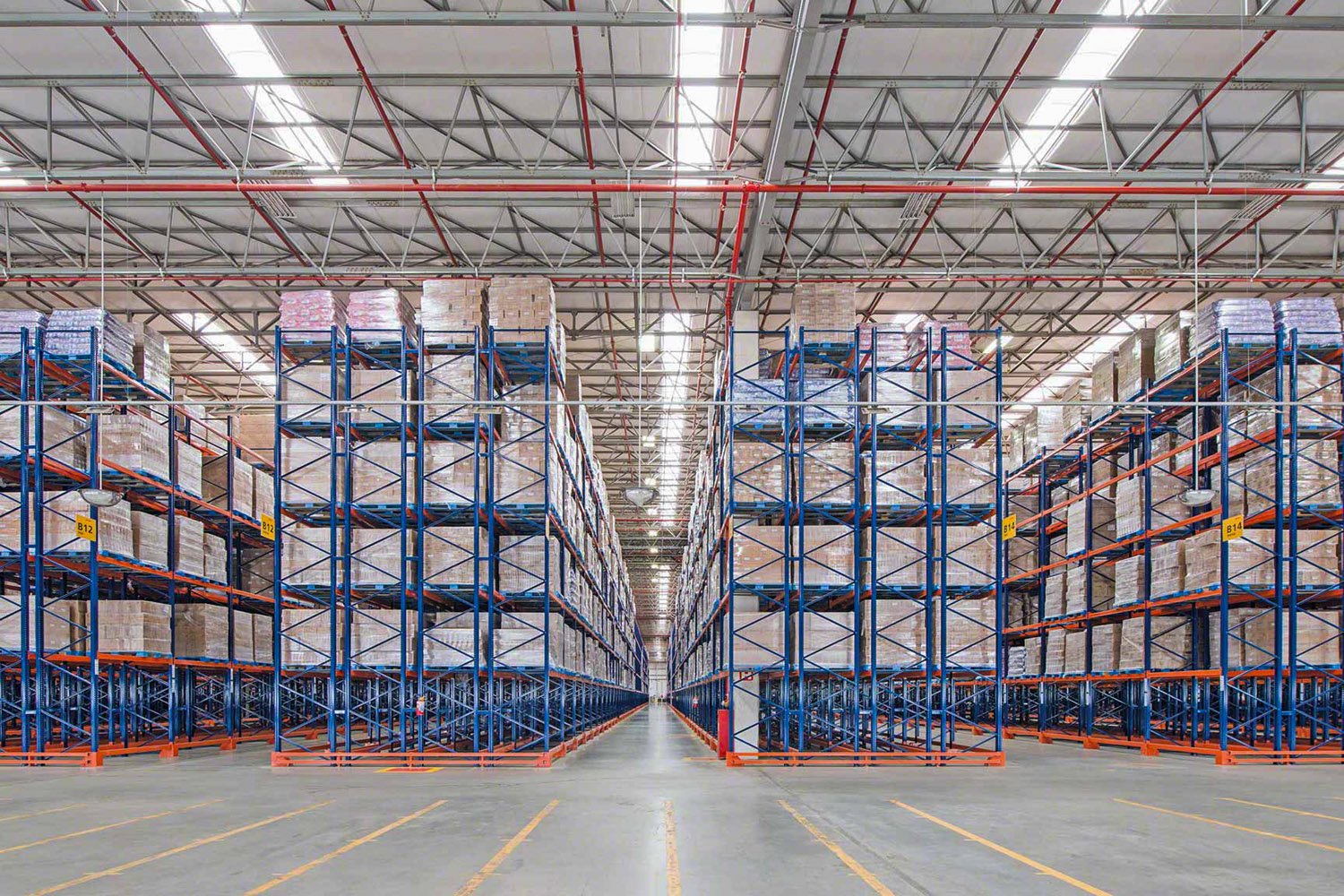
This racking system is especially effective for operations that manage large quantities of the same SKU. It is well suited for FMCG, seasonal inventory, and high-turnover products where the front pallet is typically picked first, allowing seamless access to rear pallets as inventory cycles.
When Is Double Deep Racking the Right Choice?
Double Deep Racking is not a one-size-fits-all solution, but it delivers outstanding results when applied to the right operational profile. It is particularly effective for warehouses that prioritize space efficiency and pallet density over full selective access.
Double Deep Systems are best suited for operations that:
- Handle low to medium SKU counts
- Store multiple pallets per SKU
- Operate under LIFO inventory logic
- Use or plan to use reach trucks
- Need to increase capacity without building expansion
In these environments, inventory flows are predictable, SKU turnover is consistent, and the front pallet is typically picked before the rear pallet is required. This makes LIFO operation practical while unlocking substantial space savings through reduced aisle requirements.
Why Choose Vinatech United States?
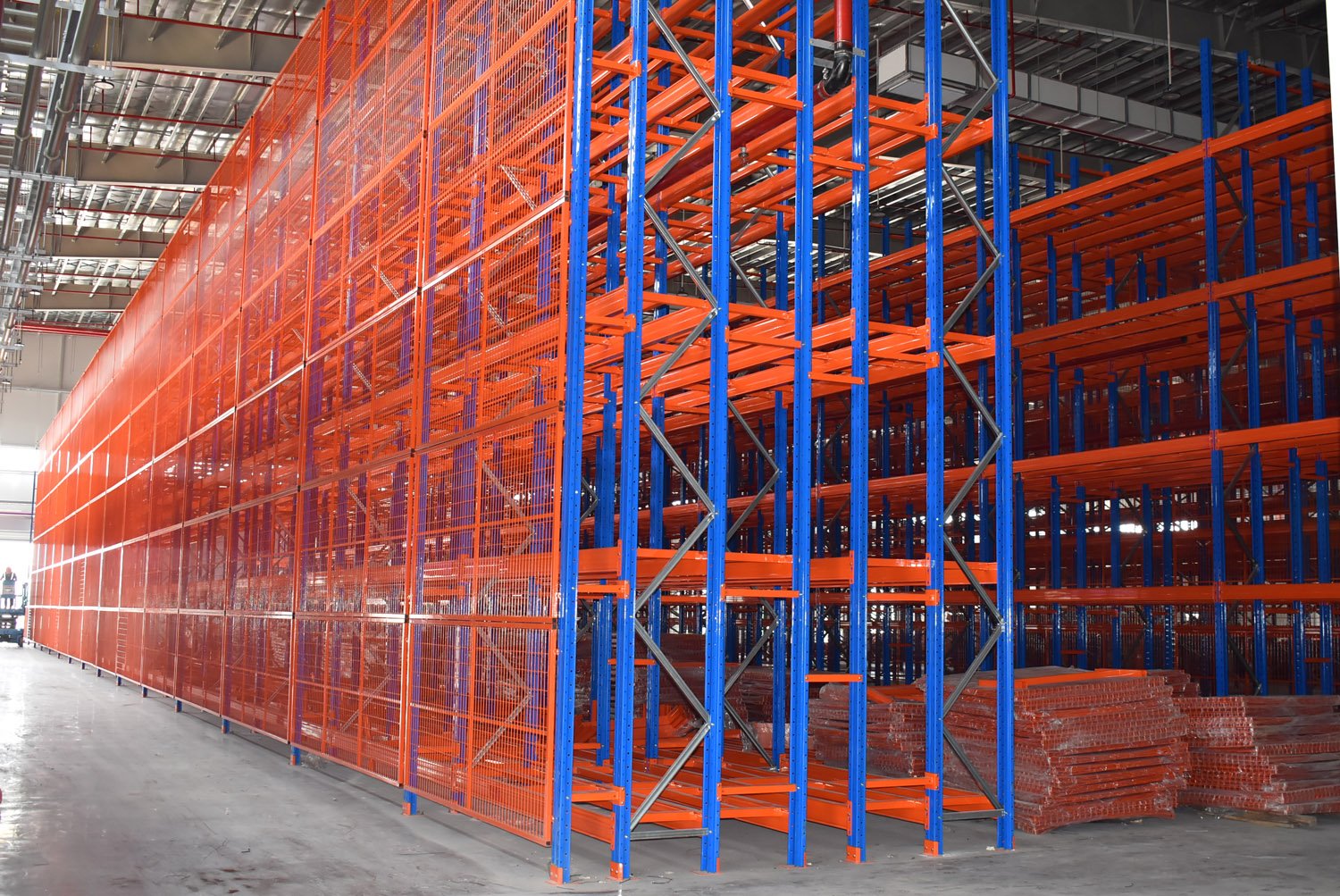
At Vinatech United States, we design and manufacture engineered Double Deep Racking Systems and Industrial Warehouse Racking tailored to U.S. warehouse standards. Our solutions focus on:
- High-strength steel and precision fabrication
- Compliance with international safety and load standards
- Custom layouts optimized for throughput and growth
- End-to-end support, from design to installation
Whether you’re upgrading an existing DC or planning a new facility, our team delivers racking systems that scale with your operation.
Reviews
There are no reviews yet.