
Industrial Warehouse Racking – Pallet Racking Systems USA
In today’s highly competitive logistics and manufacturing environment, industrial warehouse racking is no longer just a storage solution, it is a strategic asset that directly impacts operational efficiency, safety, and scalability. For businesses across the United States, selecting the right warehouse racking system is critical to maximizing space utilization while supporting growing throughput demands.
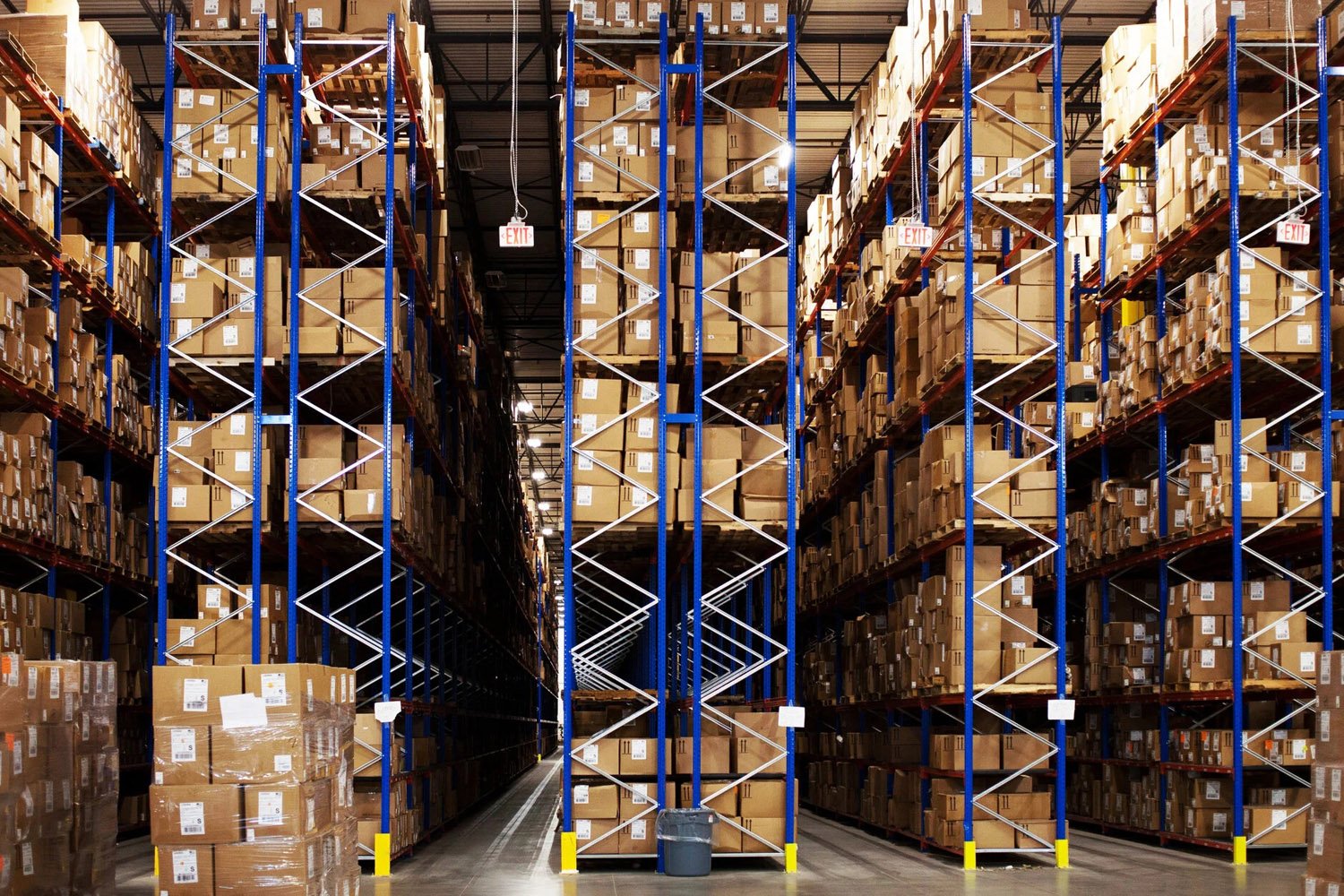
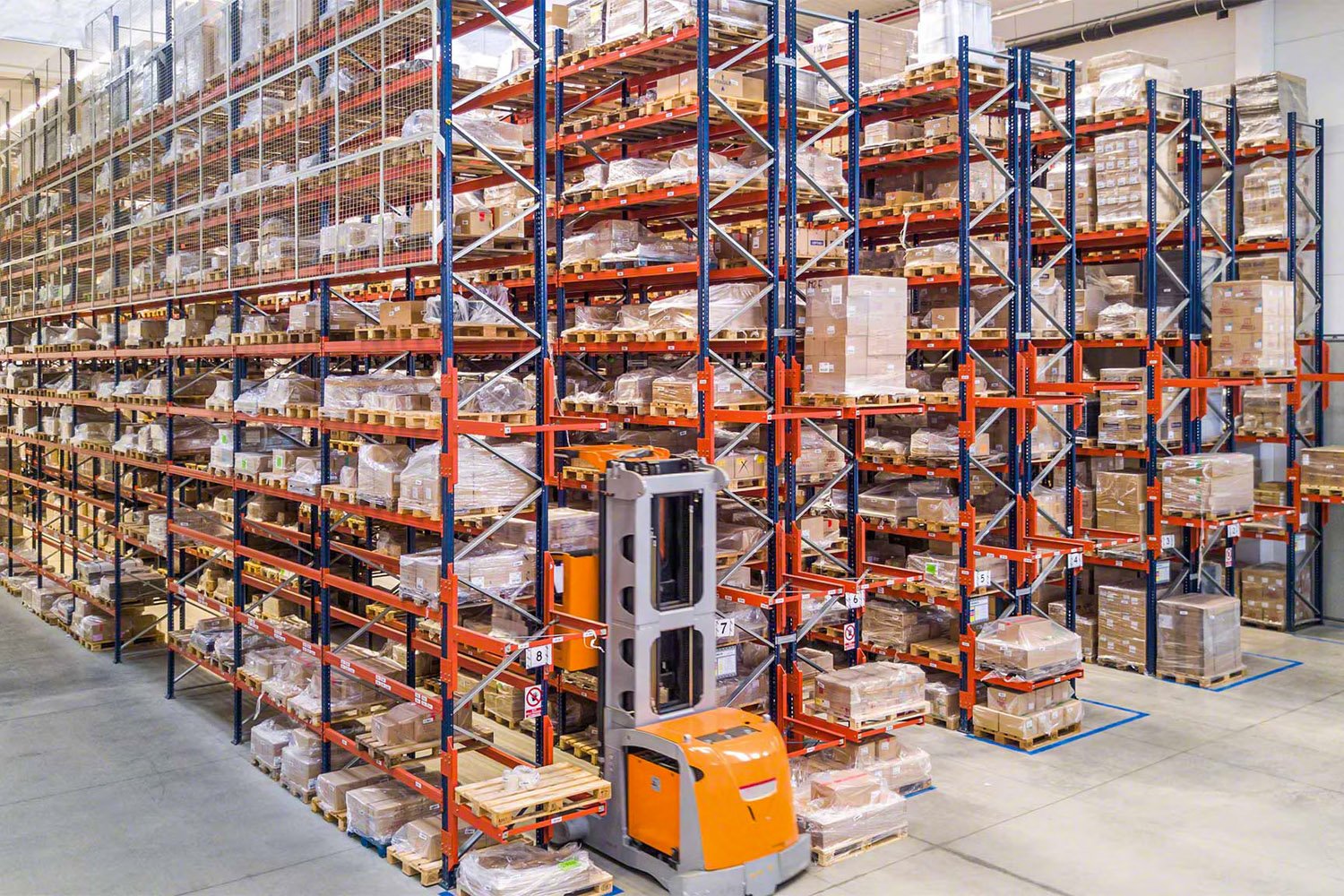
Industrial Warehouse Racking
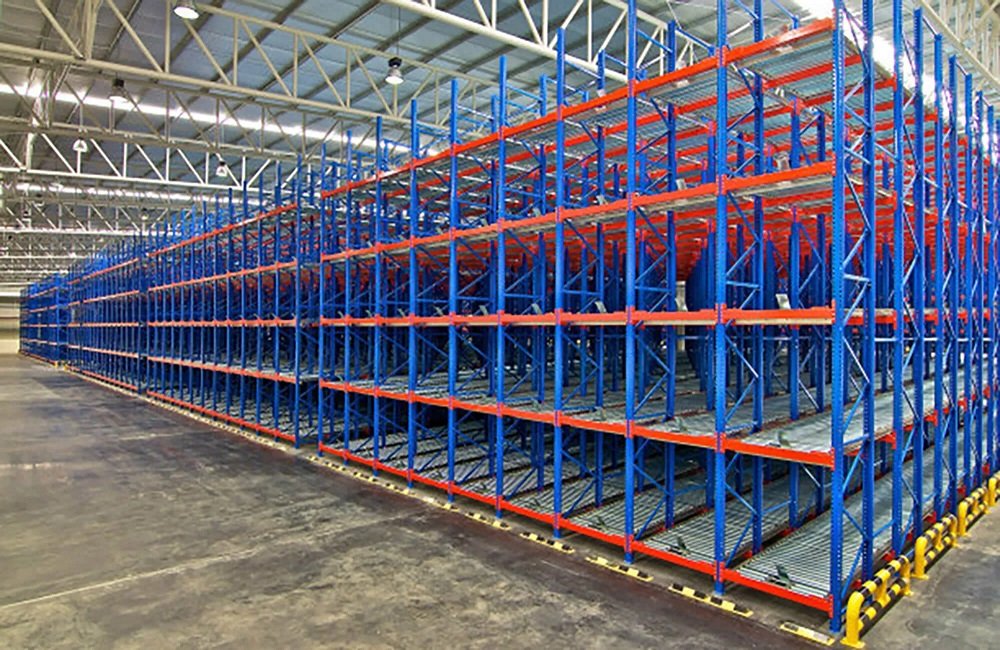
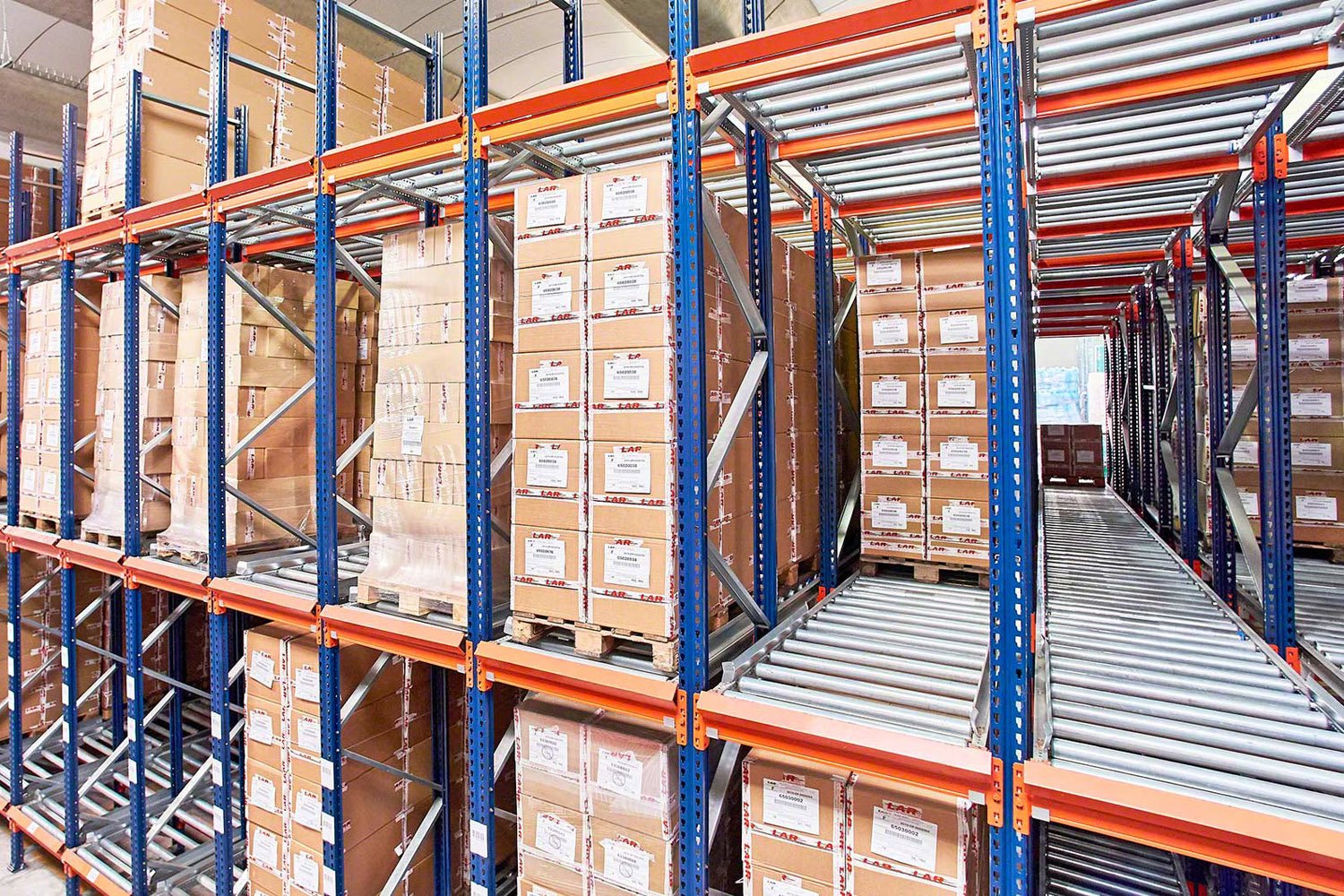
Industrial Warehouse Racking
Industrial Warehouse Racking
Industrial Warehouse Racking
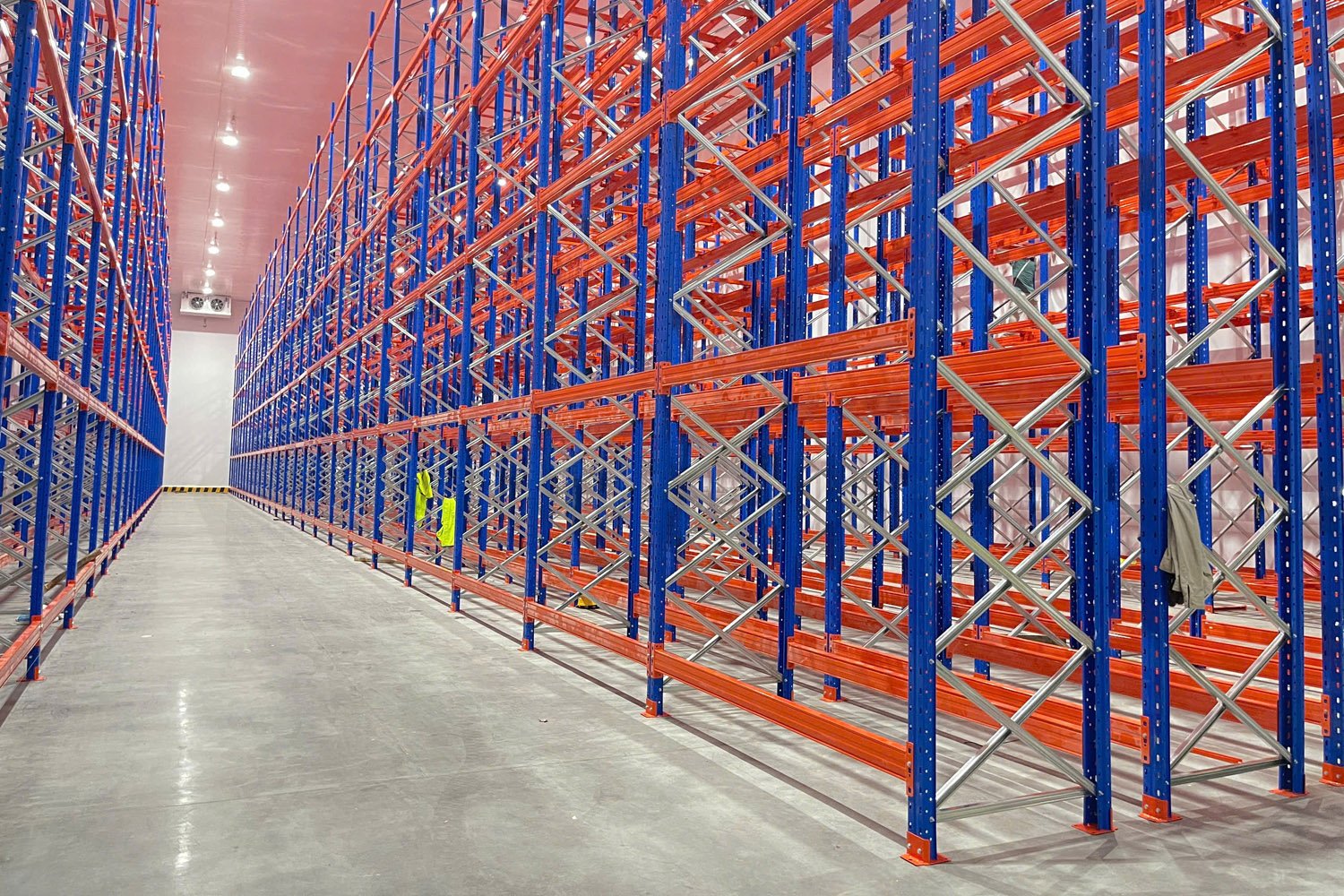
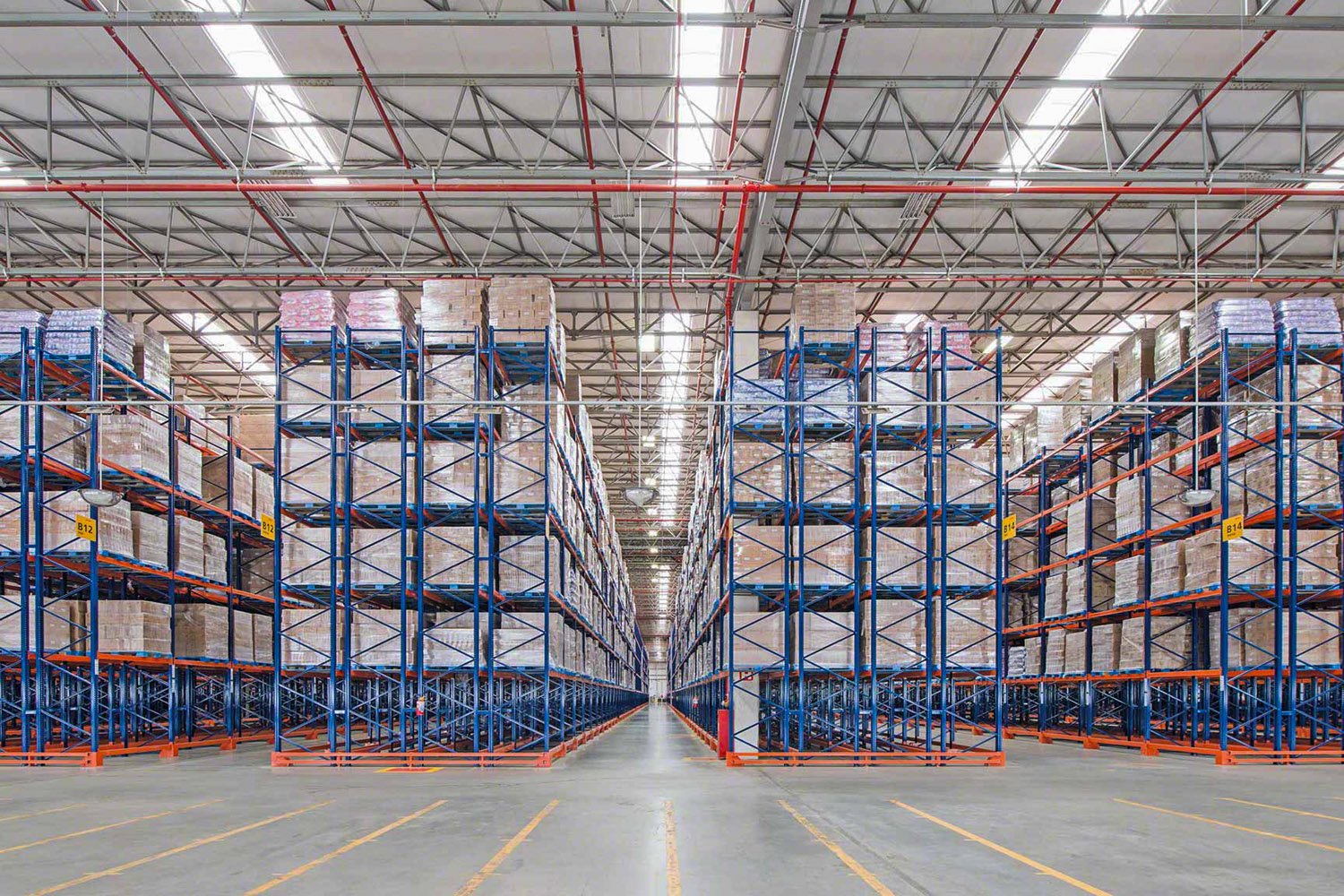
Industrial Warehouse Racking
What is Industrial Warehouse Racking?
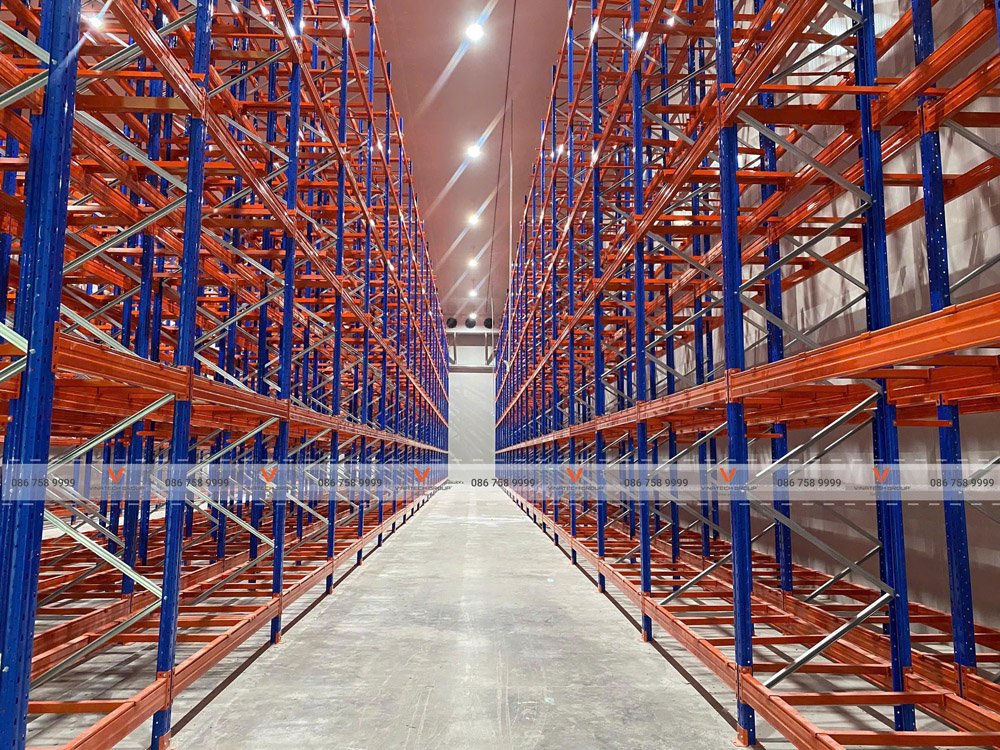
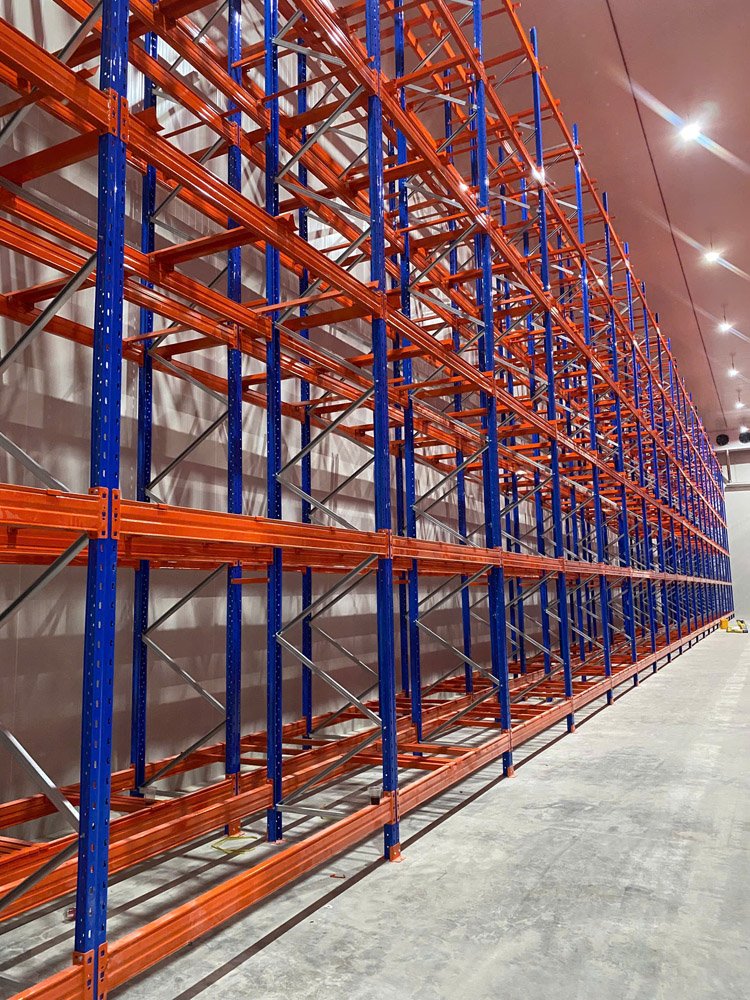
Industrial warehouse racking is a heavy-duty storage system designed to store palletized goods, raw materials, and finished products in high-throughput warehouse environments. With load capacities ranging from several hundred kilograms to tens of tons, industrial racking systems are manufactured from high-quality cold-rolled or hot-rolled steel, treated with anti-corrosion processes and powder coating to ensure superior durability in demanding warehouse conditions.
A well-engineered warehouse racking system is not merely a storage solution; it functions as the “backbone” of overall warehouse operations. The right racking system enables systematic product organization, improves inventory control, shortens receiving, dispatching, and picking time, and significantly reduces the risk of collisions and workplace accidents during daily operations.
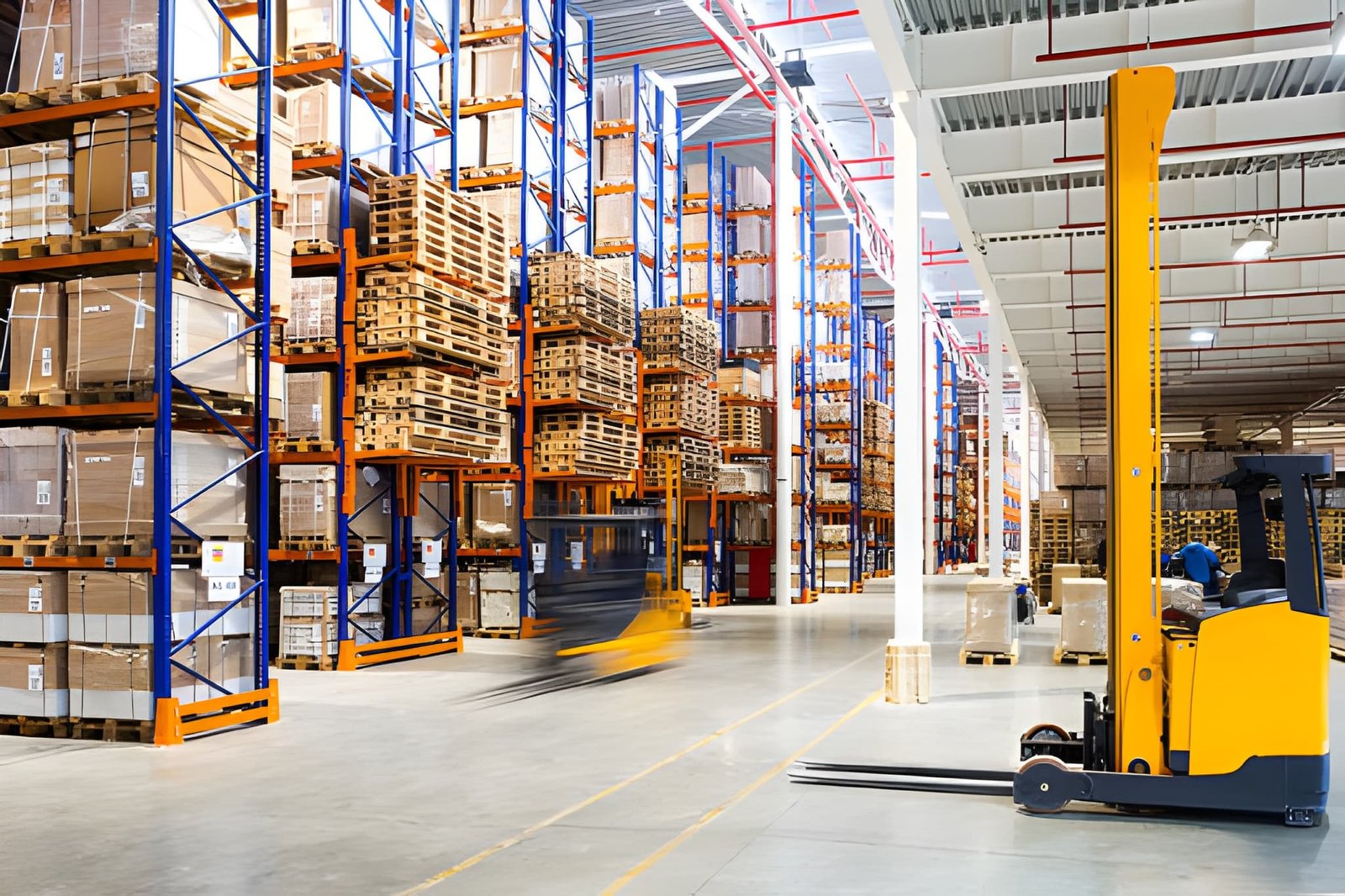
Types of Industrial Warehouse Racking we distribute
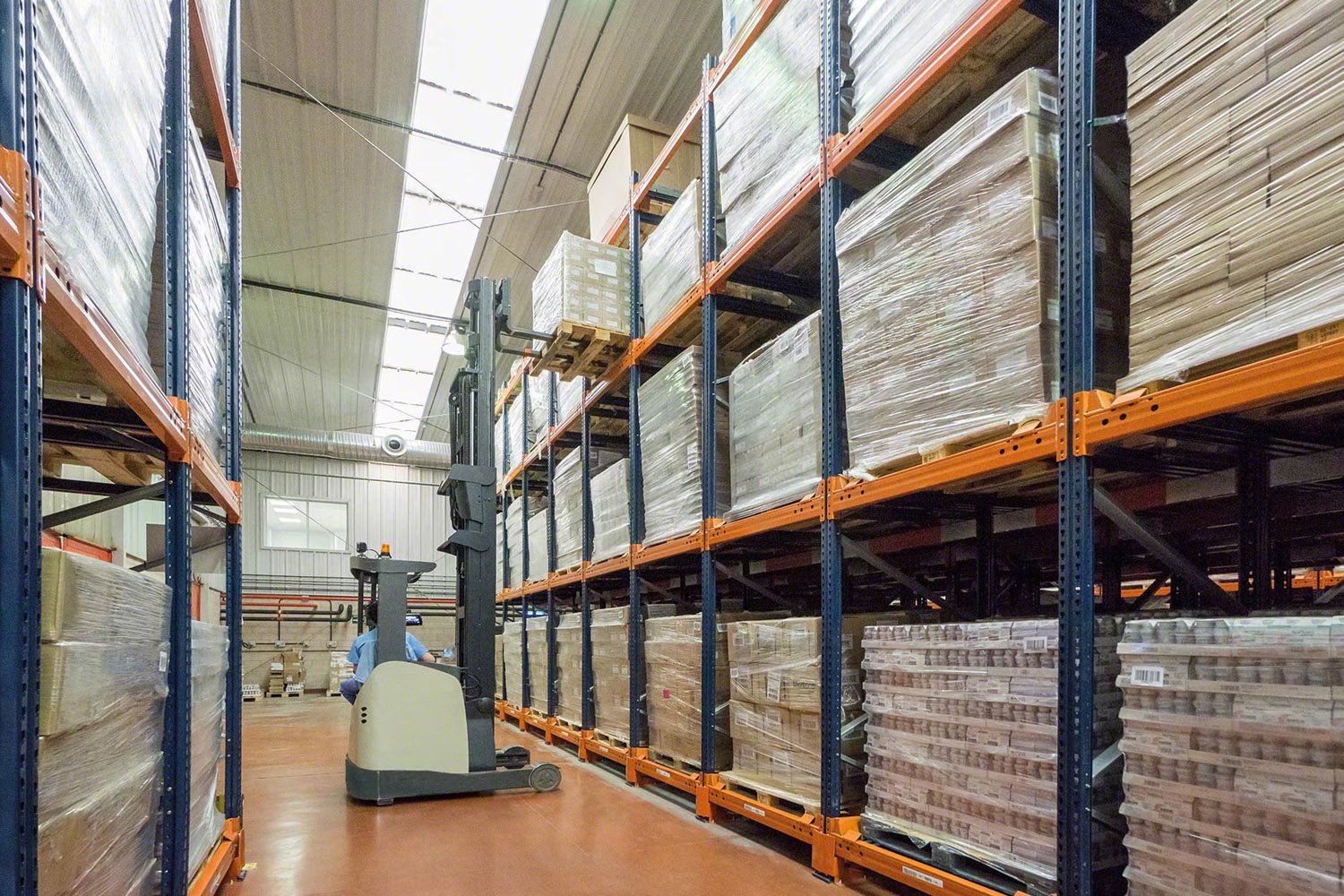
Choosing the right warehouse pallet racking configuration depends on your storage density, SKU variety, and operational flow. Common systems include:
Pallet Racking System
The warehouse pallet racking system is the most widely used storage solution in industrial warehouses, offering 100% direct access to pallets.
- Load capacity: 500-3,000 kg per level
- Beam length/depth: 1,150-4,000 mm/1,200-4,500 mm
- Selectivity: 100% of SKUs
- Picking method: FIFO/LIFO
These warehouse pallet racks are compatible with most standard forklifts, easy to install and expand, and highly flexible for layout changes during warehouse operations.
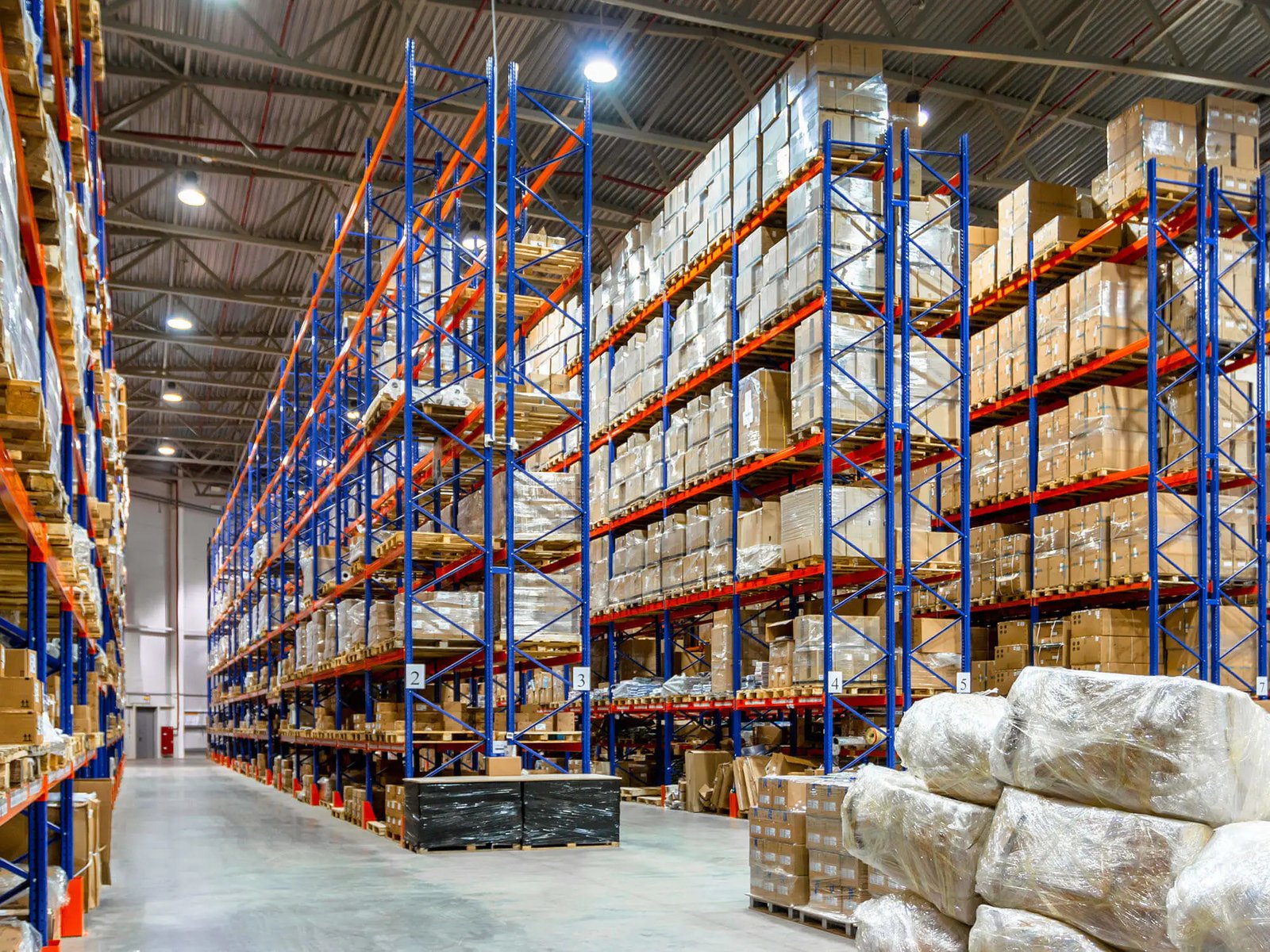
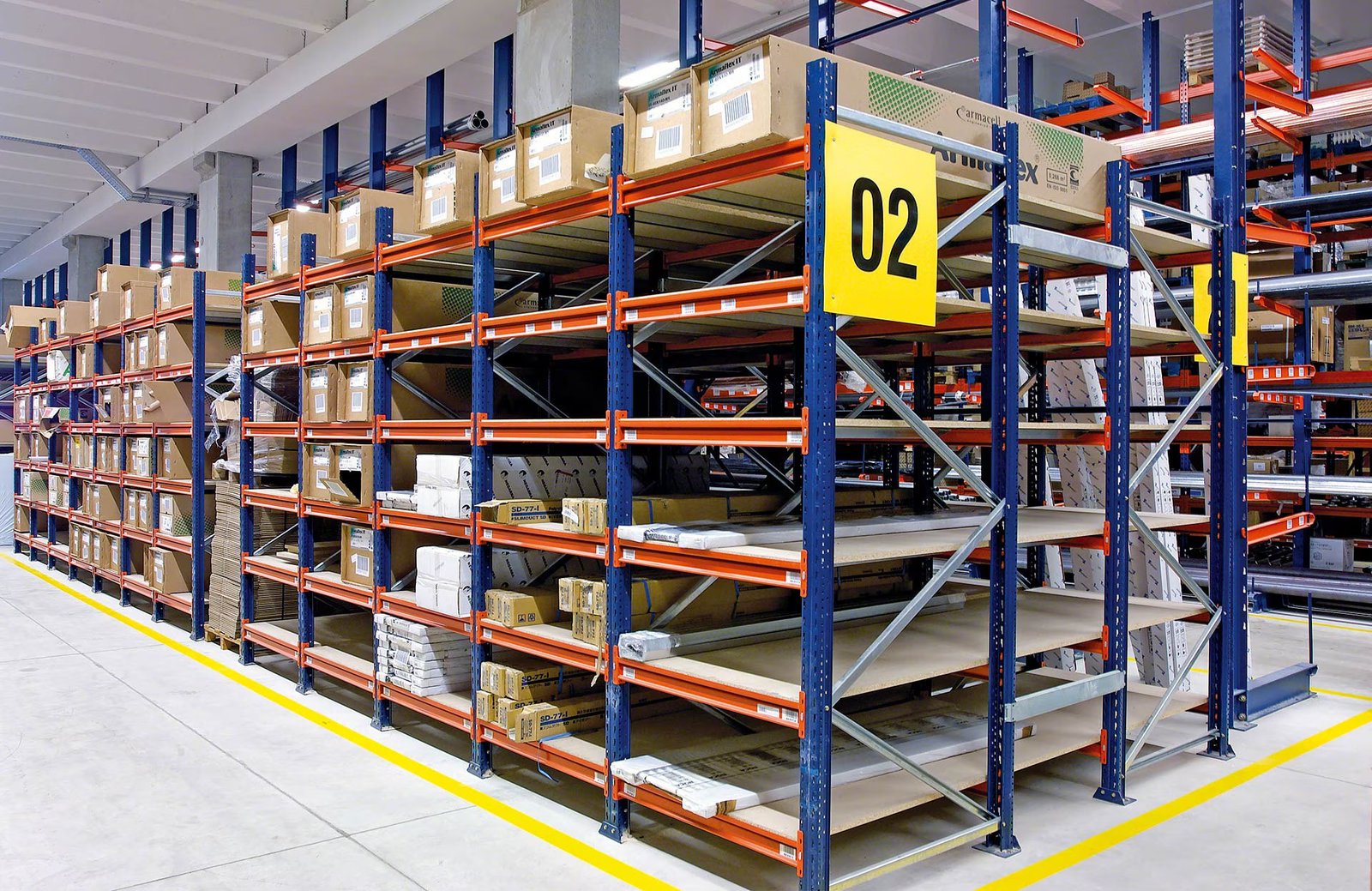
Heavy Duty Shelving
Warehouse pallet shelving designed for heavy-duty applications is suitable for storing large, bulky, or high-weight items that require robust structural support.
This solution is commonly used in spare parts warehouses, heavy industrial facilities, maintenance centres, or non-palletised storage areas. With strong construction, high load capacity, and adjustable shelf levels, heavy-duty shelving optimises space while ensuring operational safety.
Double Deep Racking
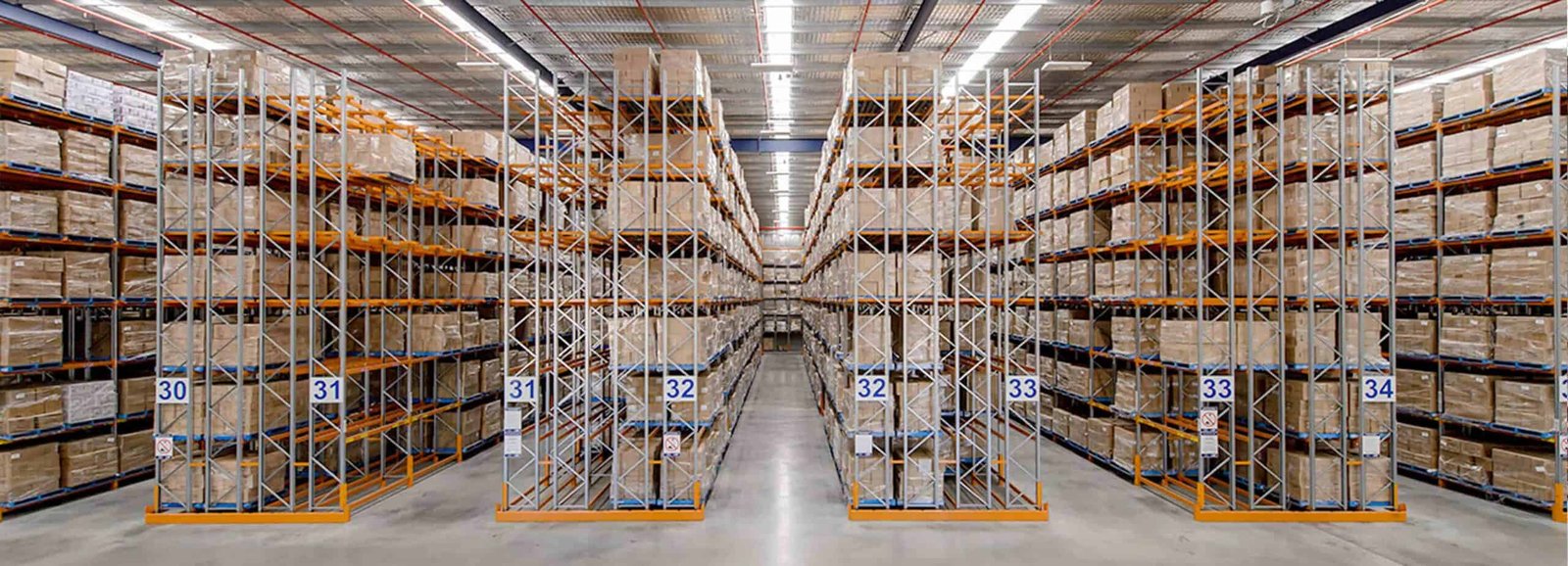
Double deep warehouse racking is a variation of selective pallet racking where pallets are stored two-deep instead of single-deep.
- Load capacity: up to 3,000 kg per level
- Beam length: 1,150-4,000 mm
- Depth: 1,200-4,500 mm
- Product accessibility: 100%
- Picking method: LIFO
This racking system requires specialised reach trucks with deep-reach forks and is best suited for warehouses with medium SKU counts and batch-based storage.
Drive-in Racking
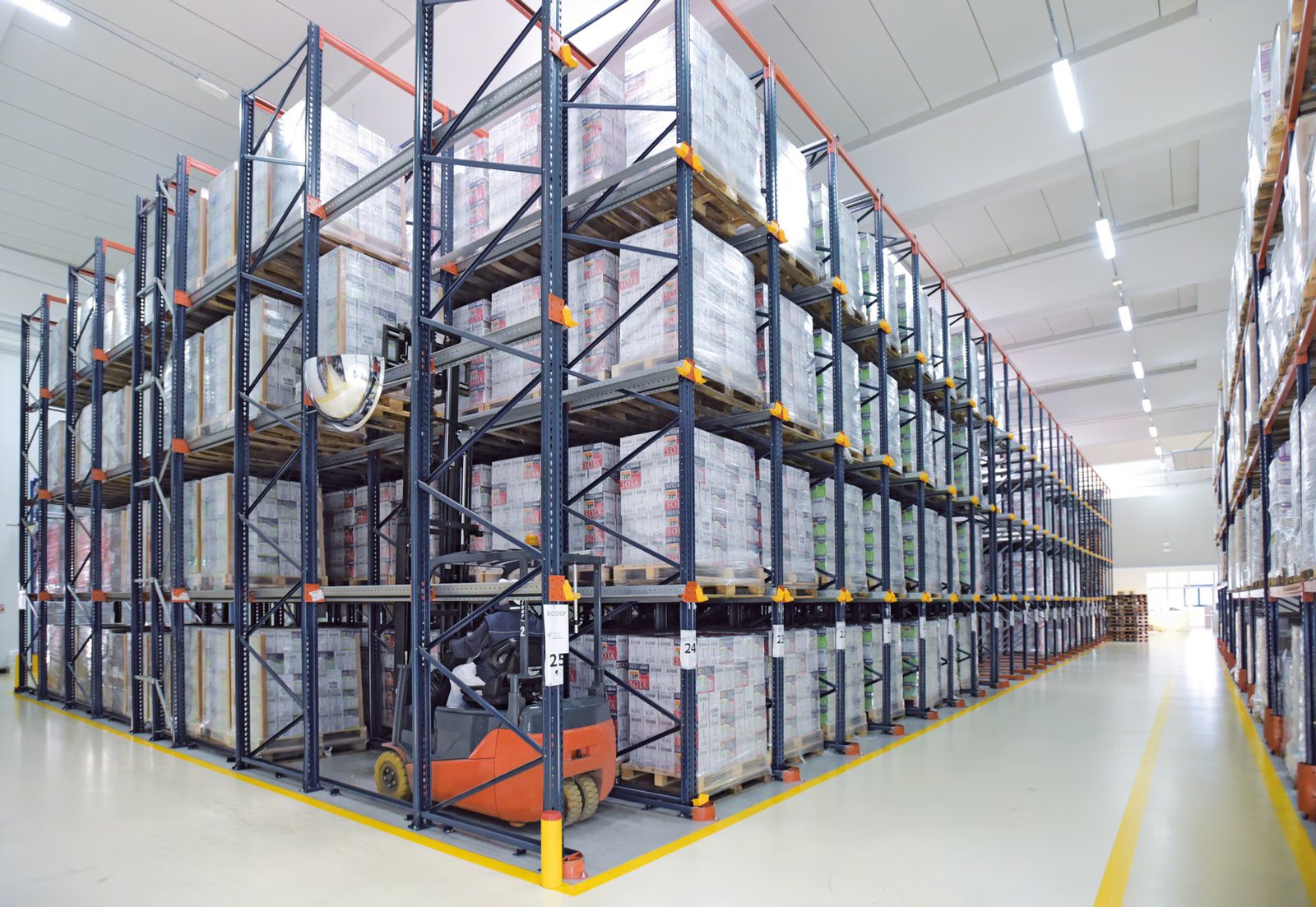
Drive-in warehouse racking is a high-density storage solution that allows forklifts to enter the racking structure to load and retrieve pallets.
- Load capacity: ≥ 1,000 kg per pallet
- Space utilisation: up to 80% pallet density
- Picking method: LIFO
This warehouse racking system is ideal for homogeneous products with low SKU variety and moderate turnover, commonly used in cold storage, food warehouses, and raw material facilities.
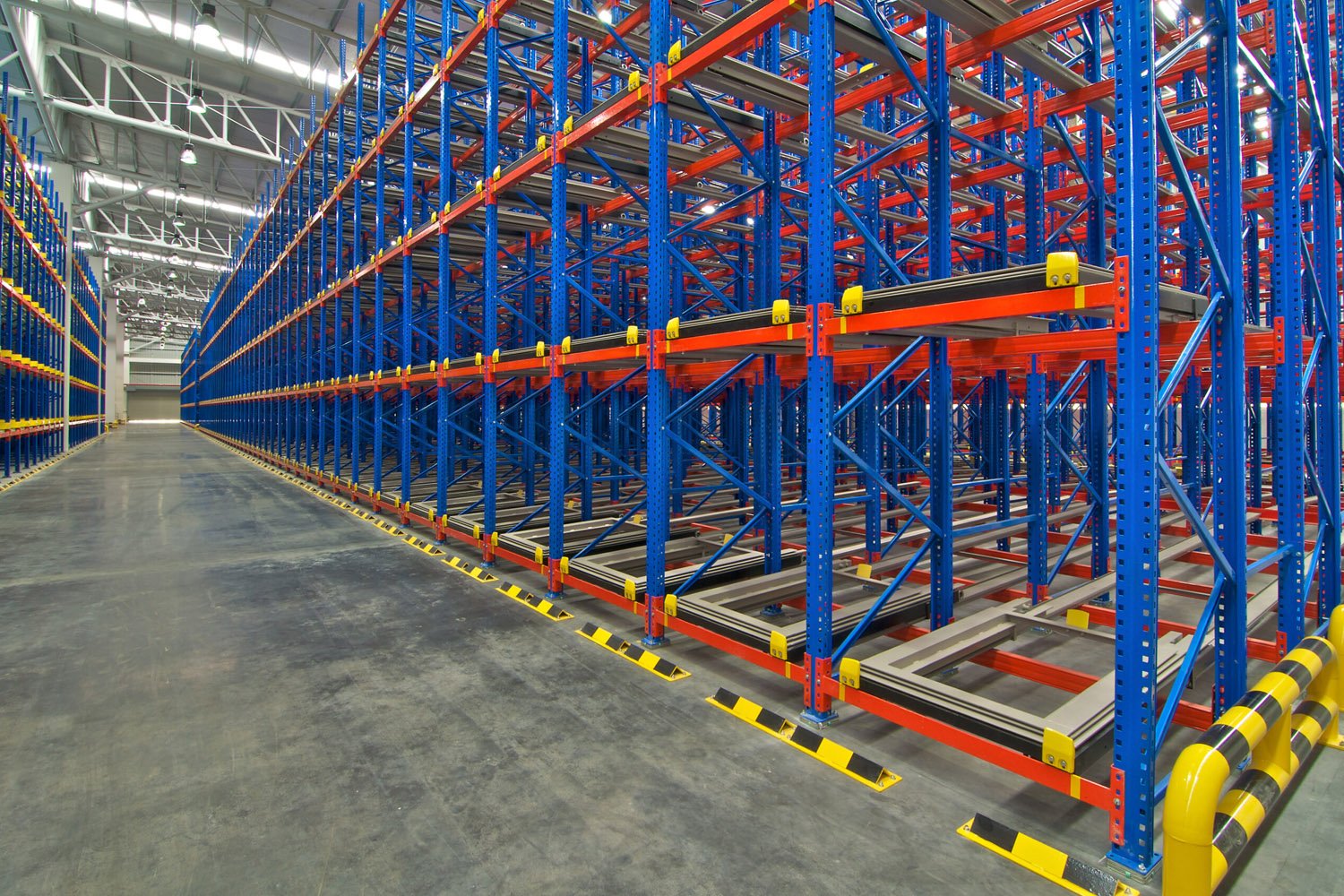
Pallet Flow Racking
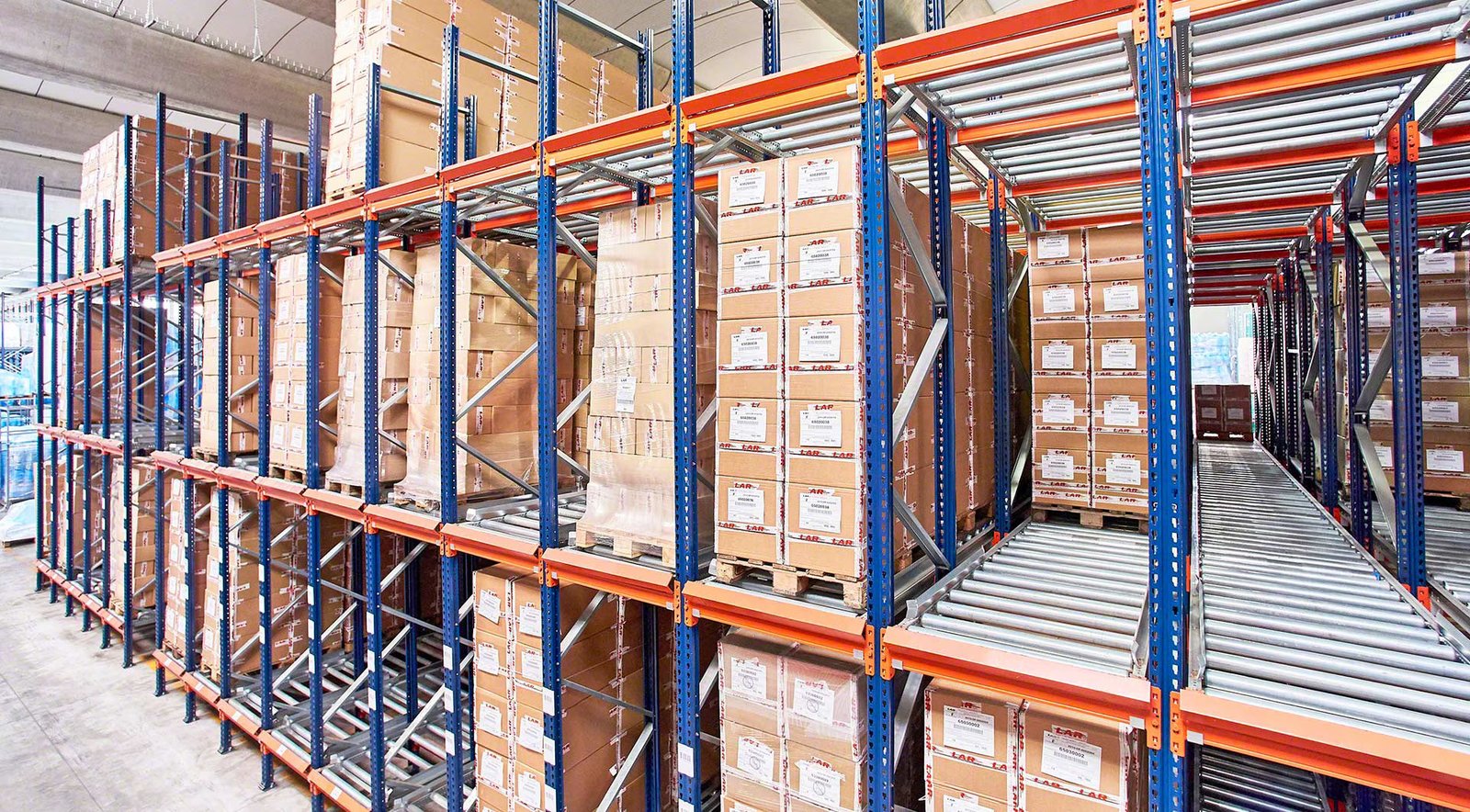
Pallet flow racking uses gravity rollers and inclined lanes to move pallets automatically from the loading side to the picking side.
- Maximum load: 1,000kg per pallet
- Pallet flow speed: up to 3 m/s
- Maximum height: 10 m
- Warehouse fill rate: 80-100%
- Picking method: FIFO
This industrial warehouse racking solution is well suited for perishable goods, food and beverage, pharmaceuticals, and high-throughput distribution centres, improving picking speed and reducing forklift travel distance.
Warehouse Racking Mezzanine
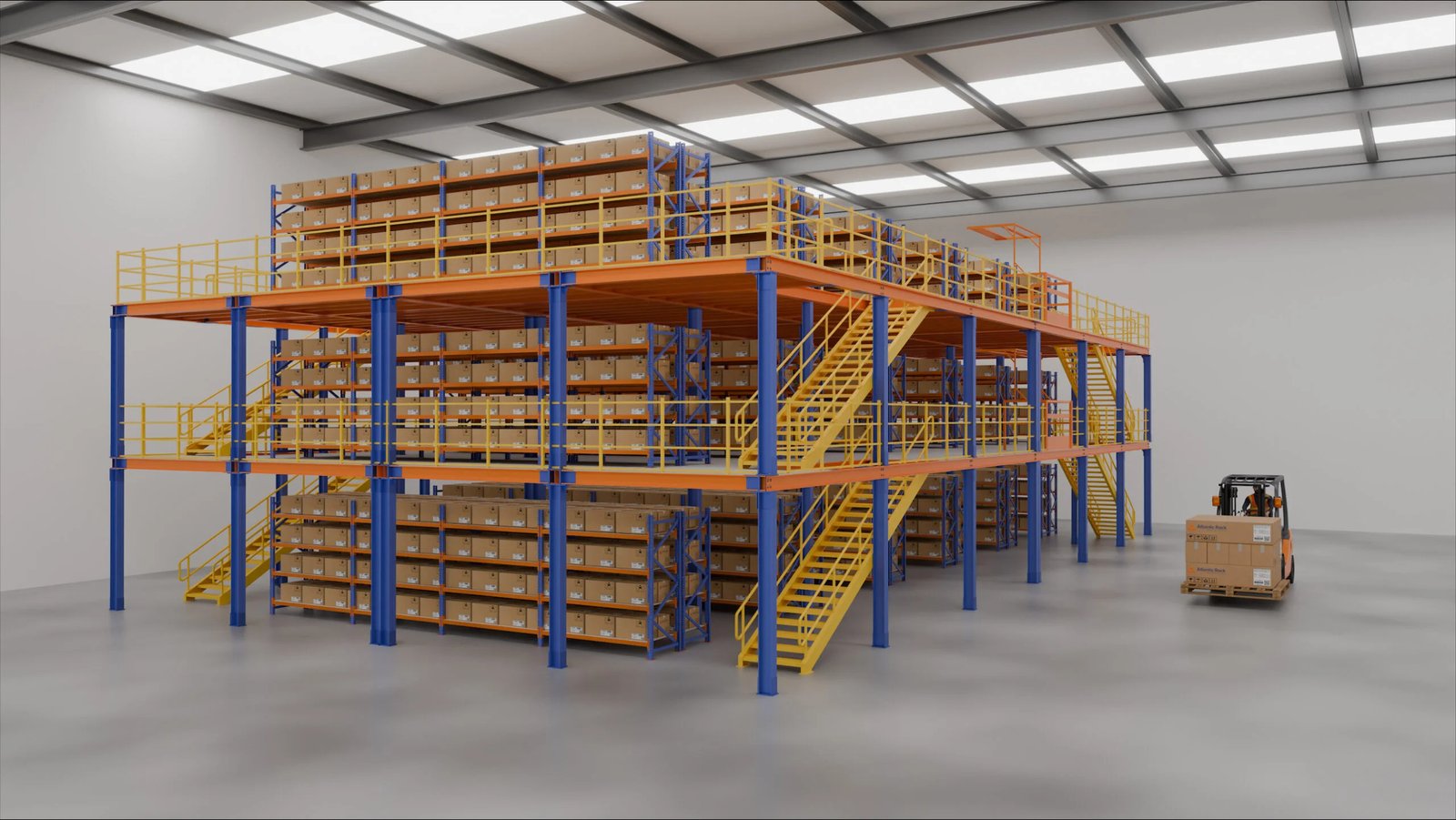
A warehouse racking mezzanine maximises vertical space by creating additional usable levels without expanding the building footprint.
- Maximum load: 500 kg/m²
- Maximum column spacing: 8 m
- Maximum height: 8 m
- Space increase: up to 400%
- Picking method: FIFO/LIFO
This solution can integrate storage racks, picking areas, offices, or packing zones and is ideal for warehouses with high ceilings and rapid expansion needs.
Very Narrow Aisle Racking (VNA)
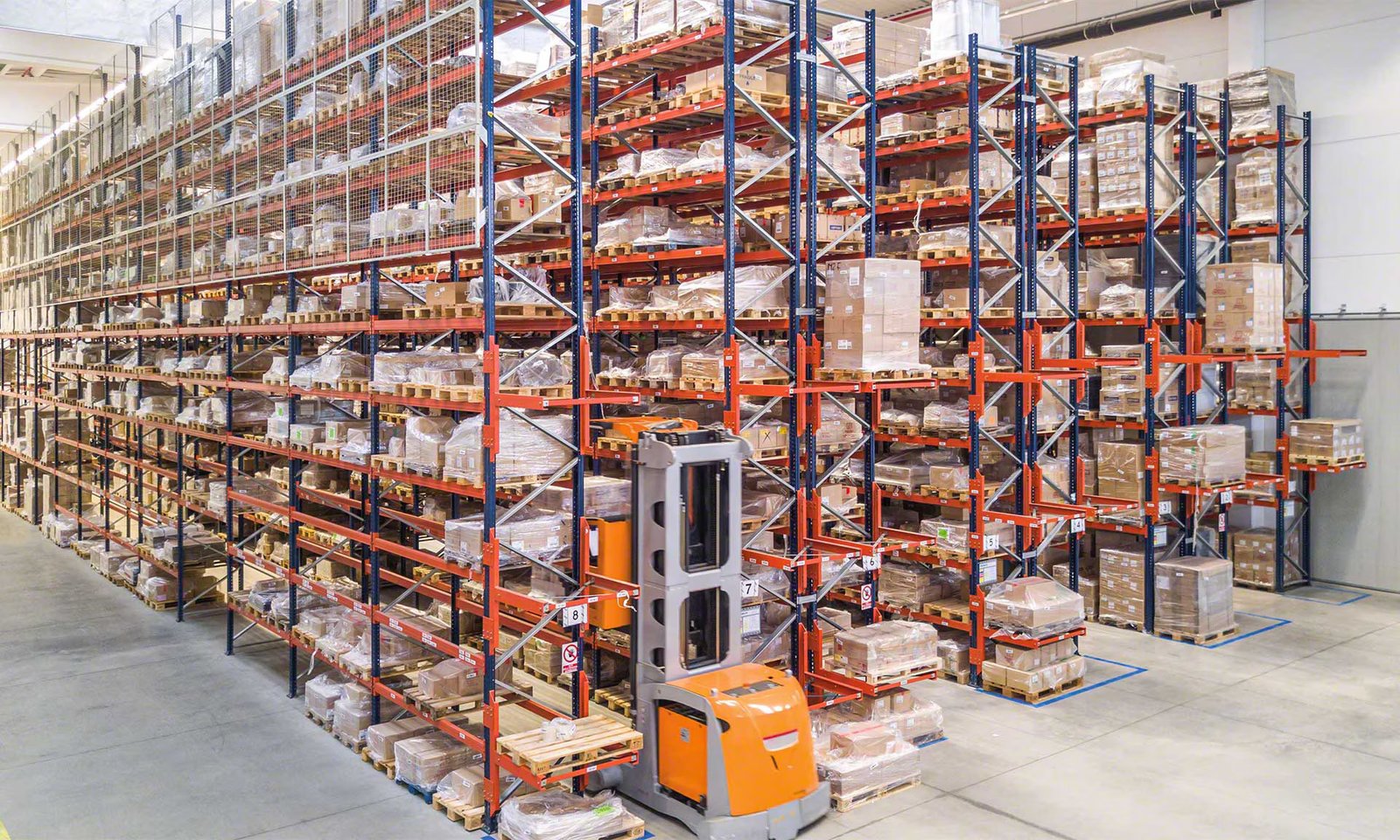
VNA warehouse racking is designed to maximise storage capacity by significantly reducing aisle width. It requires specialised VNA forklifts and often incorporates guide rails or automated guidance systems.
This warehouse racking system is suitable for facilities with high storage density requirements, precise inventory control, and long-term semi-automation or automation strategies.
Benefits of Industrial Warehouse Racking
Investing in industrial warehouse racking delivers benefits far beyond basic storage. A properly engineered racking system enables businesses to gain better control over material flow, optimize operating costs, and strengthen long-term competitiveness in demanding warehouse environments.
Optimized Space Utilization
Instead of relying solely on floor space, industrial warehouse racking allows warehouses to fully utilize vertical height, turning unused overhead space into a strategic advantage. This is especially critical for U.S. warehouses, where land acquisition and construction costs continue to rise.
When designed correctly, a warehouse racking system minimizes unnecessary aisles, increases pallet storage density, and improves overall warehouse organization. As a result, businesses can store more goods within the same footprint, optimize infrastructure investment, and maximize the return on existing assets.
Improved Operational Efficiency & Inventory Control
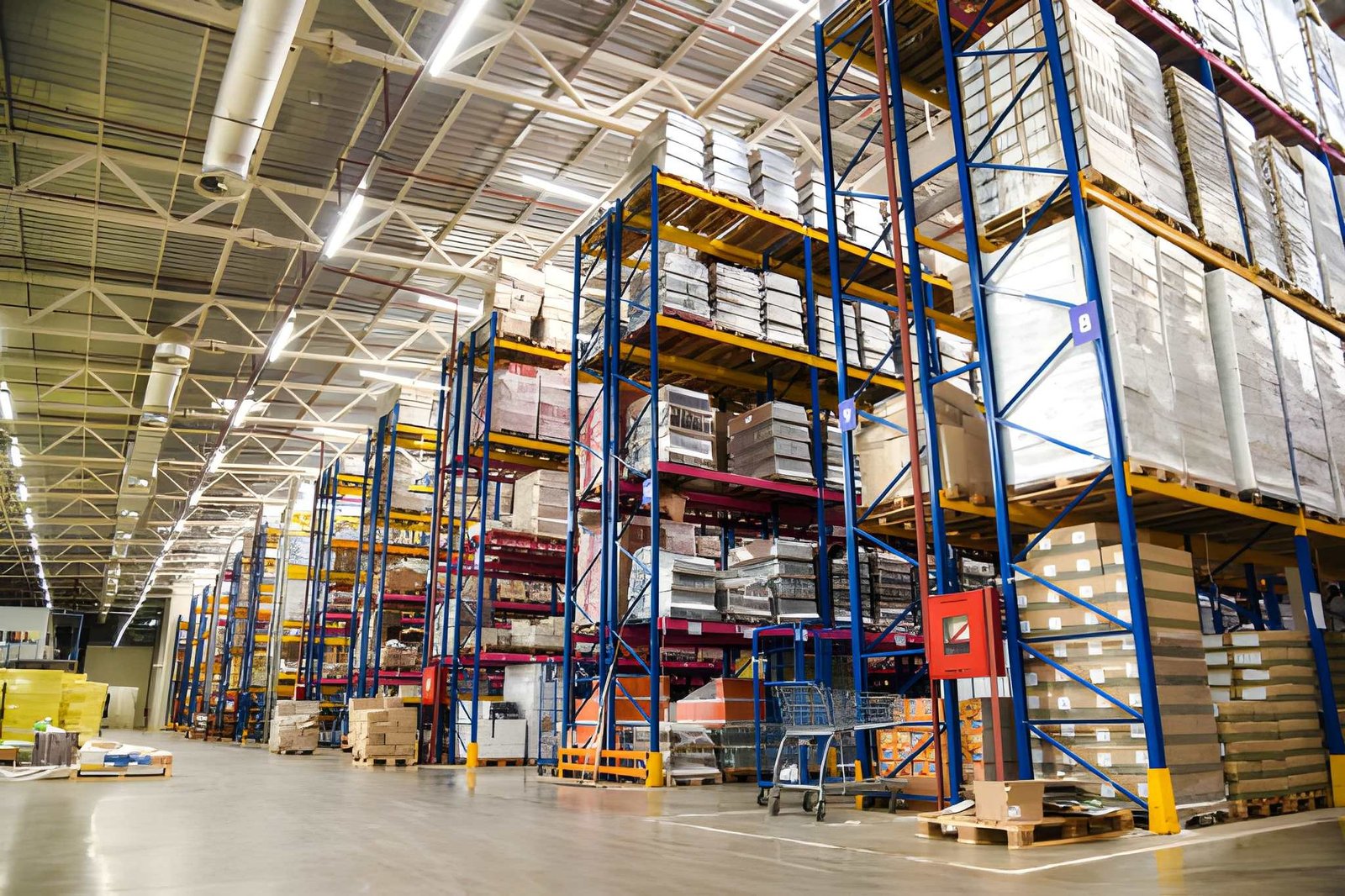
Industrial warehouse racking plays a key role in improving overall warehouse performance. With a clear and logical storage structure, warehouse pallet racking allows forklifts and warehouse personnel to move more efficiently, reducing travel time and handling effort during receiving, dispatching, and picking operations.
In addition, a well-planned warehouse racking system significantly enhances inventory control. Clearly defined pallet locations integrate seamlessly with WMS and management tools, helping reduce inventory discrepancies, minimize losses, and improve accuracy in supply chain and production planning.
Enhanced Safety & Long-Term Scalability
Workplace safety is a top priority in industrial warehouses, and industrial warehouse racking is designed to meet this requirement. Heavy-duty structures, precise installation standards, and layouts optimized for material handling equipment help reduce the risk of rack collapse, forklift impacts, and daily operational accidents.
Why a Proper Industrial Warehouse Racking Matters
Choosing the right industrial warehouse racking impacts far more than storage capacity, it directly affects operational efficiency, safety performance, and total cost of ownership across the entire warehouse lifecycle.
Improved Picking Accuracy & Inventory Control
With a structured and systematic layout, industrial warehouse racking ensures pallets are clearly identified and consistently positioned. This supports faster picking, reduces human error, and improves inventory accuracy, particularly important for high-SKU, high-turnover warehouses.
Ready for Automation, AGVs, and Conveyors
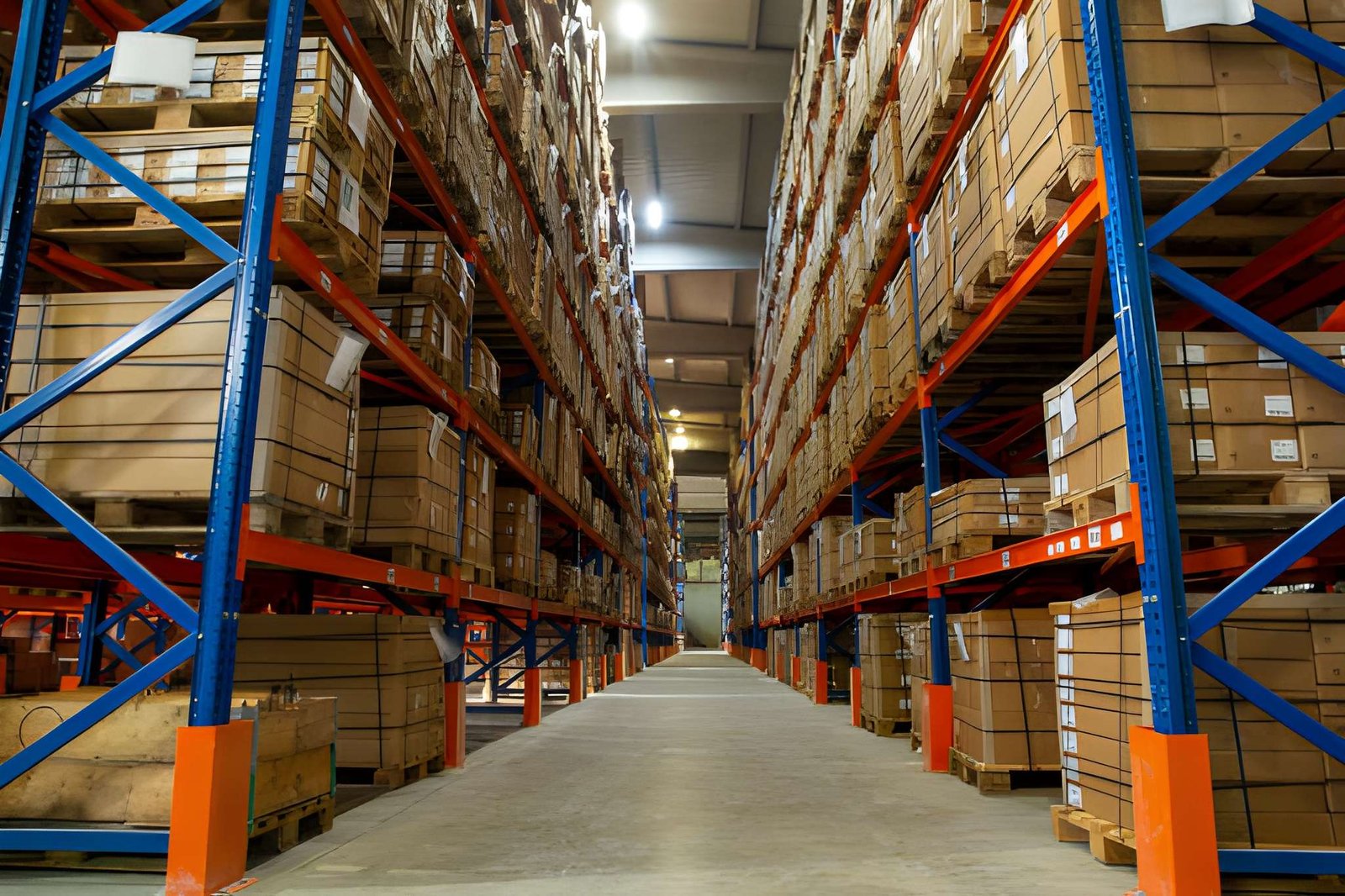
Industrial warehouse racking serves as the foundation for warehouse automation. When planned from the beginning, the racking system integrates smoothly with AGVs, conveyors, AS/RS, and other automated technologies, enabling higher productivity and a seamless transition toward smart warehouse operations.
Enhanced Workplace Safety and Product Protection
A properly engineered industrial warehouse racking system is designed with precise load calculations, structural stability, and safety factors in mind. This significantly reduces the risk of rack failure, workplace injuries, and product damage, hidden costs that can amount to millions of dollars annually in large-scale operations.
Professional Warehouse Racking Installation
Even the most advanced industrial warehouse racking, designed with precision and manufactured from premium materials, can become inefficient, or even hazardous, if warehouse racking installation is not executed correctly.
Ensuring Structural Stability
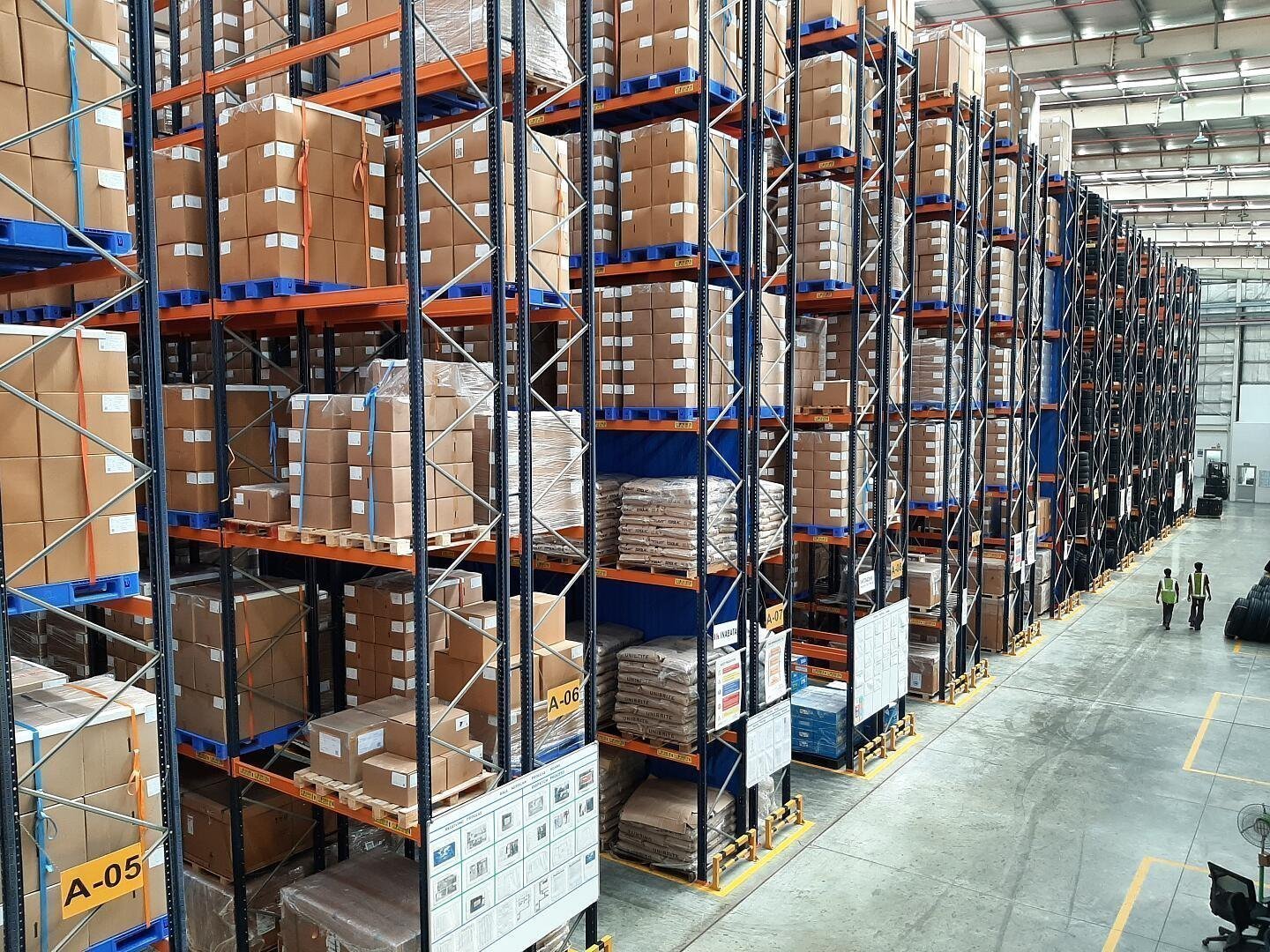
Professional warehouse racking installation begins with comprehensive site surveys, including warehouse condition assessment, floor load evaluation, real load verification, layout planning, and strict tolerance control throughout the installation process. Every component, from upright frames and load-bearing beams to floor anchoring, directly impacts the stability and lifespan of the entire warehouse racking system.
Even minor installation errors can result in uneven load distribution, structural deformation, and serious collapse risks when the system operates at full capacity.
Load Compliance and Scientific Weight Distribution
Proper installation ensures that warehouse pallet racks meet their designed load ratings, minimizing the risk of deformation, rack failure, or forklift collisions during operation. In the United States, where warehouse safety regulations are strictly enforced, warehouse racking installation must fully comply with engineering standards, occupational safety requirements, and post-installation inspections.
A correctly installed system delivers long-term operational stability, reduces maintenance costs, and prevents unnecessary downtime.
Long-Term Durability and Optimized Maintenance
A well-designed and professionally installed industrial warehouse racking system is built not only for immediate storage needs but for long-term operational durability. Upright frames, beams, bolts, and floor anchors are engineered to withstand continuous loads, limit long-term deformation, and maintain structural integrity in high-throughput warehouse environments.
Equally important, standardized industrial warehouse racking allows for efficient maintenance. Regular inspections, component replacement, and configuration adjustments can be carried out quickly without disrupting operations, helping businesses control long-term costs while keeping the warehouse racking system safe, reliable, and efficient throughout its lifecycle.
When to Upgrade or Redesign Industrial Warehouse Racking
As business operations evolve, warehouse racking systems must be reassessed to ensure they continue to meet operational, safety, and capacity requirements.
Increased storage demand or business growth
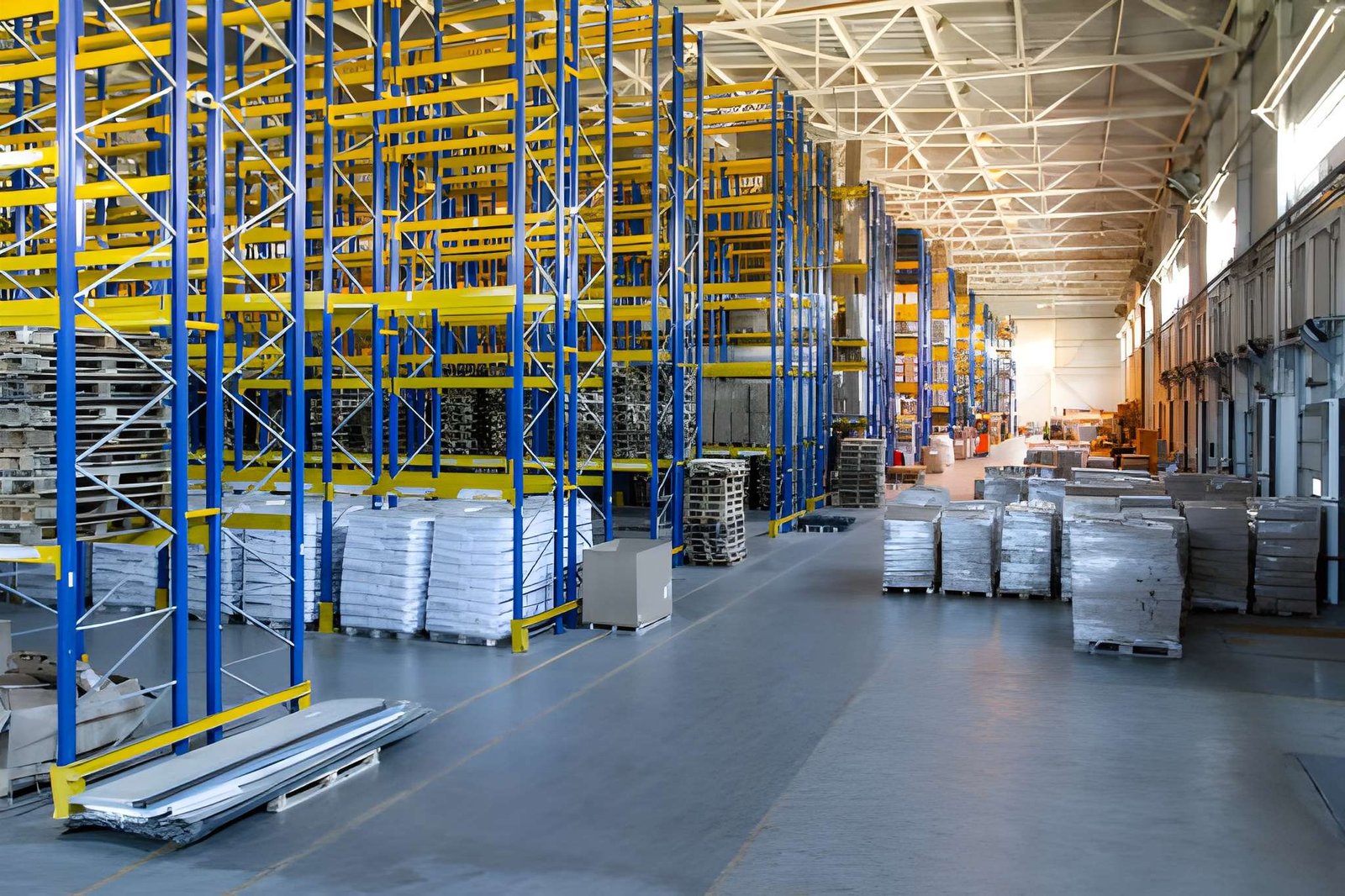
When storage demand increases or a business enters a growth phase, existing industrial warehouse racking may no longer provide sufficient capacity or operational efficiency. In such cases, upgrading or redesigning the warehouse racking system allows better use of available space, higher storage density, and sustained performance.
Changes in inventory, pallets, or equipment
Introducing new product lines, changing pallet sizes or weights, or adopting different forklifts can render an existing warehouse racking configuration unsuitable. Redesigning the racking system ensures compatibility with new operating methods while maintaining safety, efficiency, and reliable material handling.
Vinatech United States – a reliable industrial warehouse racking partner
Choosing the right supplier is just as important as choosing the right racking system. Vinatech U.S is a trusted industrial warehouse racking provider in the United States, delivering engineered warehouse racking systems that meet U.S. operational demands, safety standards, and long-term growth requirements.
Our solutions range from industrial warehouse racking and pallet shelving to scalable warehouse racking systems designed for high throughput, heavy loads and automation readiness. With professional warehouse racking installation, strict quality control, and local project support, we help businesses optimize space, improve warehouse safety, and build a future-ready racking system.