
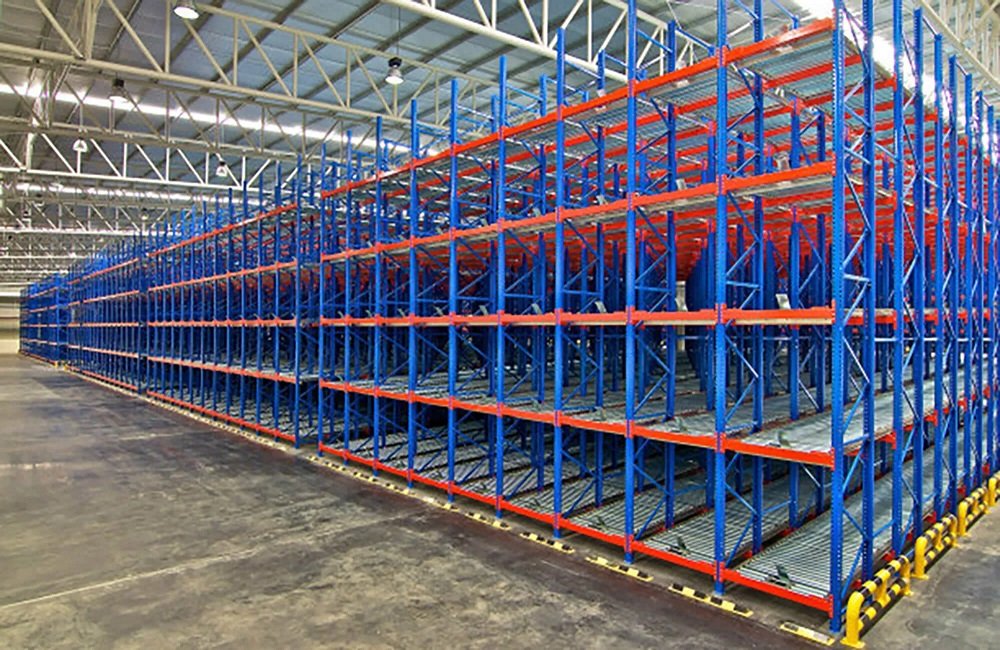
What is a Pallet Flow Racking?
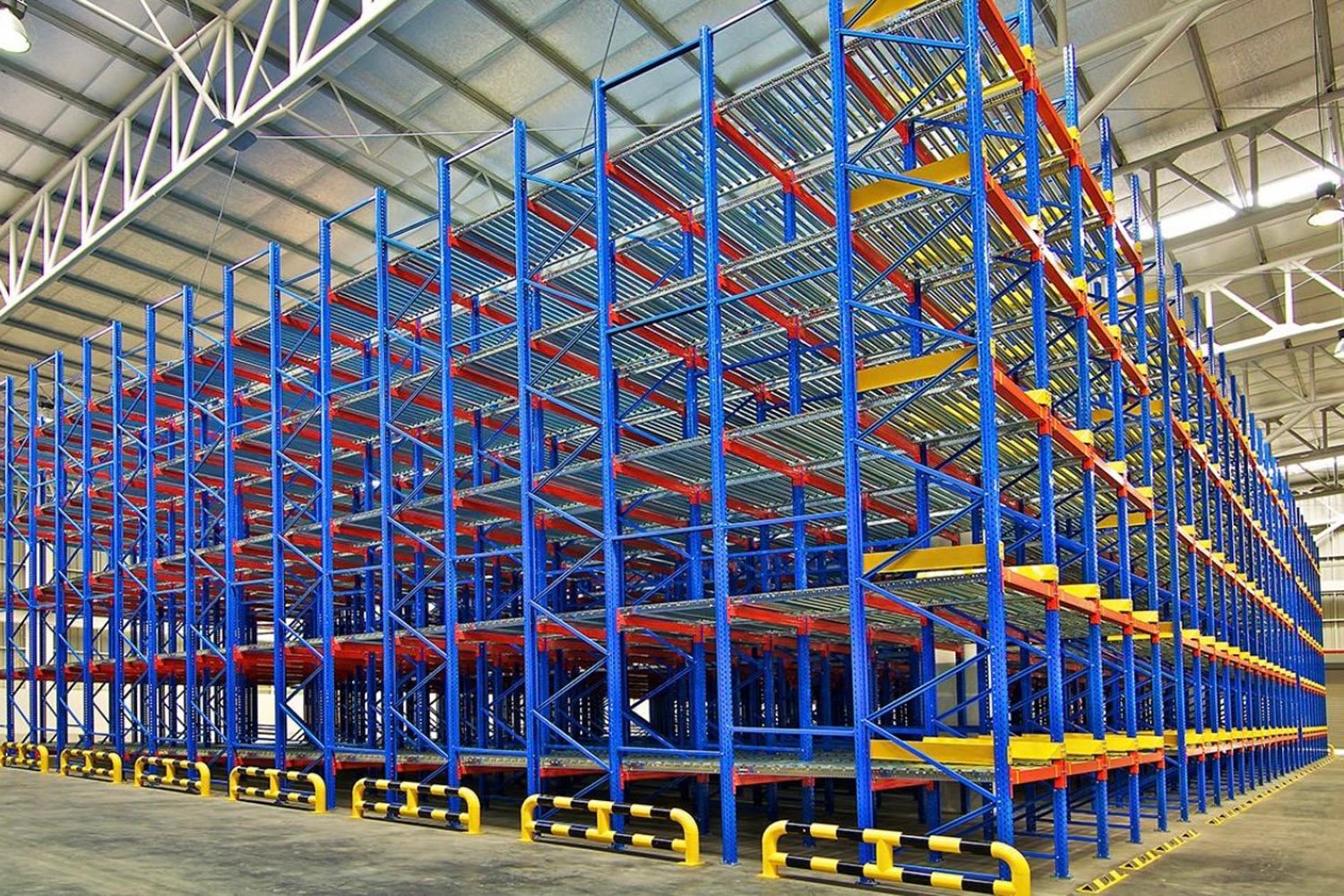
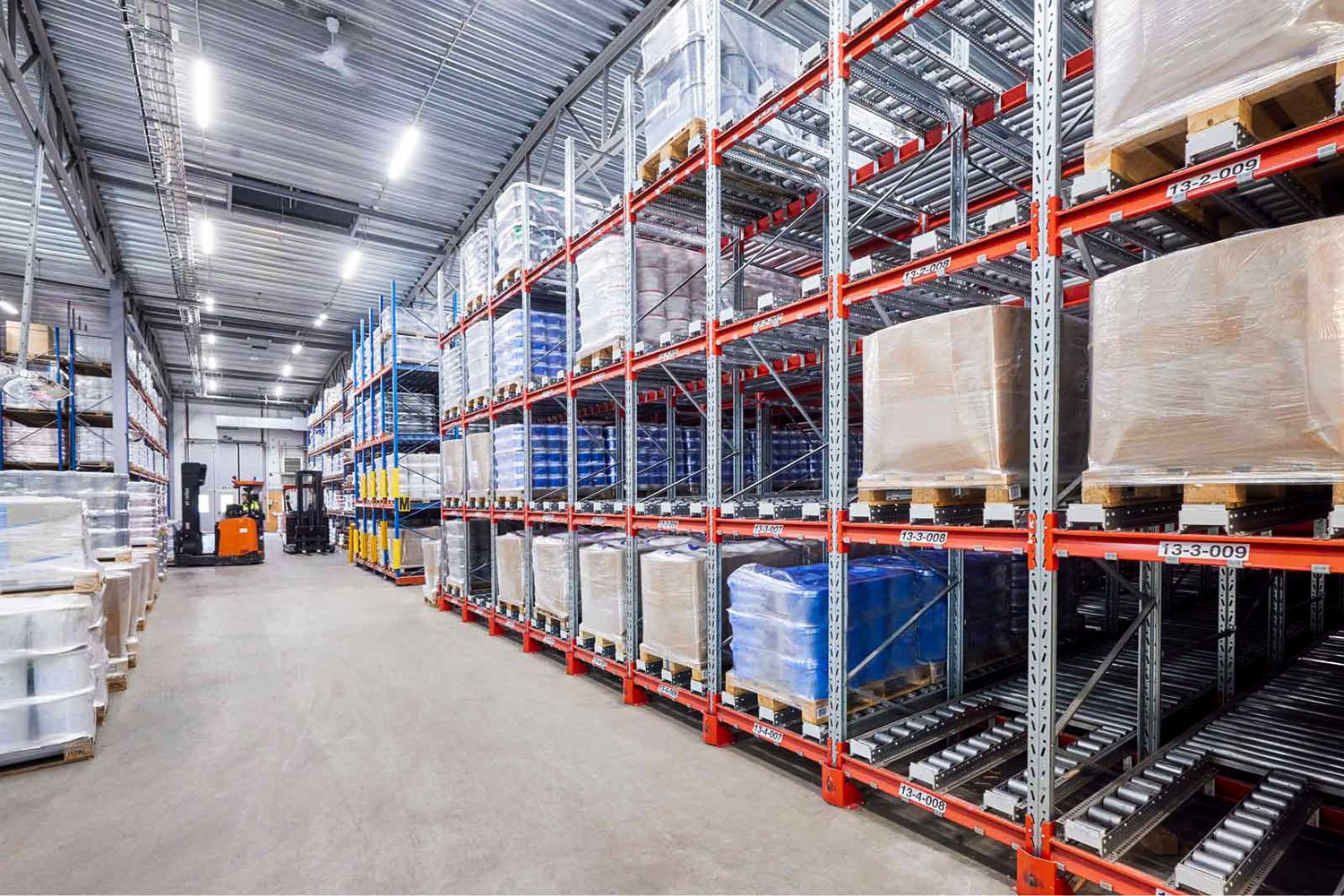
A pallet flow racking system is a high-density storage solution that uses gravity roller technology to move pallets automatically from the loading side to the picking side in a continuous and controlled flow. Once a pallet is placed into a storage lane, gravity causes it to advance forward at a regulated speed, remaining constantly available at the next picking position.
Thanks to this design, pallet flow racking ensures accurate First-In, First-Out (FIFO) inventory rotation while completely eliminating the need for forklifts to enter the rack structure. This significantly reduces collision risks, improves workplace safety, and enhances overall operational efficiency.
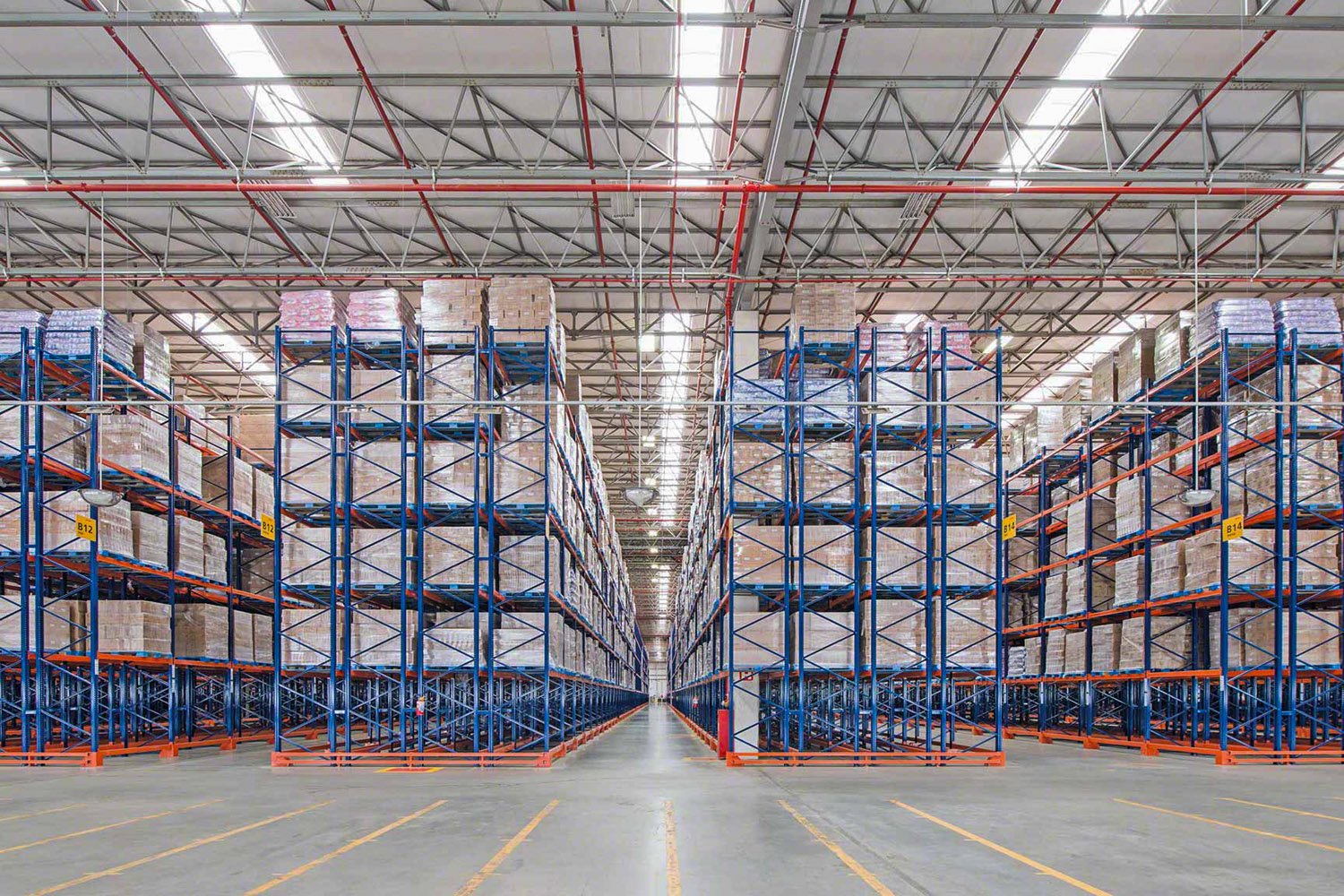
Pallet flow racking is widely used in distribution centers, manufacturing warehouses, and cold storage facilities across the United States, where fast order processing, maximum space utilization, and strict inventory control are essential.
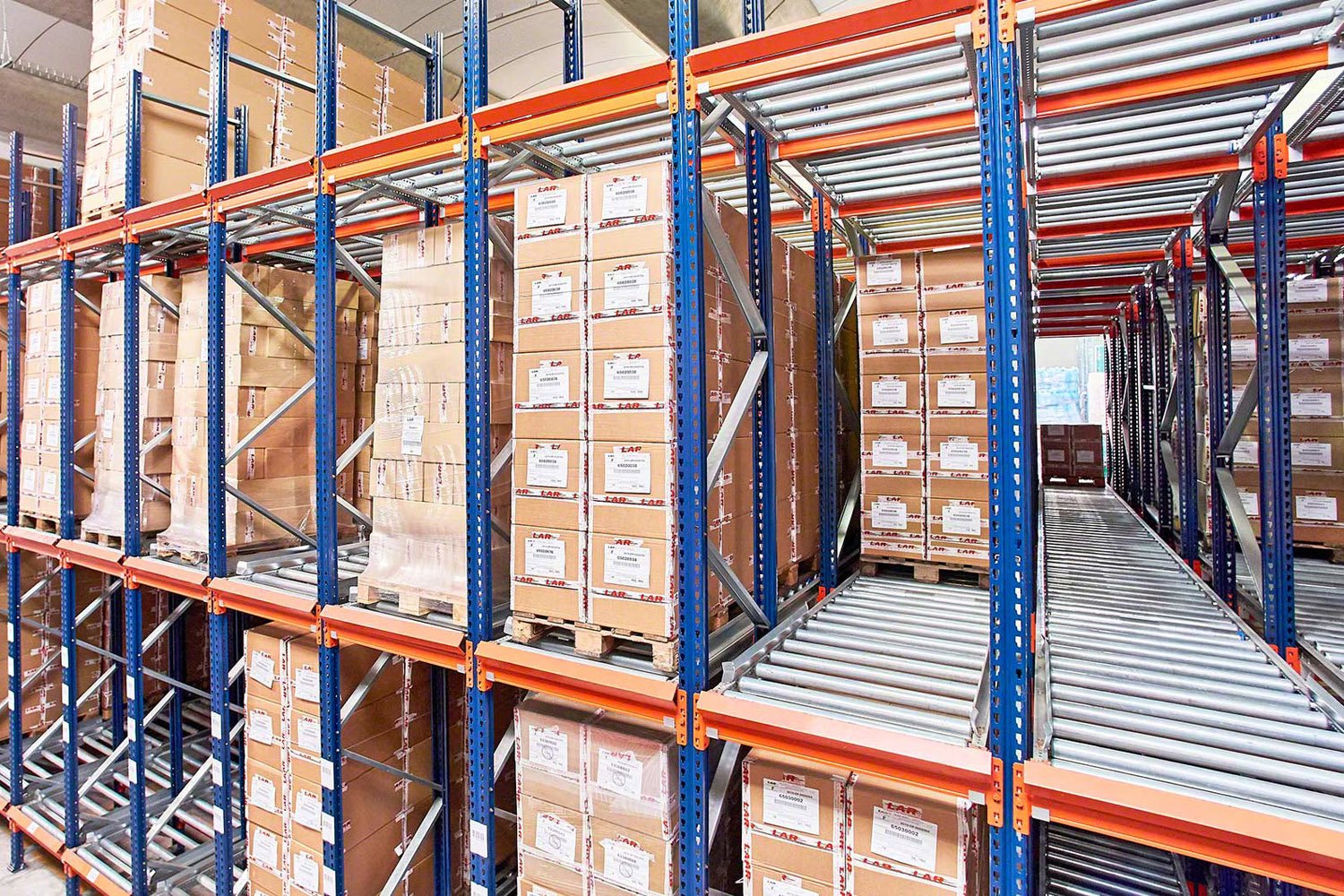
The structure of pallet flow racking
A pallet flow racking system is composed of multiple structural components and functional elements. Each component serves a specific purpose while working together to ensure load capacity, structural stability, and safe operation.
Frame
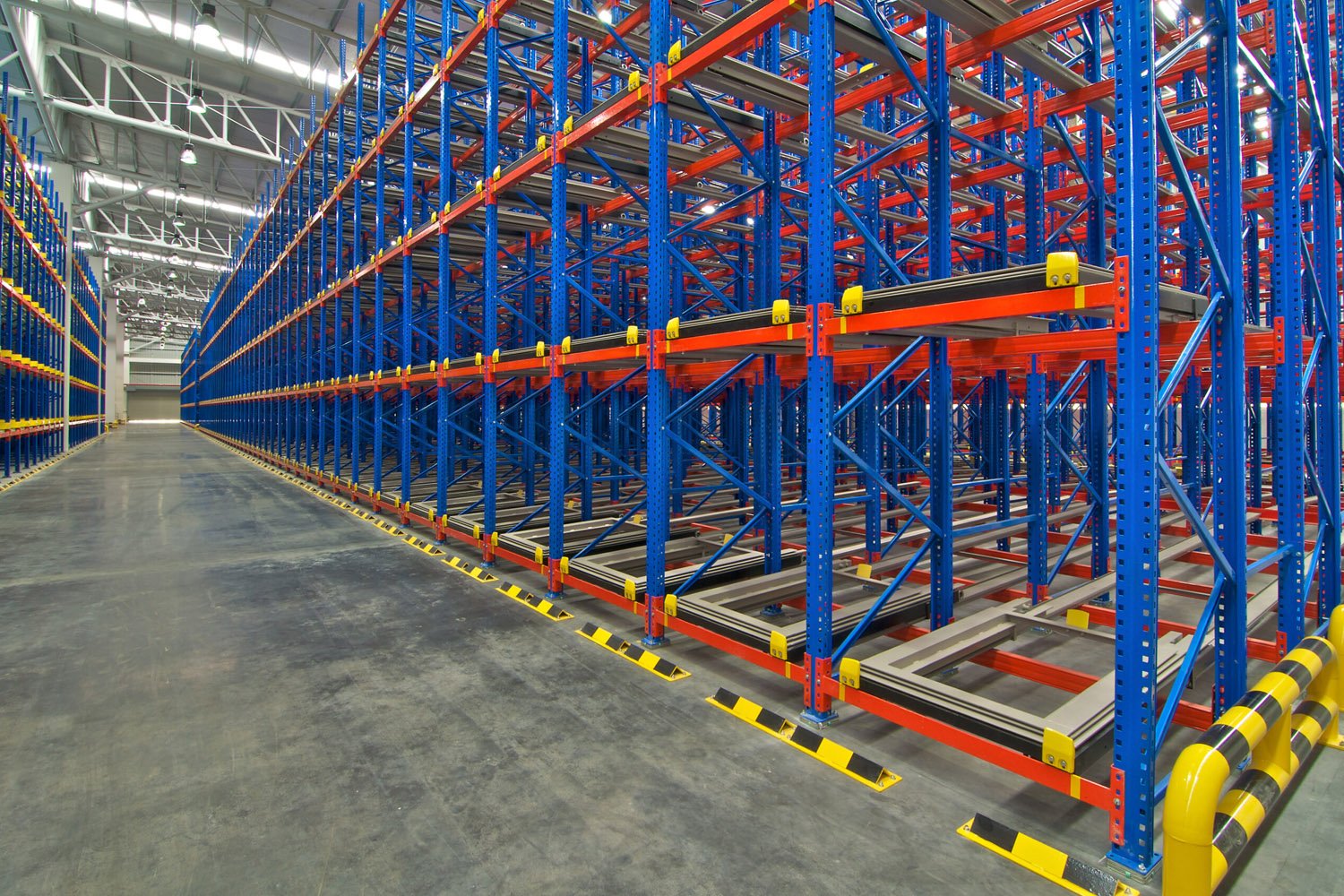
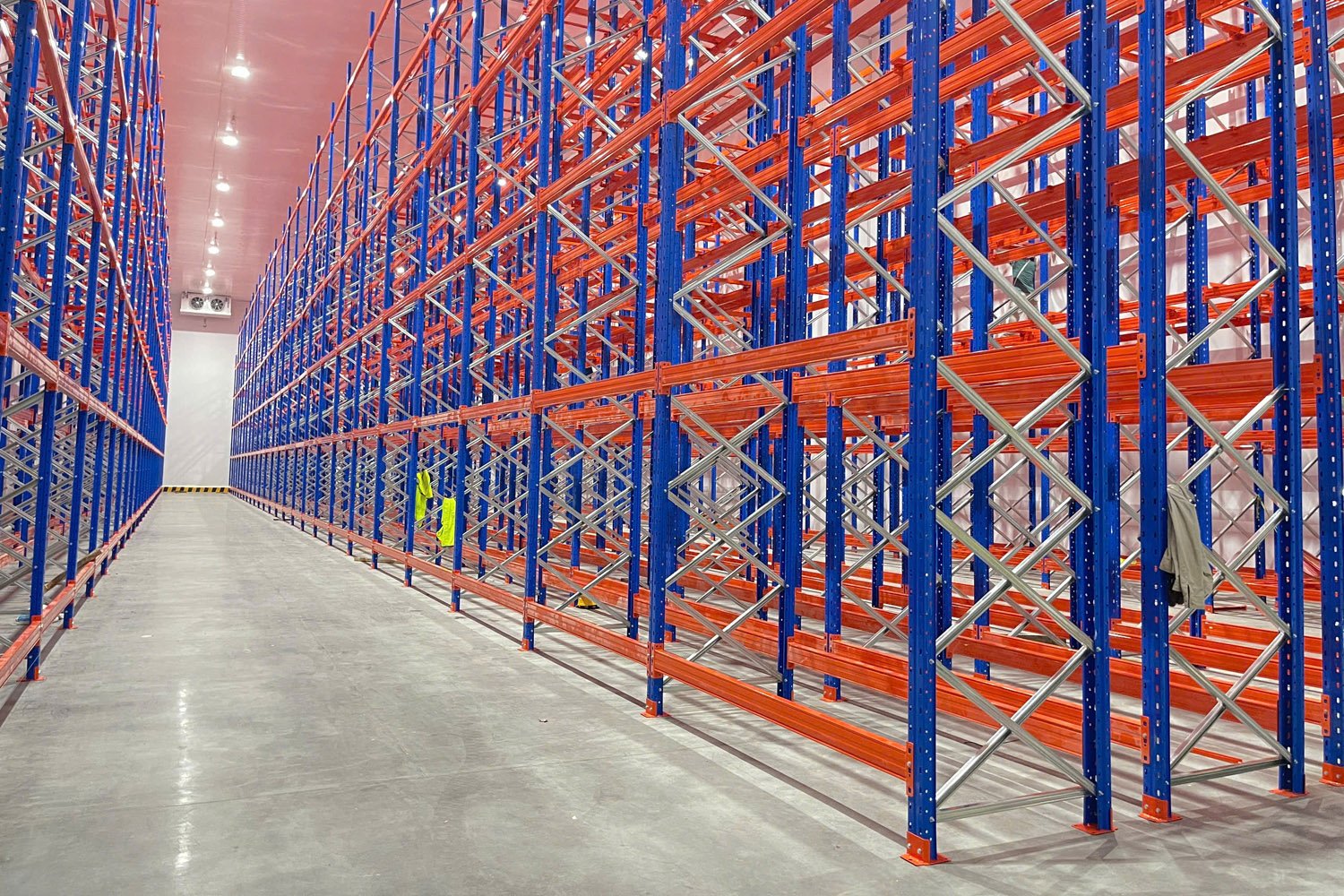
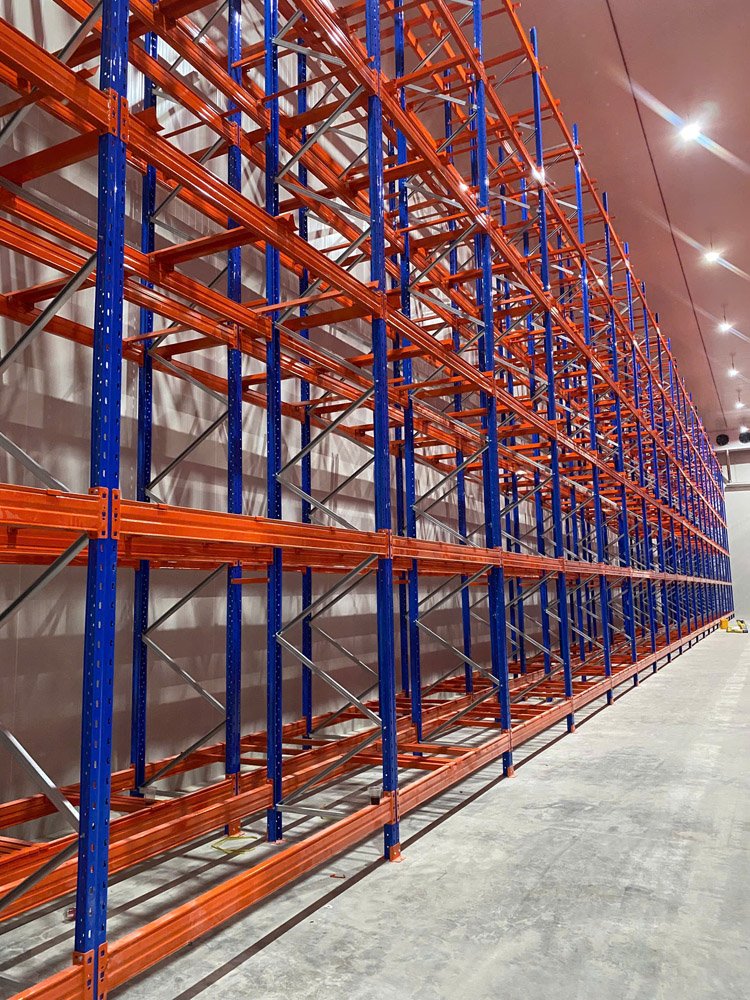
The frame is the primary structural component of the pallet flow racking system and provides the main load-bearing support. It is manufactured from galvanized steel, offering high durability, corrosion resistance, and consistent performance in warehouse environments.
Each frame consists of two uprights, connected by diagonal and horizontal bracing to form a rigid structure. Baseplates are installed at the foot of each upright to evenly distribute loads to the warehouse floor, together with floor anchoring elements that ensure stability and safe operation.
Beam
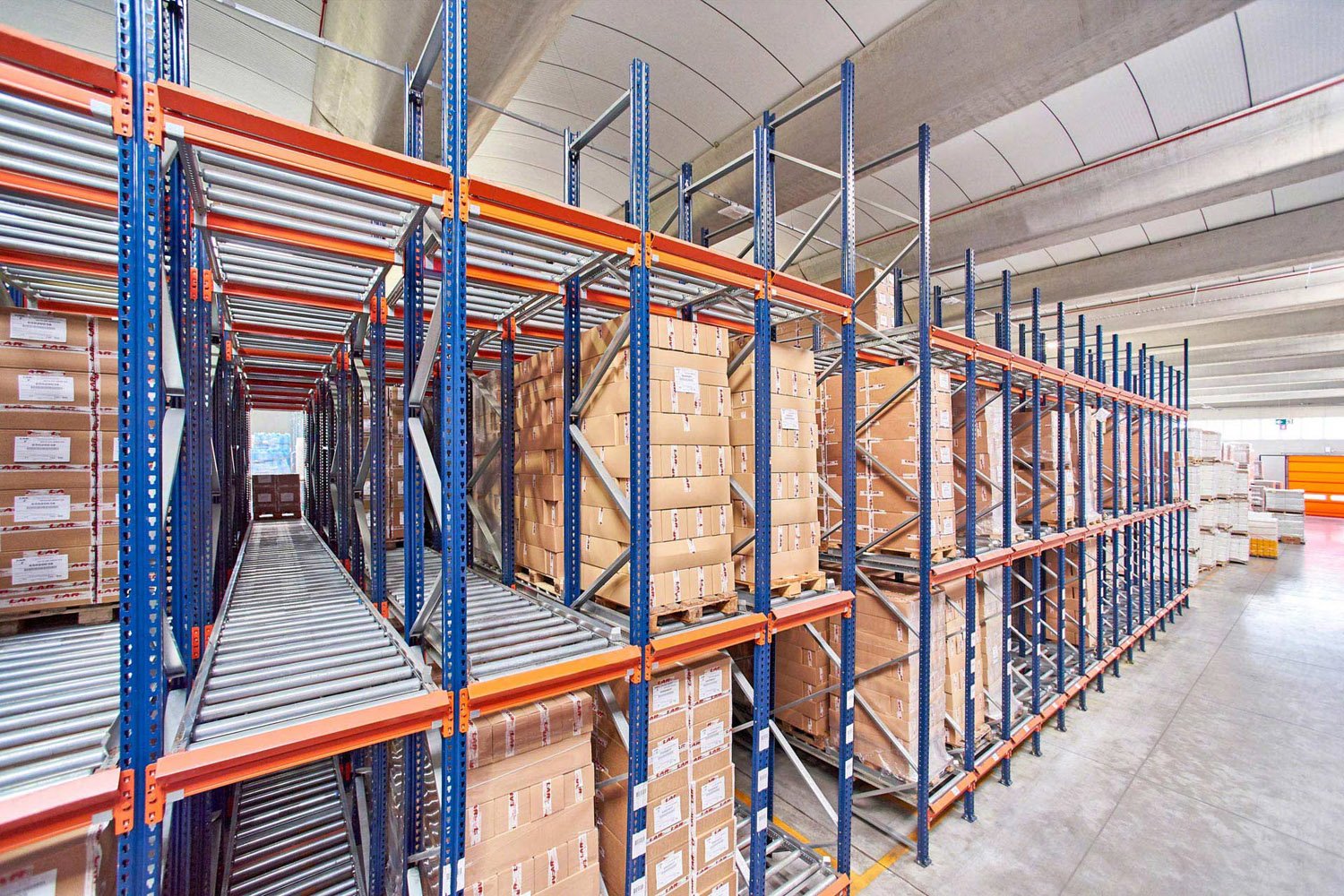
Beams are horizontal structural members that connect the frames and contribute to the overall load-bearing capacity of the system. In pallet flow racking, beams do not support pallets directly, instead, they support and secure the roller beds, where pallets move by gravity.
The beams are equipped with specialized connectors that fit precisely into the pre-punched holes of the uprights. This connection system enhances safety, load resistance, and structural integrity, even under continuous dynamic loads.
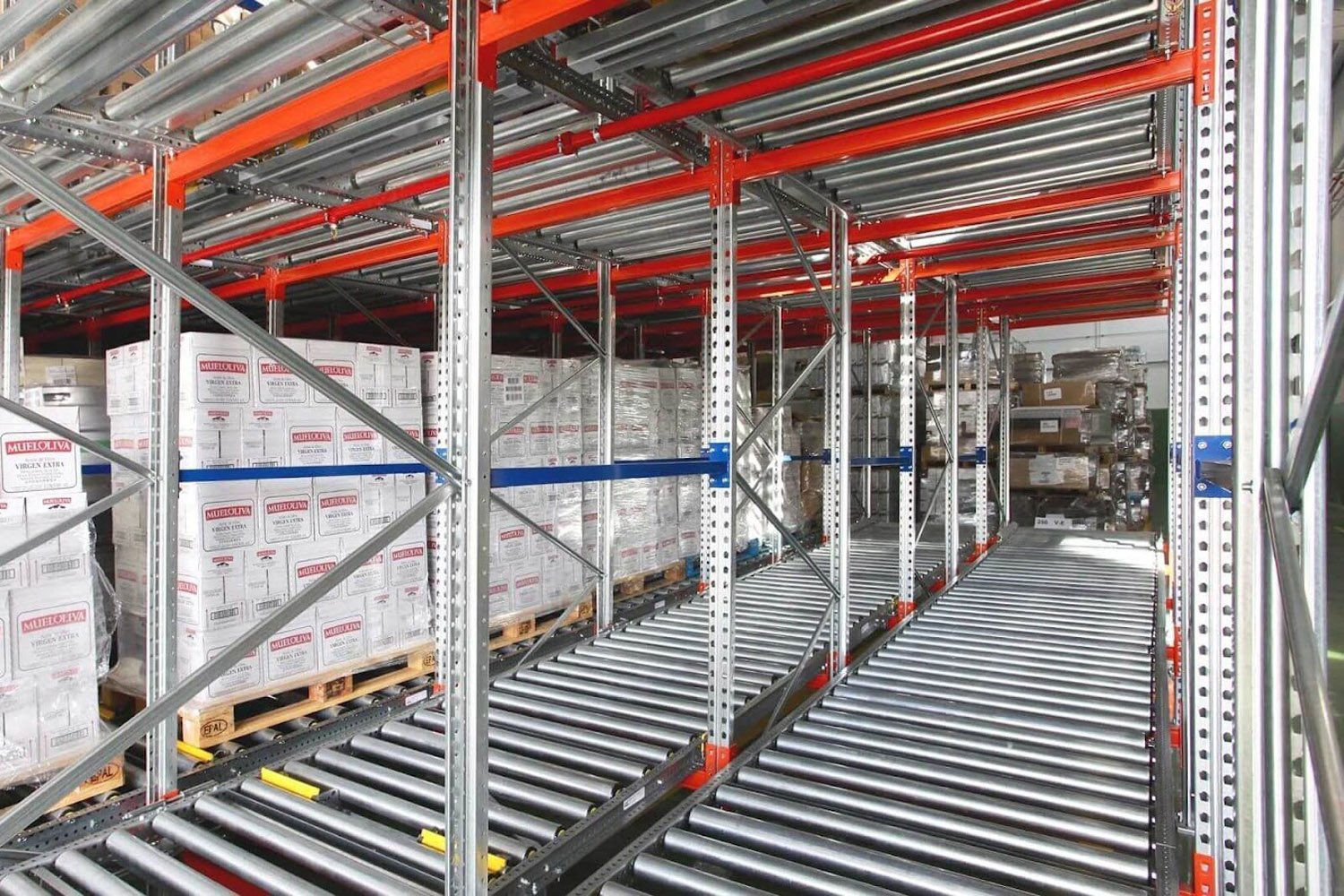
Protectors
Protectors are passive safety components installed in areas exposed to potential impact during warehouse operations. These include upright protectors and side protectors, designed to minimize damage to the pallet flow racking system caused by forklift collisions.
Profile
The profile is a structural component anchored directly to the beams at both ends of each rack level. It serves as the support base for the roller system, ensuring accurate height positioning, proper lane inclination, and precise alignment of the roller tracks that enable gravity flow.
Pallet guidance
Pallet guidance is installed at the front of the roller bed and assists operators when placing pallets into the system. These guides ensure pallets are correctly aligned from the start, preventing misalignment or incorrect lane entry.
Rollers
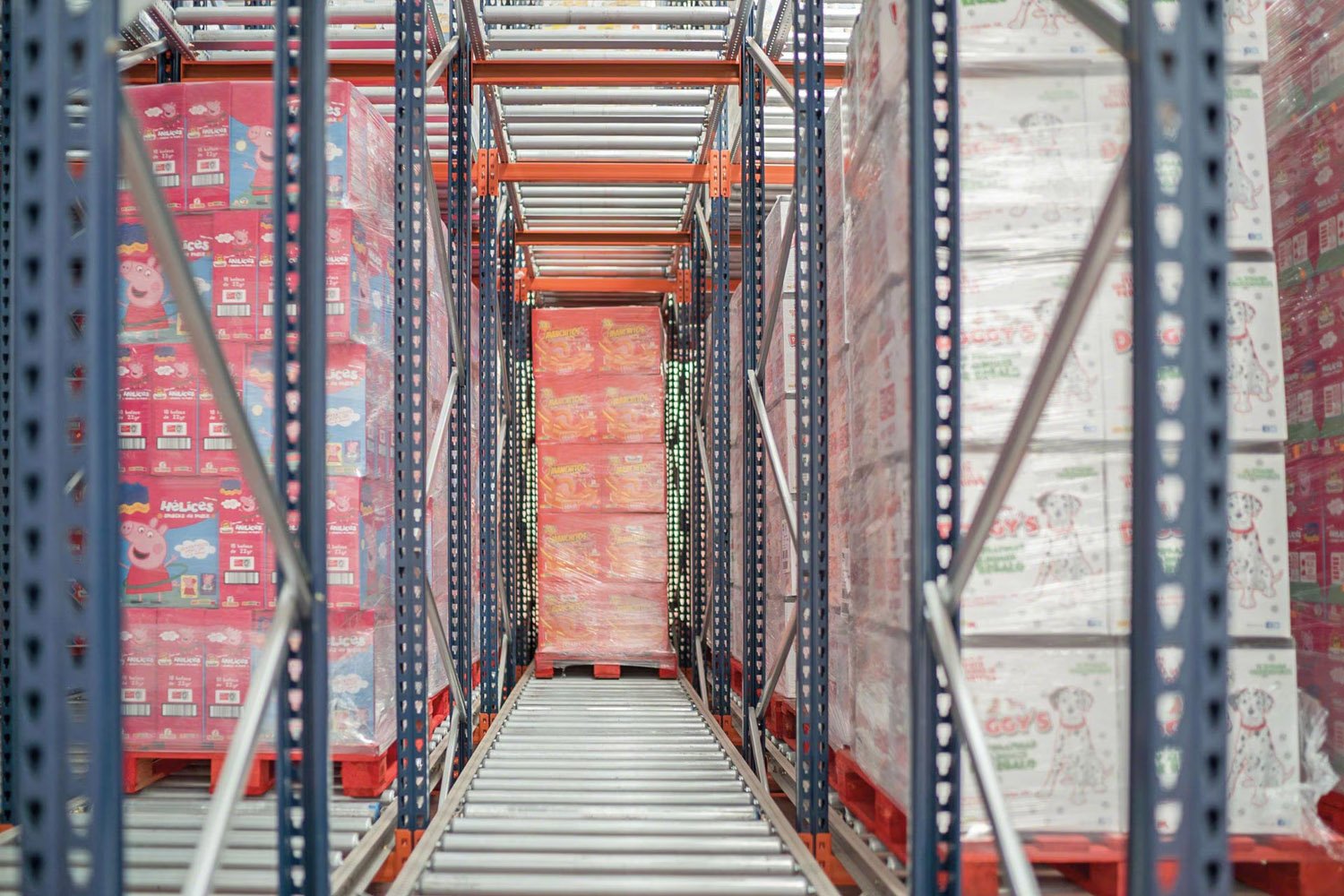
Rollers are the core component of a FIFO pallet flow racking system. Manufactured from high-quality steel, they are designed to withstand heavy loads and perform reliably under continuous operation.
By combining gravity with a precisely calculated lane slope, the rollers allow pallets to move smoothly from the infeed side to the outfeed side without the need for any powered or mechanical assistance.
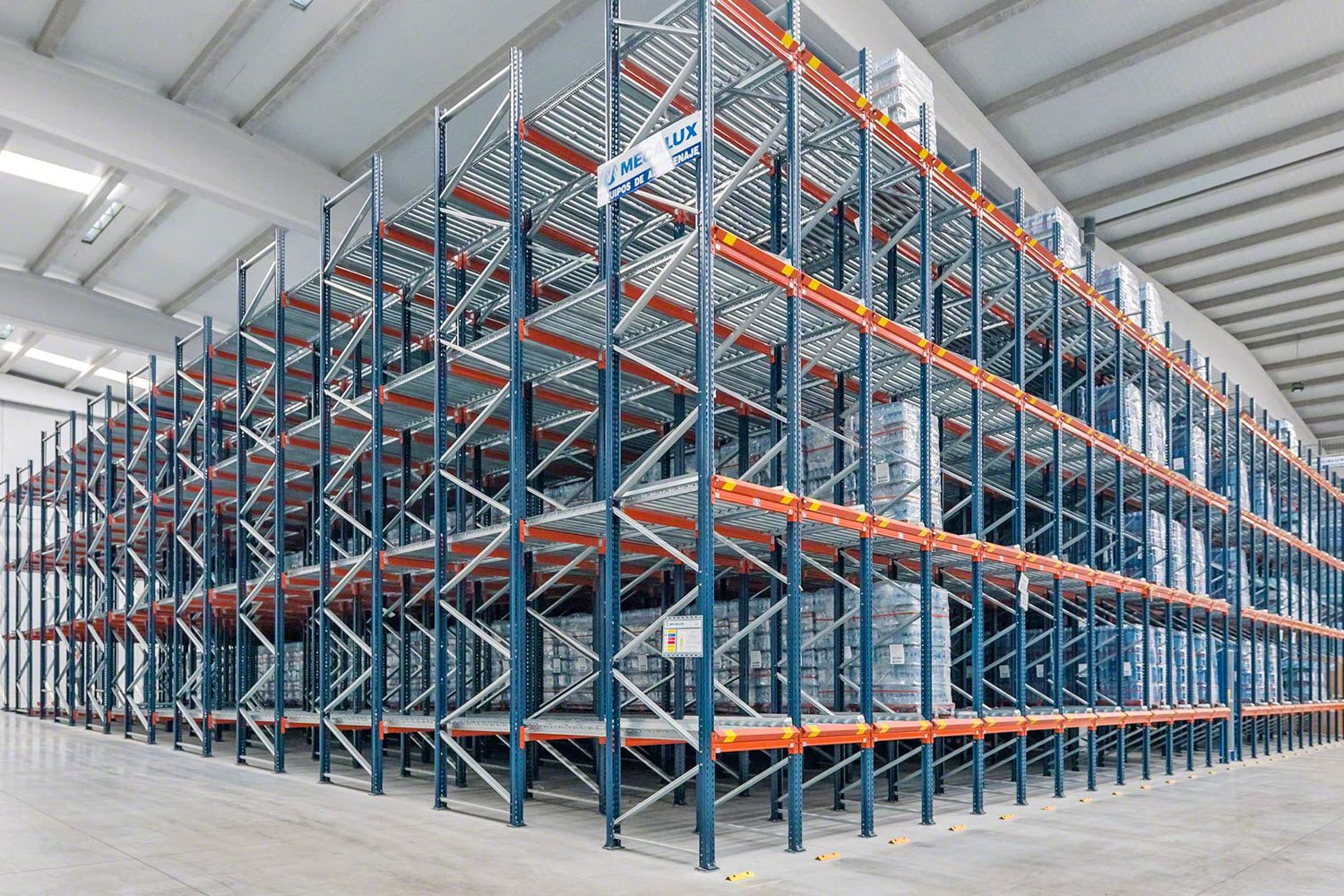
Brake rollers
Brake rollers are essential safety elements installed repeatedly along the roller bed. Their primary function is to control and regulate pallet speed as pallets travel from one end of the rack to the other.
Through automatic braking based on pallet weight and speed, brake rollers prevent excessive acceleration, reduce impact forces at the discharge end, and protect both the goods and the racking structure.
Pallet Backstops
Pallet backstops are installed at the end of each roller lane and are designed to stop the pallet once it reaches the discharge position. They ensure the pallet remains securely in place, ready for safe removal by a forklift or handling equipment, preventing pallets from rolling beyond the rack.
Pallet retainer
The pallet retainer is an optional component installed at the end of the roller lane where pallets accumulate before discharge. Its function is to separate compacted pallets and evenly distribute pressure across the entire pallet line, rather than concentrating force on the front pallet.
How does a pallet flow racking system work?
A pallet flow racking operates using gravity combined with mechanical control components to ensure continuous, safe pallet movement and accurate FIFO (First-In, First-Out) inventory rotation.
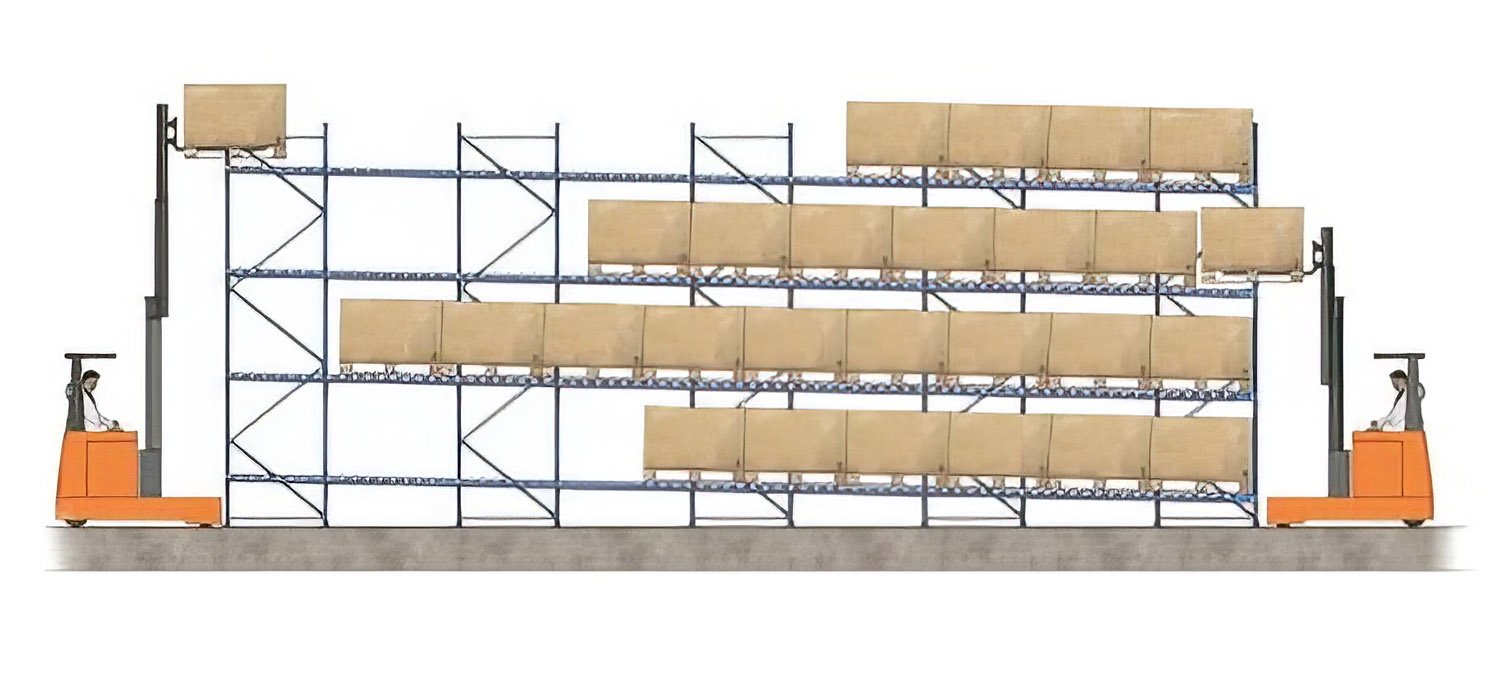
Gravity moves pallets smoothly from infeed to outfeed, ensuring continuous FIFO flow
Pallet Storage – Infeed
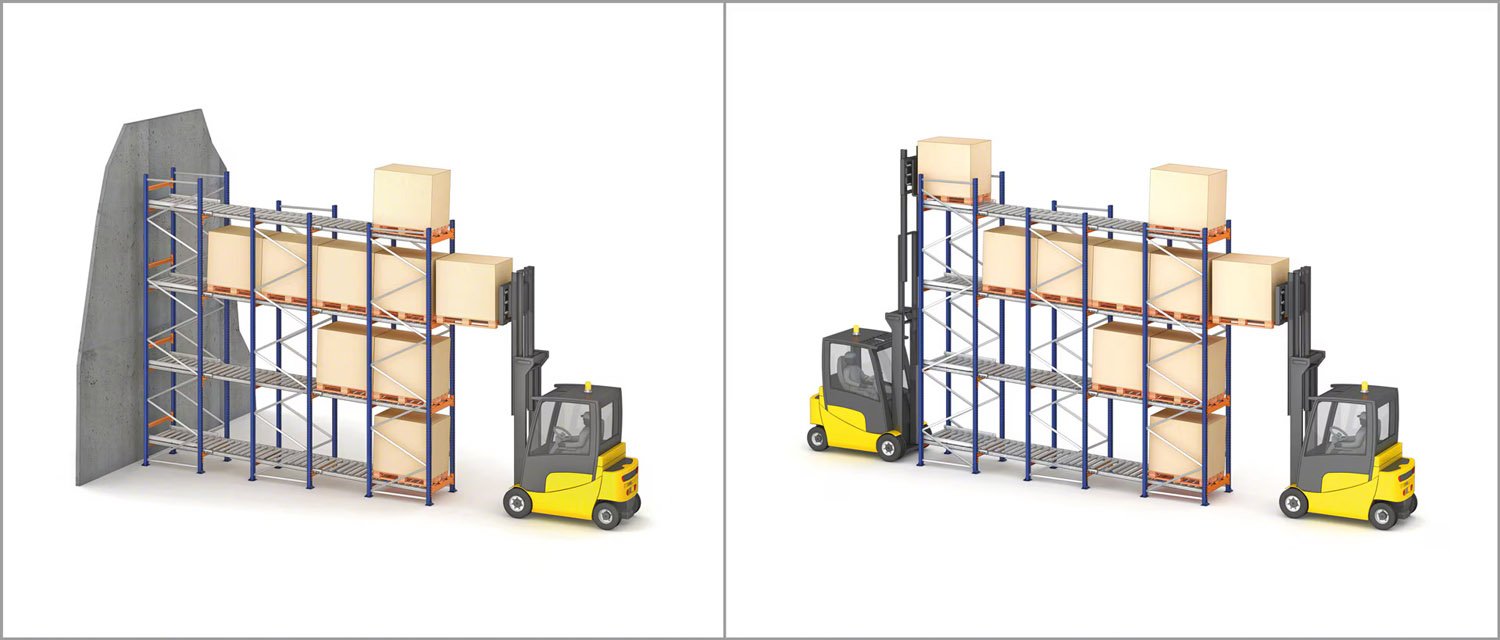
Pallets are loaded into the system from the infeed side using a forklift. Each pallet is placed onto a slightly inclined roller lane. Pallet guidance components assist operators in positioning the pallet correctly from the start, ensuring stable and accurate entry into the lane.
Pallet Movement – Gravity Flow
Once placed in the lane, pallets move forward automatically by gravity. The lane slope is precisely engineered to ensure smooth and controlled movement. Brake rollers, installed at intervals along the lane, regulate pallet speed based on load weight and momentum, preventing excessive acceleration.
When a pallet is removed from the outfeed side, the pallets behind it automatically advance forward. This creates a continuous flow and guarantees FIFO rotation without manual intervention.
Pallet Removal – Outfeed
At the outfeed side, pallets are held securely in the picking position by pallet backstops. The pallet is now correctly positioned and ready for safe removal by a forklift or other handling equipment.
As soon as the front pallet is removed, the next pallet automatically moves into position, maintaining a steady and uninterrupted picking rhythm.
Advantages of pallet flow racking
Pallet flow racking is a high-performance storage solution designed to maximize space utilization, improve inventory control, and enhance operational efficiency. The following four advantages represent the core value of the system in modern warehouses.
Maximum Space Utilization & Energy Efficiency
Pallet flow racking is a high-density storage system that reduces the number of aisles while significantly increasing pallet capacity per square foot. Deep storage lanes allow warehouses to make full use of available space without expanding the facility footprint.
In cold storage environments, higher storage density reduces the total refrigerated volume. This leads to lower energy consumption, reduced operating costs, and improved long-term warehouse efficiency.
Accurate FIFO Inventory Rotation
The pallet flow racking system is designed to operate strictly on the FIFO principle, ensuring products are always picked in the correct sequence. This improves inventory accuracy, minimizes long-term storage, and reduces the risk of product expiration.
This advantage is especially critical for industries such as food and beverage, pharmaceuticals, and regulated goods, where traceability and shelf-life management are essential.
Higher Throughput & Operational Efficiency
By concentrating pallet retrieval at a single working aisle, operators can quickly identify and access the required pallets. Forklifts do not need to travel deep into the rack, reducing handling time and accelerating order fulfillment.
In addition, the complete separation of loading and unloading aisles eliminates traffic conflicts. Forklifts can operate continuously without interruptions, significantly increasing overall warehouse productivity.
Safety, Flexibility & Reliability
Although each lane stores a single SKU, the system allows multiple SKUs to be stored across different lanes, offering flexibility while maintaining high storage density.
At the same time, pallet flow racking integrates safety components such as brake rollers, pallet guides, and structural protectors. These features ensure safe operation for personnel, protect goods, and maintain system reliability, even in high-throughput, heavy-duty warehouse environments.
Pallet flow racking system applications
Pallet flow racking systems are widely used in warehouses and distribution facilities thanks to their gravity-based design and high-density storage configuration. This solution is especially suitable for operations with high pallet throughput and stable product flows.
The most common applications include:
- Distribution centers and logistics warehouses: Pallet flow racking enables continuous product movement, reduces forklift travel distances, and maintains consistent outbound performance. It is ideal for retail distribution, fast-moving consumer goods (FMCG), and third-party logistics (3PL) operations.
- Food and cold storage facilities: The system supports strict FIFO requirements to manage expiration dates effectively, while high storage density reduces the total refrigerated volume required, leading to improved energy efficiency.
- Manufacturing warehouses: Pallet flow racking helps maintain continuous pallet flow between production and shipping areas, separates inbound and outbound operations, and reduces congestion, improving material handling efficiency and stabilizing production output.
Overall, pallet flow racking is best suited for warehouses with high pallet turnover, limited SKU variety per lane, and strict requirements for inventory accuracy and operational reliability.
Frequently asked questions about Pallet flow racking
While pallet flow racking offers significant advantages, achieving optimal performance requires a clear understanding of its technical and operational characteristics. The following frequently asked questions address the most common considerations when designing, investing in, and operating a pallet flow racking system.
Clear answers to common questions that support confident system design, selection, and operation
How deep can each storage channel be?
The depth of each storage channel (lane) in a pallet flow racking system can range from a few pallets to several dozen pallets, depending on pallet weight, pallet dimensions, lane slope, and operational requirements. In practice, most lanes are designed to store between 6 and 20 pallets deep, although greater depths are achievable with proper engineering.
Do pallet flow racking systems have motors?
No. Pallet flow racking systems operate entirely by gravity and do not use motors, electrical power, or active control systems. Pallet movement is achieved through the lane incline combined with rollers and brake rollers.
How wide should each channel be?
Each channel is designed to match the exact pallet dimensions, allowing for appropriate safety tolerances during forklift placement. Typically, the lane width is only slightly wider than the pallet to prevent jamming while ensuring stable guidance.
What are the differences between pallet flow racking and drive-in racks?
The primary difference lies in operating principles and inventory rotation. Pallet flow racking operates on FIFO, with pallets moving by gravity and forklifts remaining outside the lanes. In contrast, drive-in racking requires forklifts to enter the rack structure to place or retrieve pallets and typically operates on a LIFO basis.
What is the difference between pallet flow racking and push-back racking?
Both systems are high-density storage solutions; however, pallet flow racking operates on FIFO, while push-back racking operates on LIFO. In pallet flow racking, pallets are loaded from one side and retrieved from the opposite side, whereas push-back racking uses a single loading and unloading aisle.
Reviews
There are no reviews yet.