
What is a Push Back Racking?
Push back racking is a high-density pallet storage solution that allows 2 to 6 pallets to be stored deep per lane on each side of an aisle, significantly optimizing warehouse space compared to traditional racking systems. By reducing the number of aisles required, push back racking helps maximize pallet positions within the same footprint.
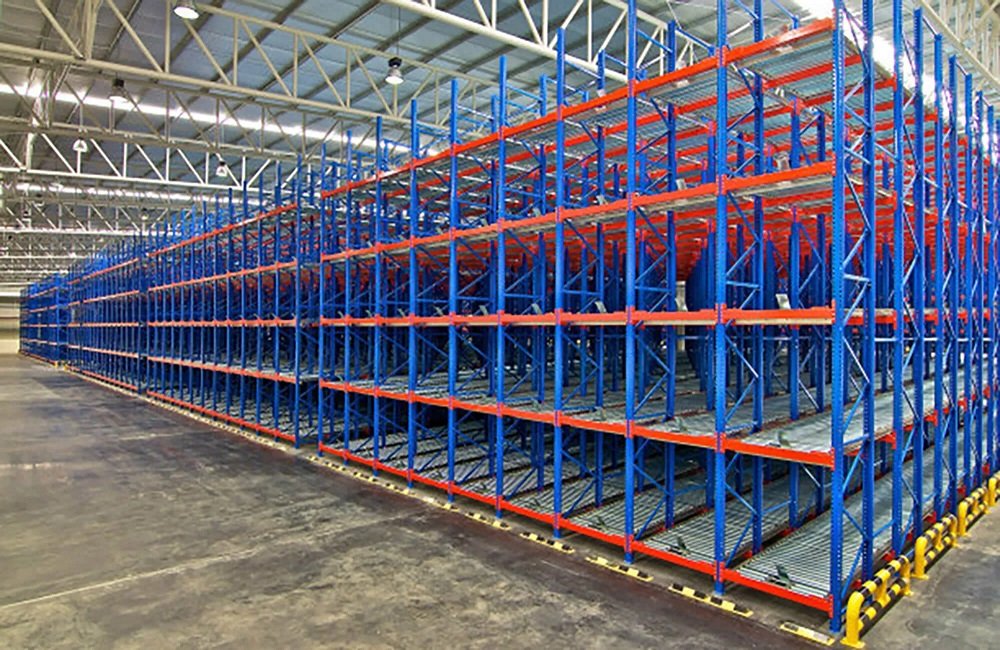
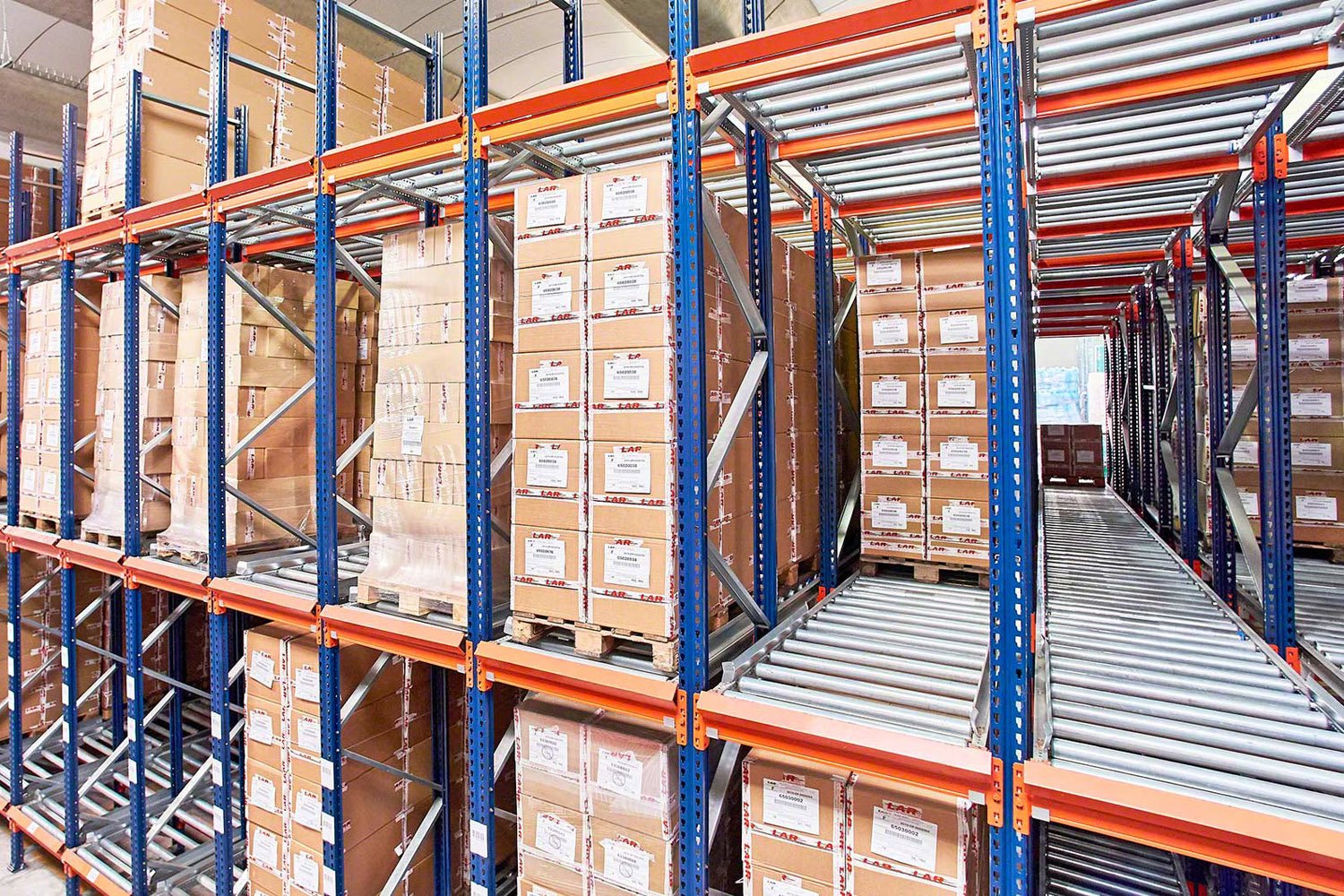
The system operates on a LIFO (Last-In, First-Out) principle and uses nested carts mounted on inclined rails. When a new pallet is loaded, it physically pushes the existing pallets backward into the lane. When the front pallet is removed, the remaining pallets automatically roll forward to the pick face using gravity, ensuring a smooth and consistent product flow.
From both an operational and financial perspective, push back pallet racking is a cost-effective, flexible, and long-term solution. It is particularly well suited for warehouses with high pallet volumes, medium SKU counts, and fast inventory turnover, where space utilization and throughput are critical.
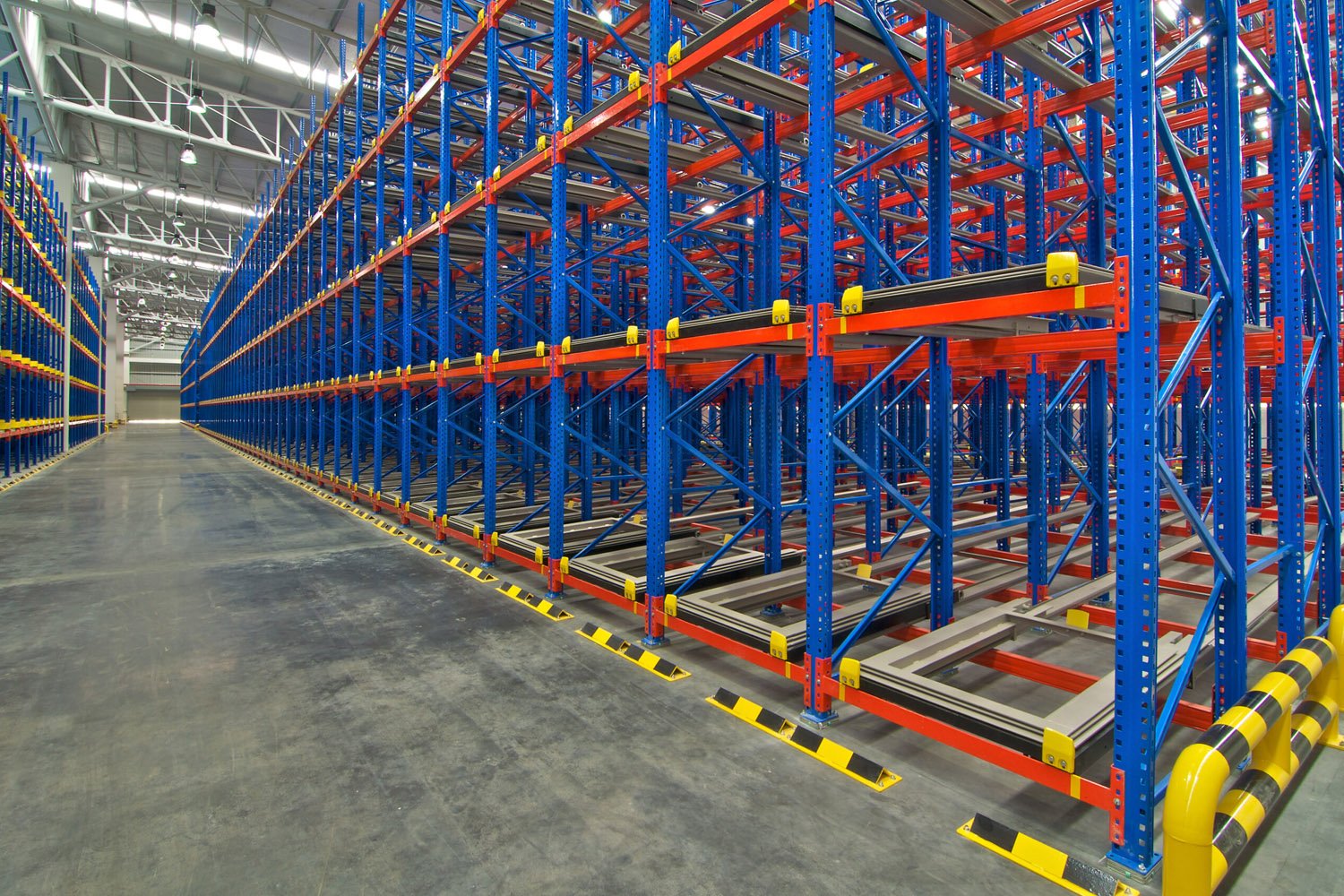
How Push Back Racking Works?
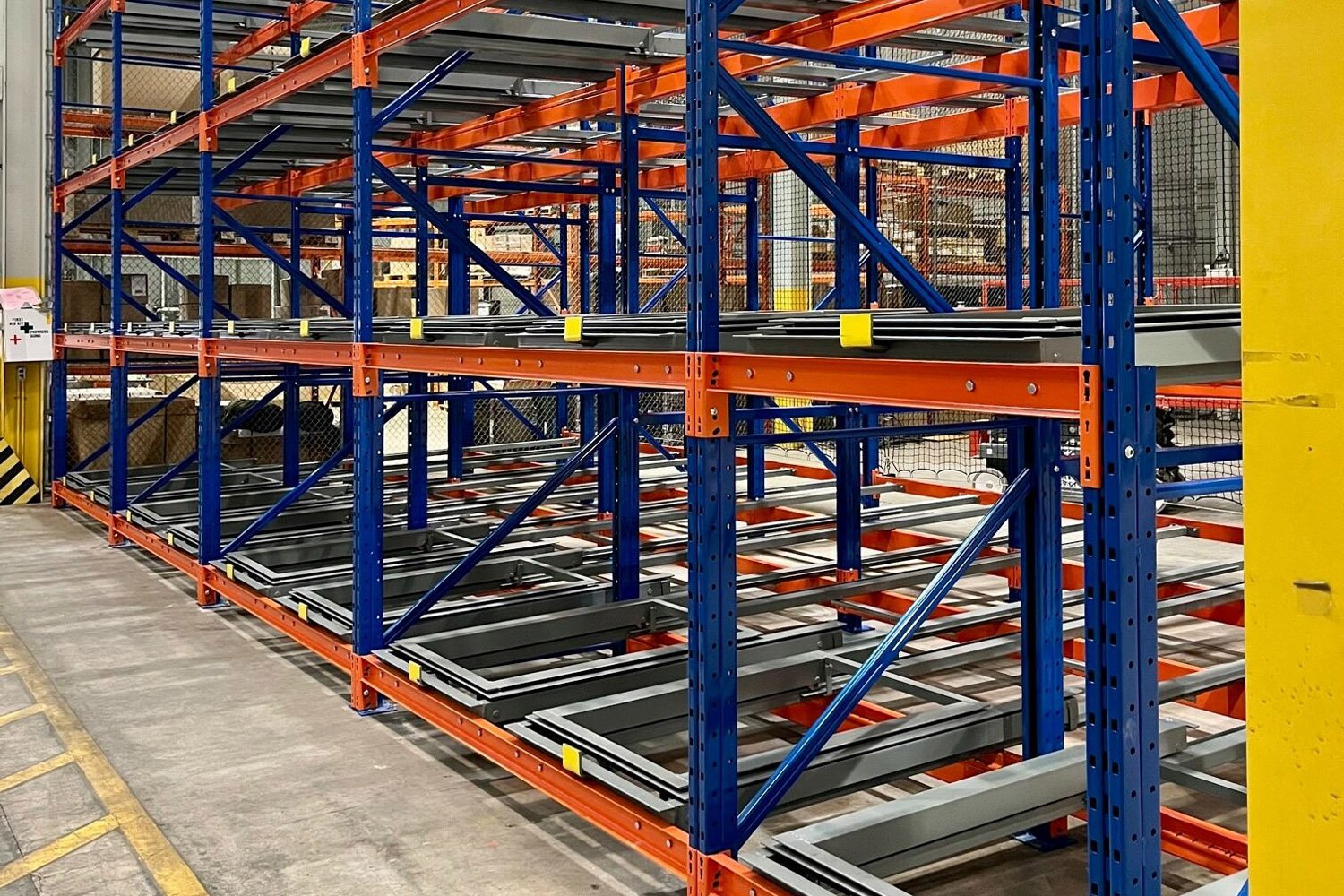
A push back racking system is constructed using a series of nested carts that travel on slightly inclined rails facing the aisle. This design leverages gravity to control pallet movement while keeping all loading and unloading activities at the front of the rack.
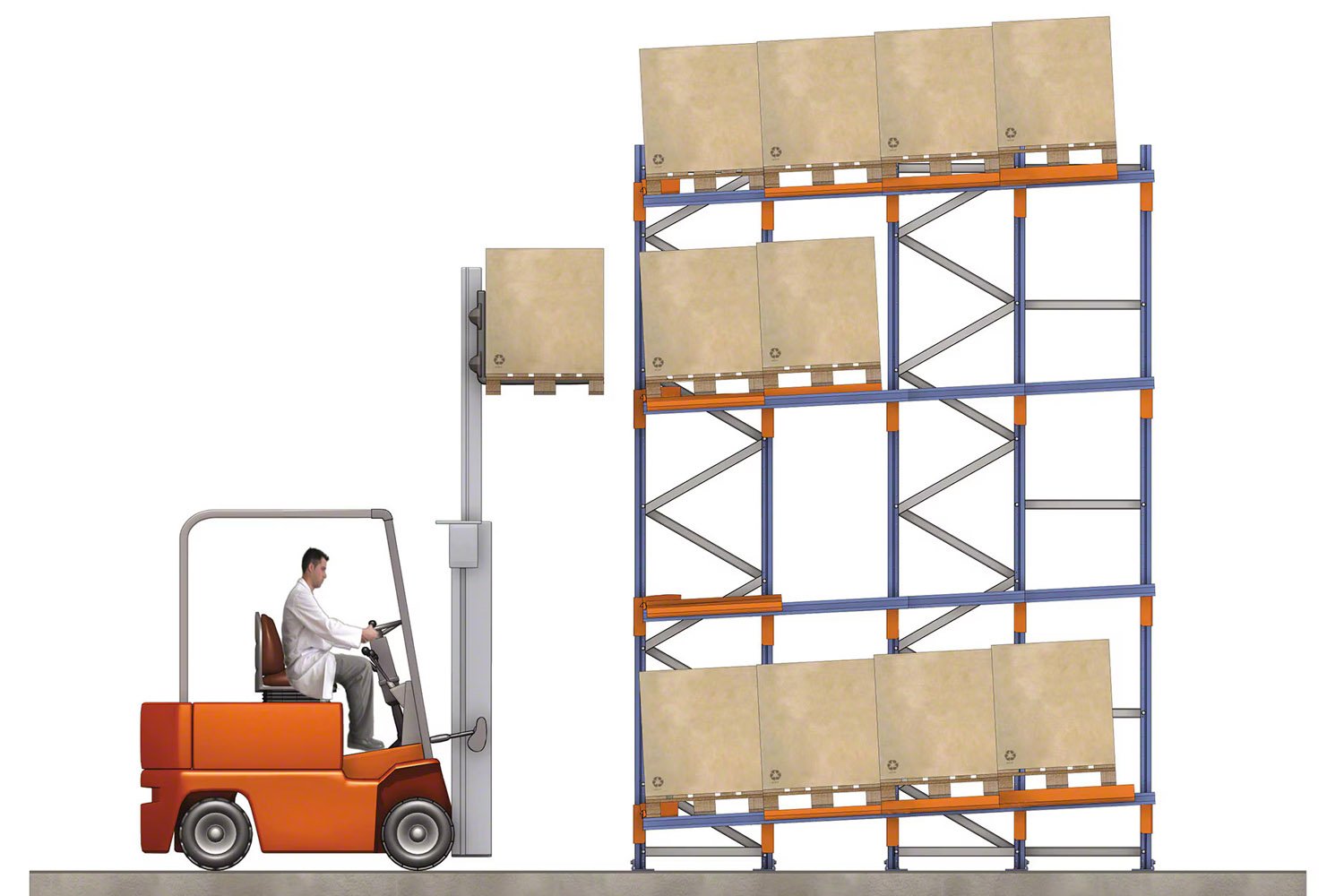
Each lane of push back pallet racking consists of multiple carts positioned on inclined rails:
- A forklift places the first pallet onto the front cart.
- Each subsequent pallet pushes the previous pallets deeper into the lane.
- During unloading, the front pallet is removed first.
- The remaining pallets automatically roll forward, positioning the next pallet at the pick face.
This operating mechanism creates a continuous, controlled, and efficient material flow, reducing forklift travel time, minimizing the risk of internal rack impacts, and improving overall warehouse productivity.
For operations that require high storage density without sacrificing stability, safety, or ease of operation, push back racking provides a clear, reliable, and easy-to-manage solution aligned with modern warehouse performance requirements.
Push Back Racking System Dimensions
The dimensions of a push back racking system are highly flexible and fully customizable to suit the specific requirements of each warehouse. System design is based on key factors such as pallet size, load weight, number of pallets per lane, and available clear height, all of which play a critical role in long-term operational efficiency and return on investment.
In terms of storage depth, the total lane depth is calculated using pallet dimensions, cart or shuttle travel distance, and required safety clearances to ensure smooth and secure pallet movement.
- Common depth configuration: 2-6 pallets per lane
- Ideal for warehouses seeking higher storage density while maintaining aisle-based operation
- Depth can be adjusted based on inventory turnover rates and SKU characteristics
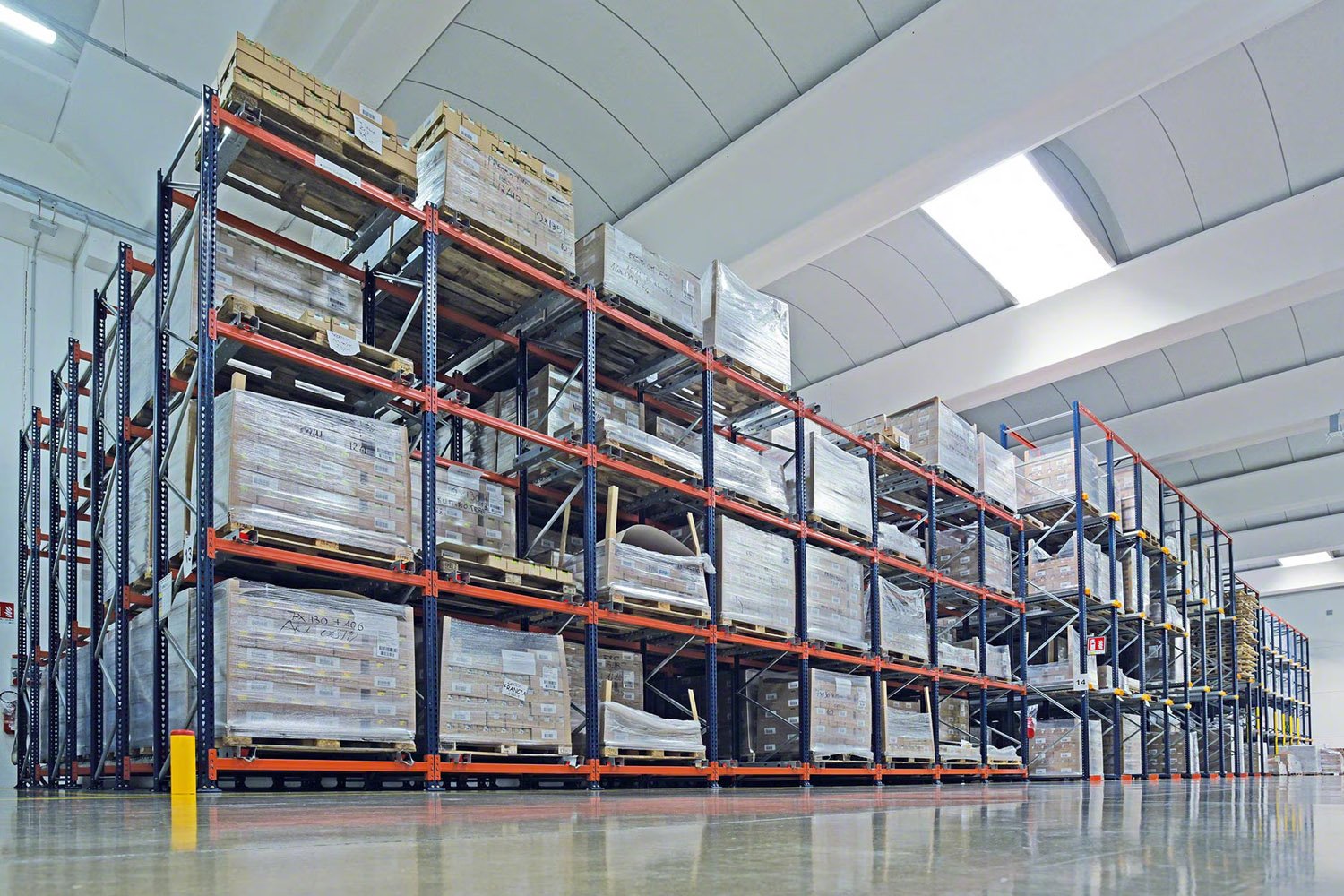
About system height, push back racking can be designed with 2 to 5 levels or more, depending on warehouse clear height, pallet load capacity, and forklift reach capabilities.
- Rack height is determined by the warehouse clear height
- Number of levels is optimized to balance storage capacity and operational speed
- Rails and carts/shuttles are engineered to distribute loads evenly across the structure
In terms of lane width, push back pallet racking are fully compatible with standard U.S. pallet sizes, most commonly 40” × 48”, while also allowing customization for non-standard or industry-specific pallets.
- Suitable for U.S. and international pallet standards
- Side clearances are engineered to reduce friction and prevent pallet misalignment
- Compatible with a wide range of forklift types
Regarding forklift aisles, push back racking allows for narrower aisle widths compared to selective racking, as all loading and unloading operations are performed at the front face of the rack.
By standardizing and optimizing push back racking dimensions, businesses can reduce CAPEX, lower long-term OPEX, and preserve flexibility for future expansion. Proper dimensional planning is the foundation of a safe, efficient, and scalable push back pallet racking solution aligned with long-term warehouse growth strategies.
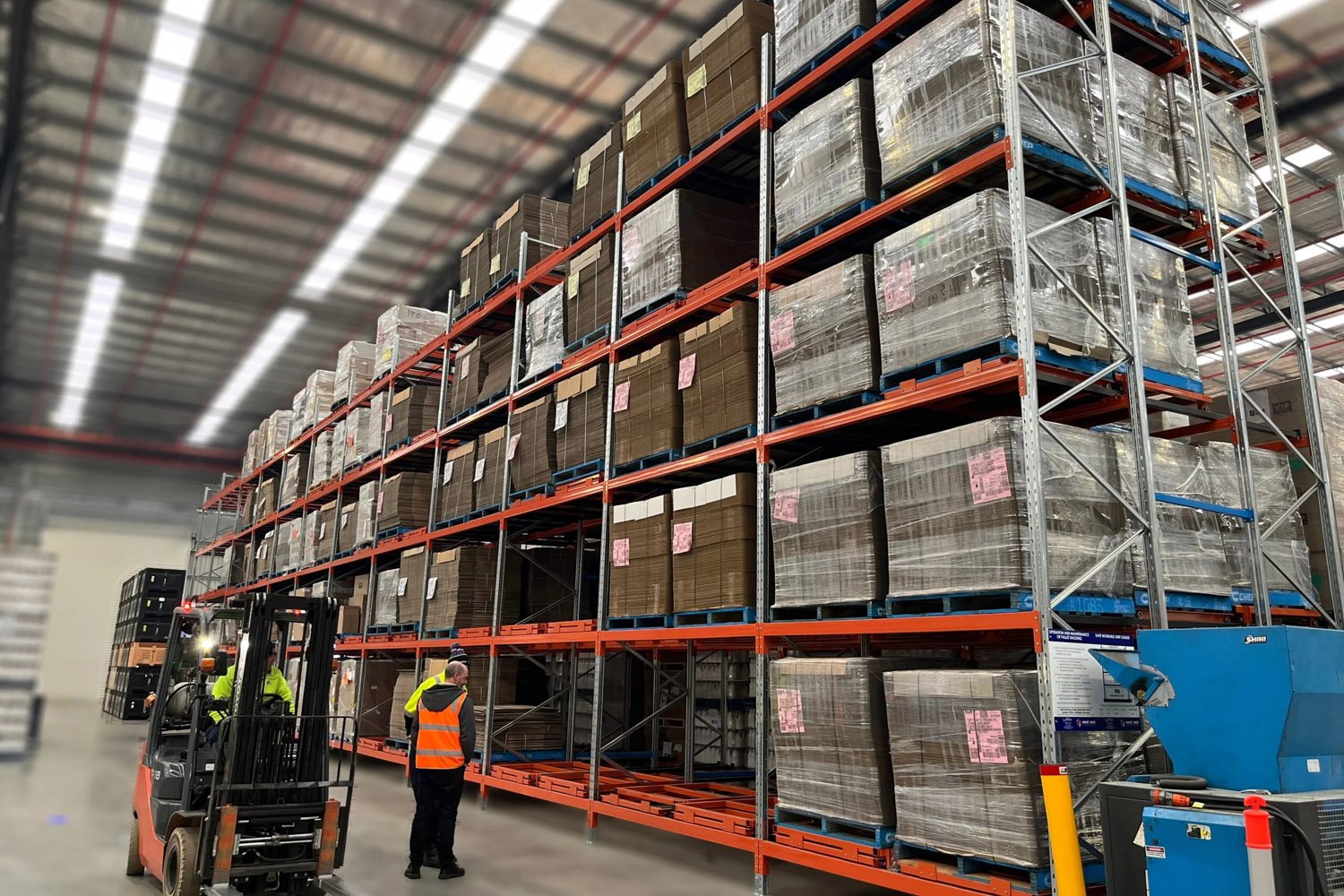
Push Back Racking structure
The push back racking structure is engineered as an integrated system in which each component performs a specific structural and operational function. Together, these elements ensure high load capacity, structural stability, operational safety, and long-term storage efficiency.
Frame
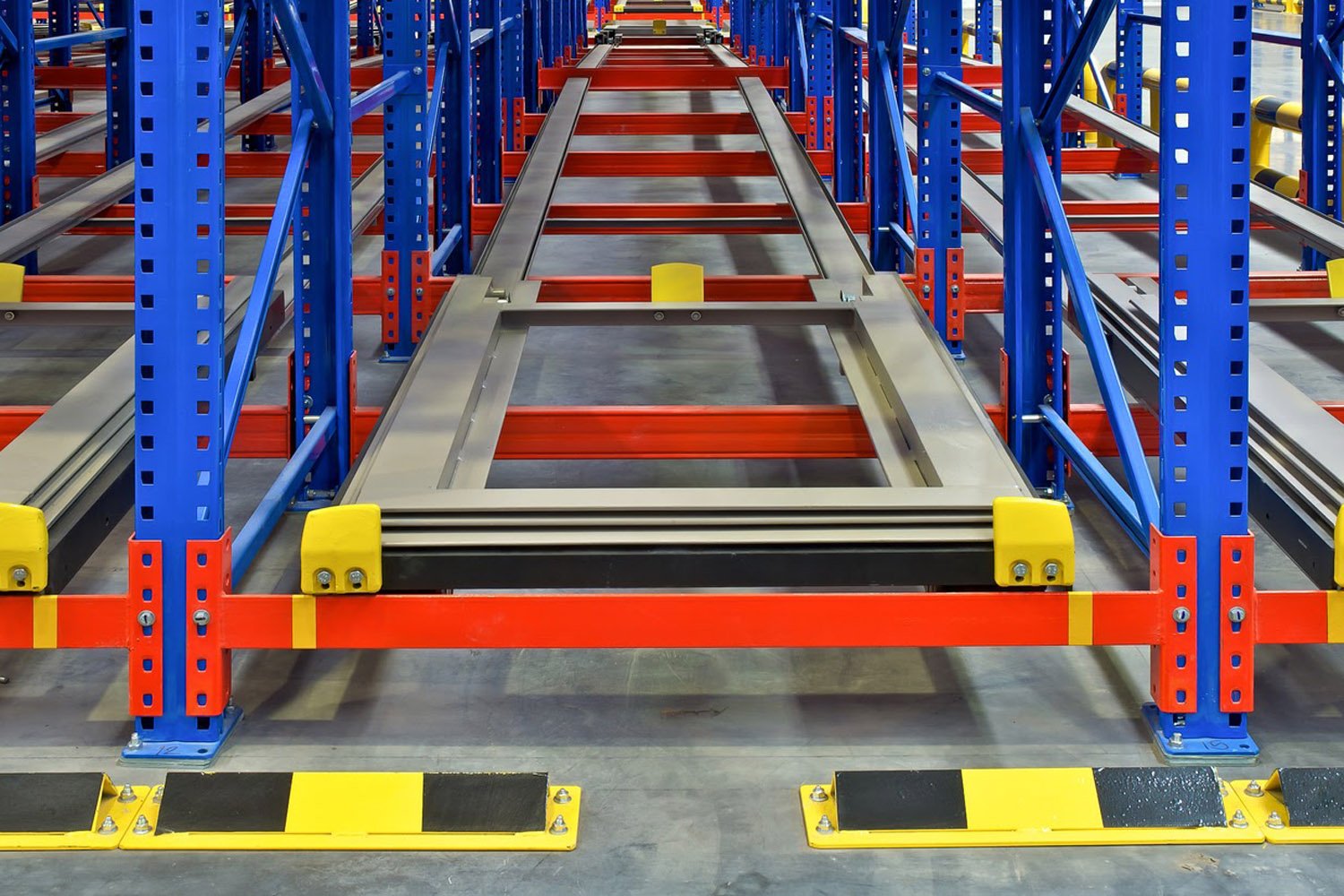
The frame is the primary load-bearing structure of a push back racking system, responsible for receiving and transferring the full load from pallets, rails, and moving components down to the warehouse floor.
A standard frame consists of:
- Upright posts
- Diagonals
- Baseplates
- Floor anchoring and fixing elements
Frames are manufactured from high-strength structural steel and are typically powder-coated for surface protection. In specialized environments such as cold storage or freezer warehouses, frames can be hot-dip galvanized to enhance corrosion resistance and extend system lifespan.
Beams
Beams are horizontal members that connect the racking structure laterally and directly support pallet loads and push-back mechanisms such as shuttles or roller carts.
Beams are installed into pre-punched holes in the uprights, allowing flexible vertical adjustment based on pallet height and operational requirements. Specialized connectors secure the beams in place, ensuring safe load transfer even under high-throughput conditions.
Post Protectors
Post protectors are optional safety devices installed at the base of upright posts to protect the racking system from forklift impacts during daily operations.
Post protectors are particularly beneficial in warehouses with high forklift traffic, narrow aisles, or fast-paced operations. Installing these protective components helps to:
- Reducing deformation or damage to uprights
- Minimizing the risk of structural instability
- Extending system lifespan while lowering repair and downtime costs
Profile
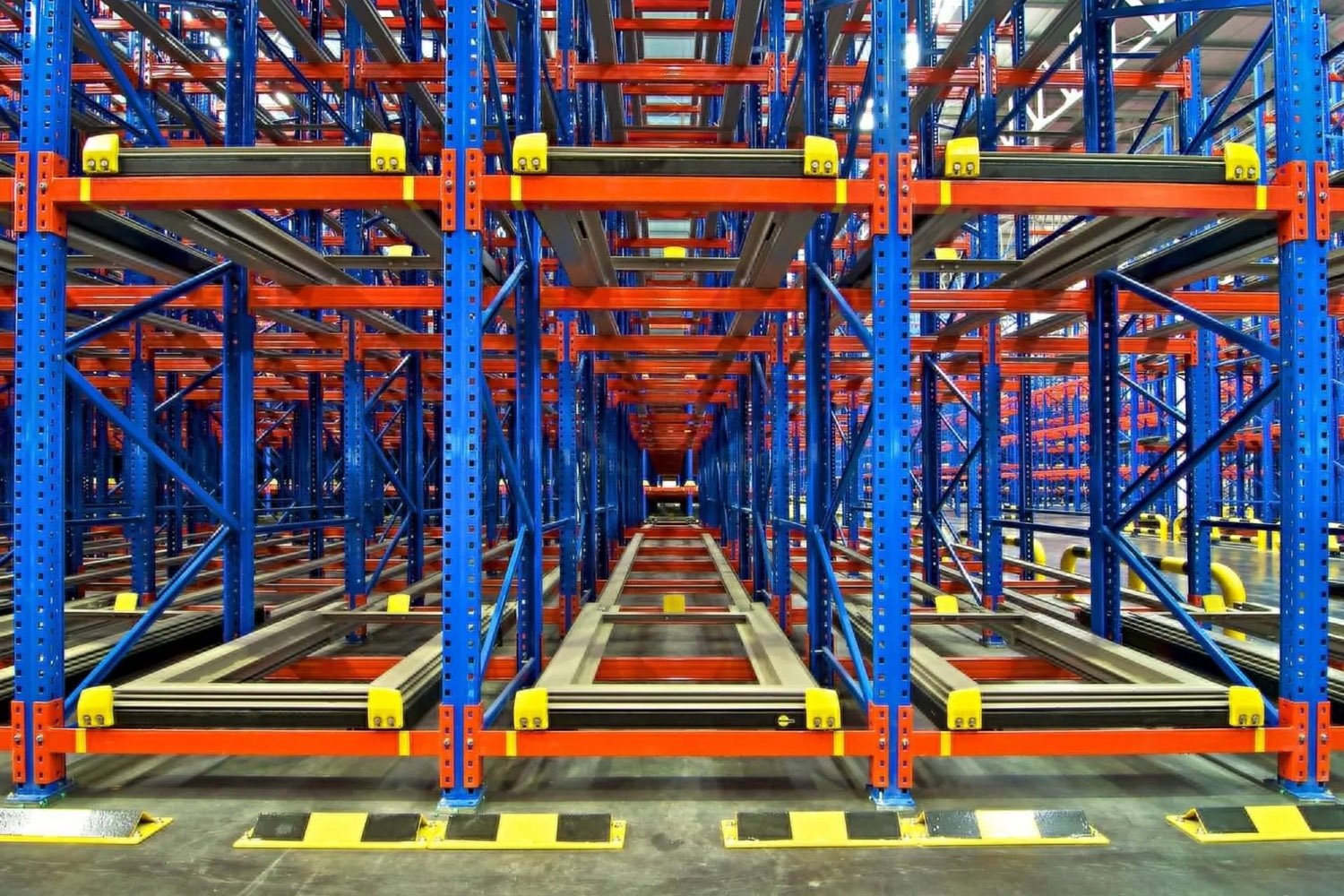
The profile is a metal component that is directly anchored to the beams at each end of a rack level, serving as an intermediate support structure for the shuttles or rollers in a push back racking system.
It plays a critical role in defining and securing the pallet movement mechanism along the depth of the lane, ensuring consistent alignment and controlled pallet travel.
Pallet Guidance
Pallet guidance is a guiding system installed at the front of each rack level, positioned on both sides of the push back lane, with the primary purpose of assisting operators during pallet placement and ensuring pallets remain aligned with the designed travel path.
During loading operations, pallet guidance helps accurately position pallets, reducing the risk of misalignment or off-center placement, an especially important function in deep-lane push back pallet racking and high-speed warehouse environments.
Pallet Backstops
Pallet backstops are installed at the rear of each push back lane to control pallet travel limits and prevent pallets or loads from being pushed out of the back of the system.
They provide essential protection by:
- Preventing pallets and loads from falling behind the rack
- Protecting the racking structure and rear warehouse areas
- Keeping pallets within the safe operating zone of rollers or shuttles
Push-Back Roller System
The push-back roller system is a configuration of push back racking that uses rollers instead of carts to support pallet movement along the lane depth.
Compared to cart-based systems, roller systems feature a simpler mechanical design with fewer moving parts, offering:
- Lower mechanical maintenance requirements
- Best performance with uniform pallet sizes and solid pallet bottoms
- Stable and predictable pallet flow for suitable load conditions
Push Back Shuttle System
The push back shuttle system is a more advanced push back pallet racking configuration that uses rails combined with dedicated shuttles to transport pallets along the depth of the lane.
Compared to roller systems, push-back shuttle systems provide:
- Higher load capacity with even weight distribution
- More precise pallet movement control
- Superior stability and durability in high-intensity operations
Advantages of Push-Back Racking
Push back racking delivers a clear set of advantages in terms of space efficiency, operational speed, and safety, making it a strategic choice for businesses that need to balance high storage density with flexible warehouse operations.
Superior Space Optimization
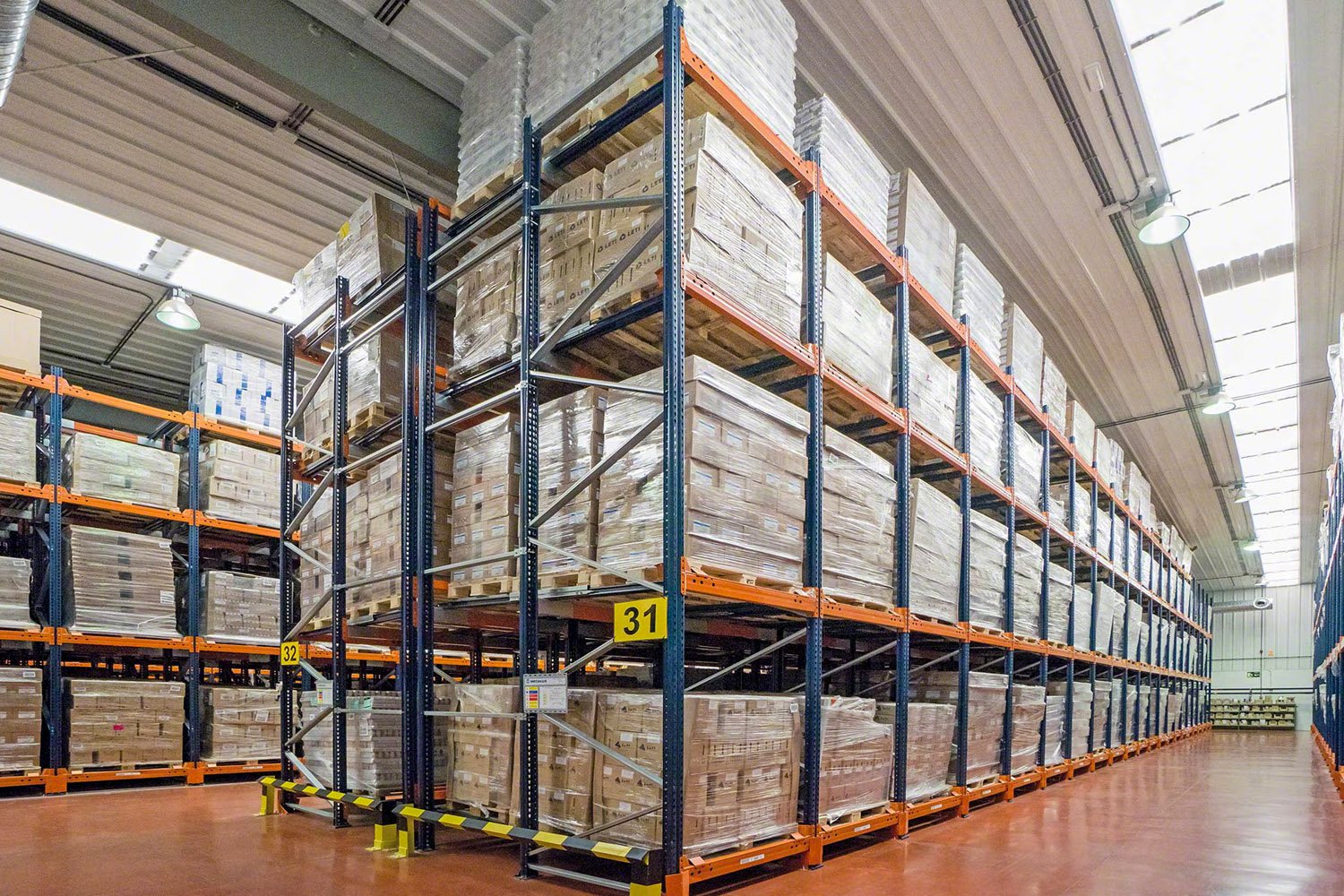
- Allows 3-6 pallets to be stored deep per lane, significantly increasing the number of pallet positions within the same floor area.
- Can deliver 2-3 times the storage capacity of standard selective racking.
- Reduces the need for warehouse expansion, helping lower facility, construction, and real estate investment costs.
High Density with Lane-Level Selectivity
- Provides storage density comparable to drive-in racking, while still maintaining selectivity at the lane level.
- Each lane can store a dedicated SKU, offering far greater flexibility than drive-in systems, which typically require one SKU per lane.
Fast Throughput and High Productivity
- All pallet loading and unloading operations are performed from the aisle, eliminating the need for forklifts to enter the racking structure.
- Improves forklift productivity, reduces pallet handling time, and enhances overall material flow within the warehouse.
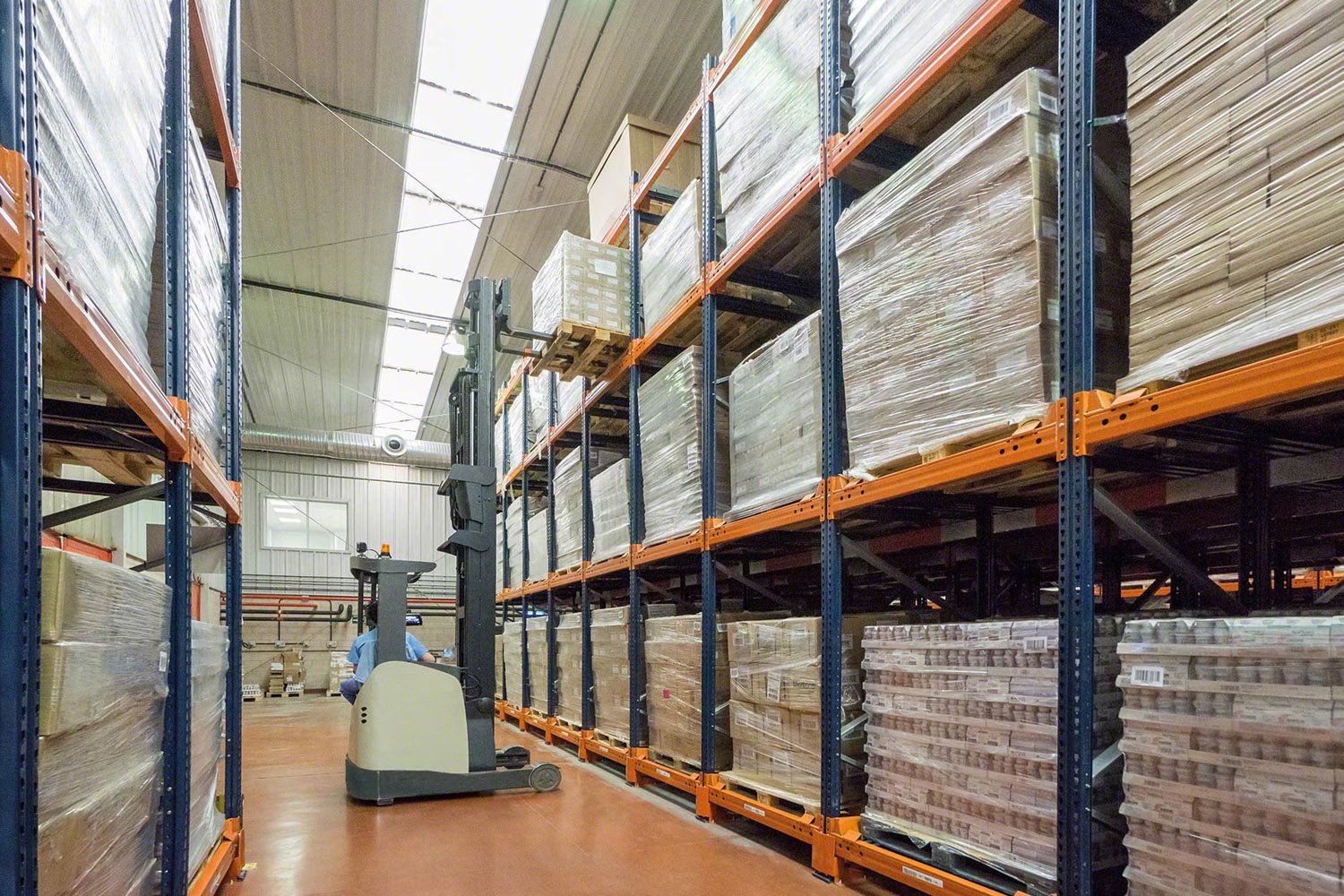
Together, these advantages position push back pallet racking as a highly efficient, cost-effective solution for warehouses seeking to maximize capacity, improve throughput, and maintain safe, streamlined operations.

Reviews
There are no reviews yet.