What is a Drive-in Racking?
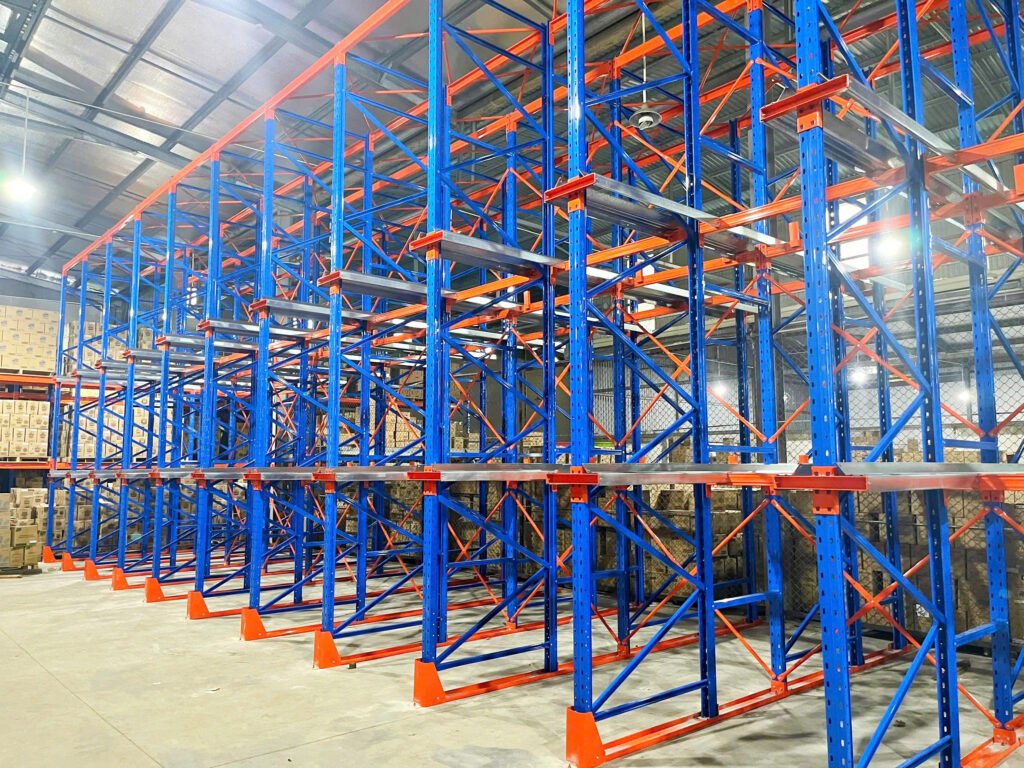
Drive-in racking is a high-density storage system that allows forklifts to drive directly into the racking structure to place and retrieve pallets. Unlike selective pallet racking, this system eliminates aisles between racks, significantly increasing storage capacity.
Drive-in Racking Specification
- Load capacity: ≥ 1,000 kg per pallet
- Handling equipment: All types of forklifts
- Storage depth: Up to 10-12 pallets deep and 6-7 pallets high
- Space utilization: Optimizes up to 80% of total warehouse pallet capacity
- Inventory flow: LIFO/FIFO
By eliminating the need for an access aisle between every row, this system makes exceptional use of both floor space and vertical height. It is the ideal solution for businesses looking to achieve the highest possible storage density for bulk goods.
Drive-in Racking vs Drive Through Racking
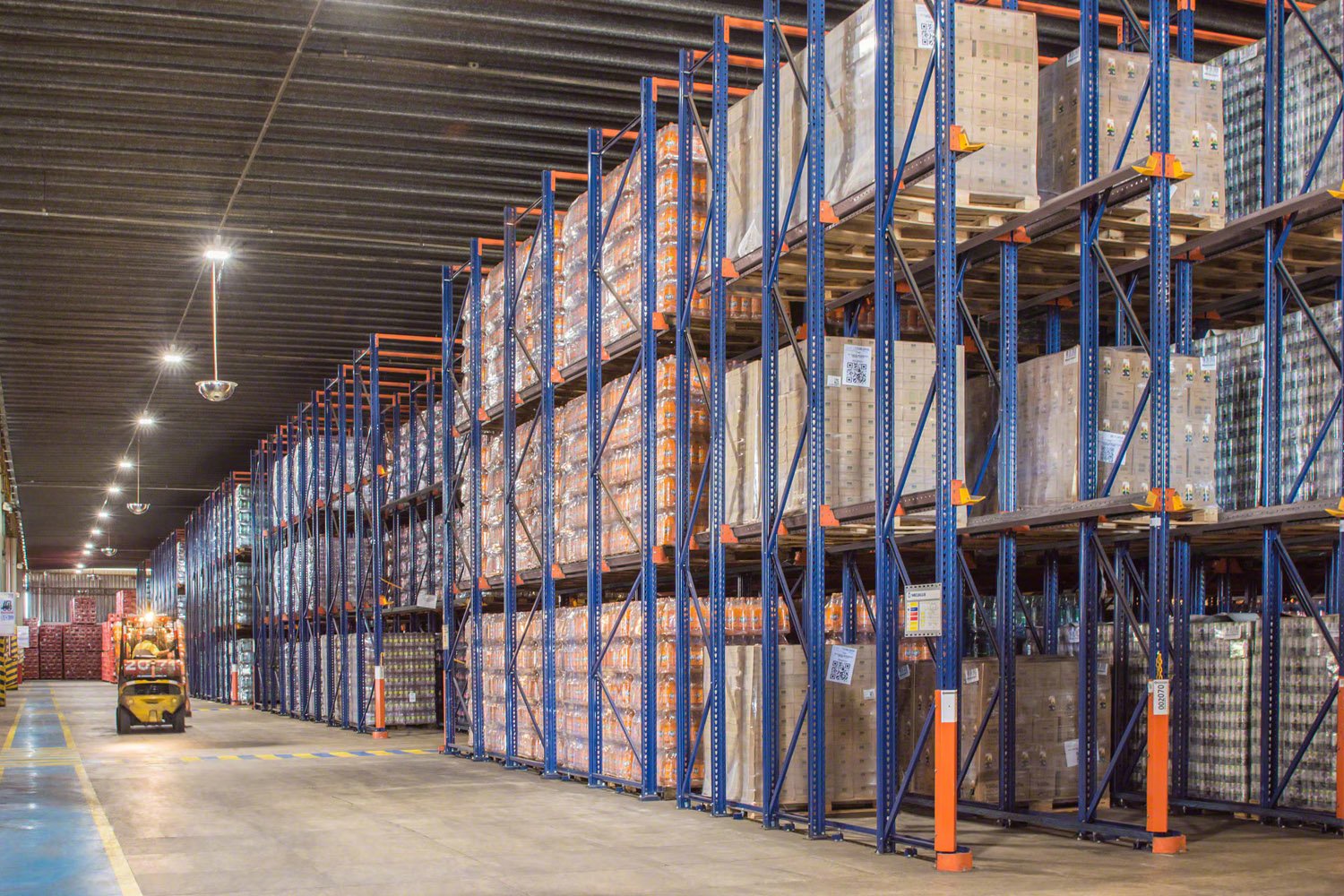
Although drive-in racking and drive through racking share the same high-density structural design, they serve different inventory strategies and operational priorities. Understanding the distinction between these two systems is critical when selecting the right racking solution for your warehouse.
Drive-in Racking
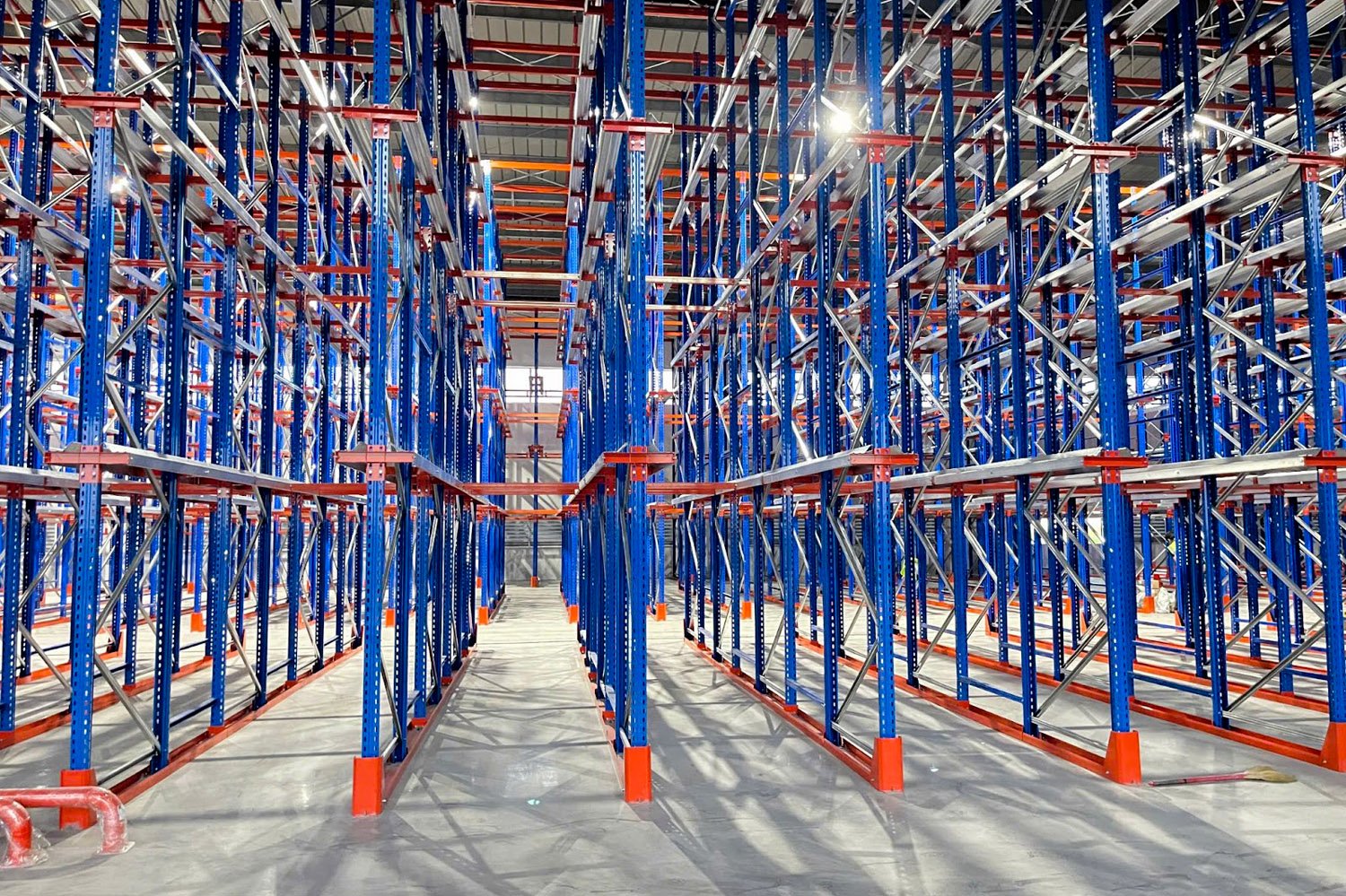
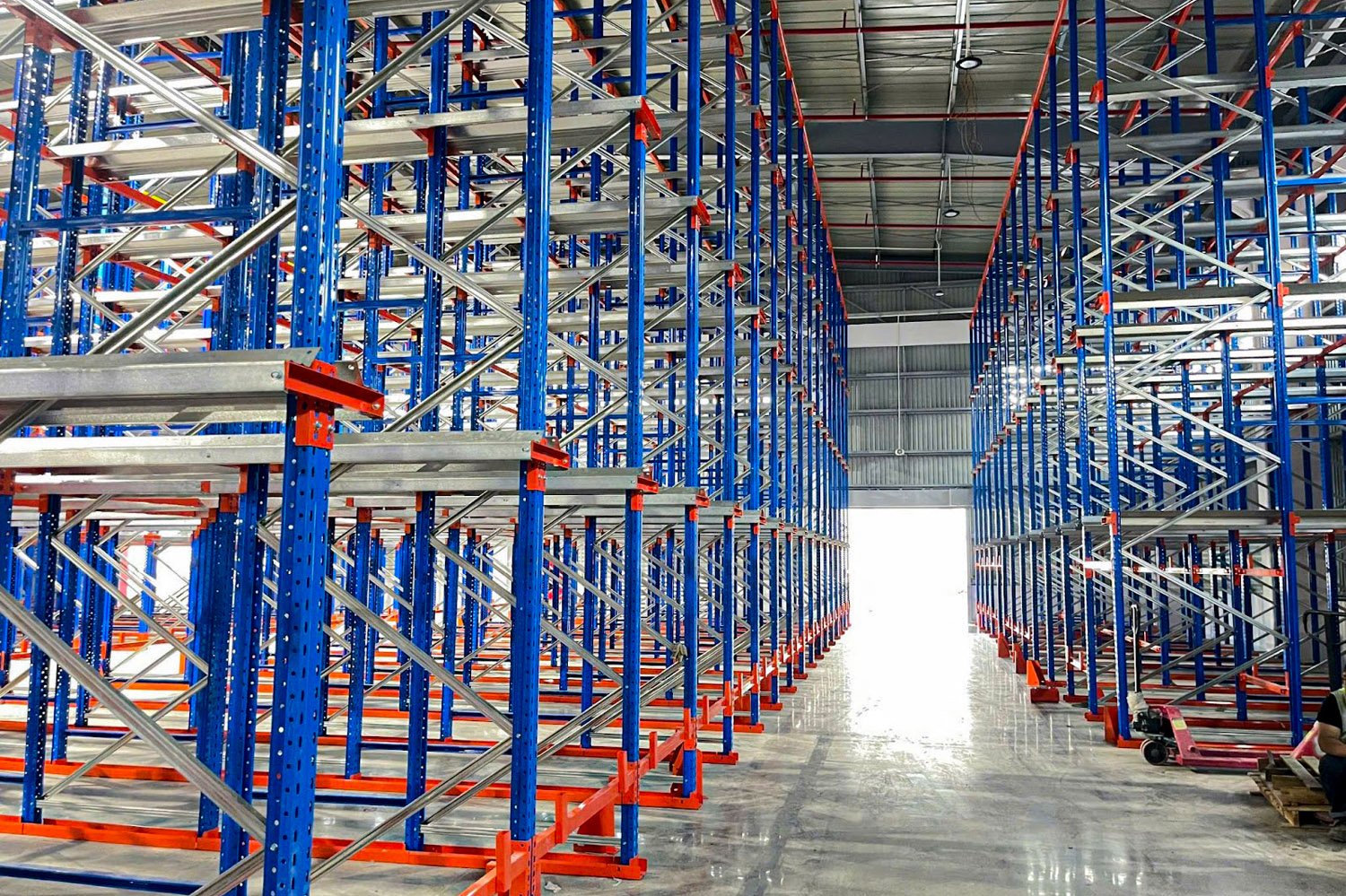
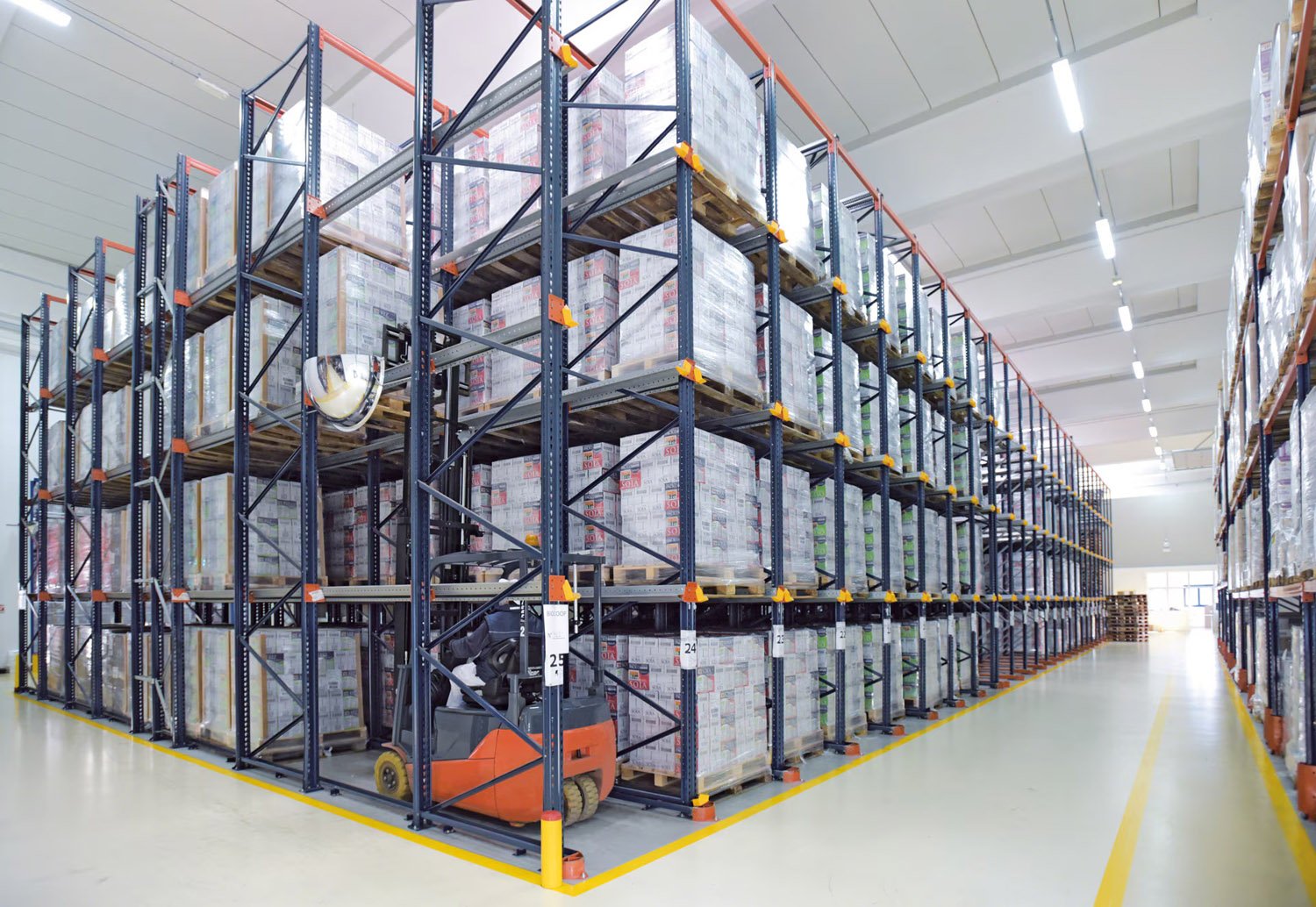
Drive-in racking is designed around the Last-In, First-Out (LIFO) inventory principle. Forklifts enter the rack from a single access aisle, placing pallets onto support rails that run deep into the racking lanes. As a result, the most recently stored pallet is the first one retrieved.
This system is best suited for operations that:
- Handle large volumes of identical or similar SKUs
- Do not require strict stock rotation
- Prioritize maximum storage density over selectivity
Because aisles are minimized, drive in pallet racking delivers exceptional space utilization, making it a popular choice for cold storage, frozen food, and bulk inventory environments where floor space is at a premium.
Drive Through Racking
Drive through racking allows forklifts to access the racking lanes from both the front and the rear, enabling a First-In, First-Out (FIFO) inventory flow. Pallets are loaded from one side and retrieved from the opposite side, ensuring older stock moves out first.
This configuration is ideal for:
- Perishable goods with strict expiration-date control
- Operations requiring high inventory turnover
- Warehouses designed with linear or continuous material flow
By supporting FIFO, drive through racking helps reduce product spoilage, improves inventory accuracy, and aligns well with food, beverage, and pharmaceutical supply chains.
Key Advantages of Drive-in Pallet Racking
Designed for warehouses that prioritize storage density and operational efficiency, drive-in pallet racking delivers a combination of space optimization, cost control, and structural reliability. Below are the core advantages that make this system a strategic choice for high-volume storage environments.
Maximum Space Utilization
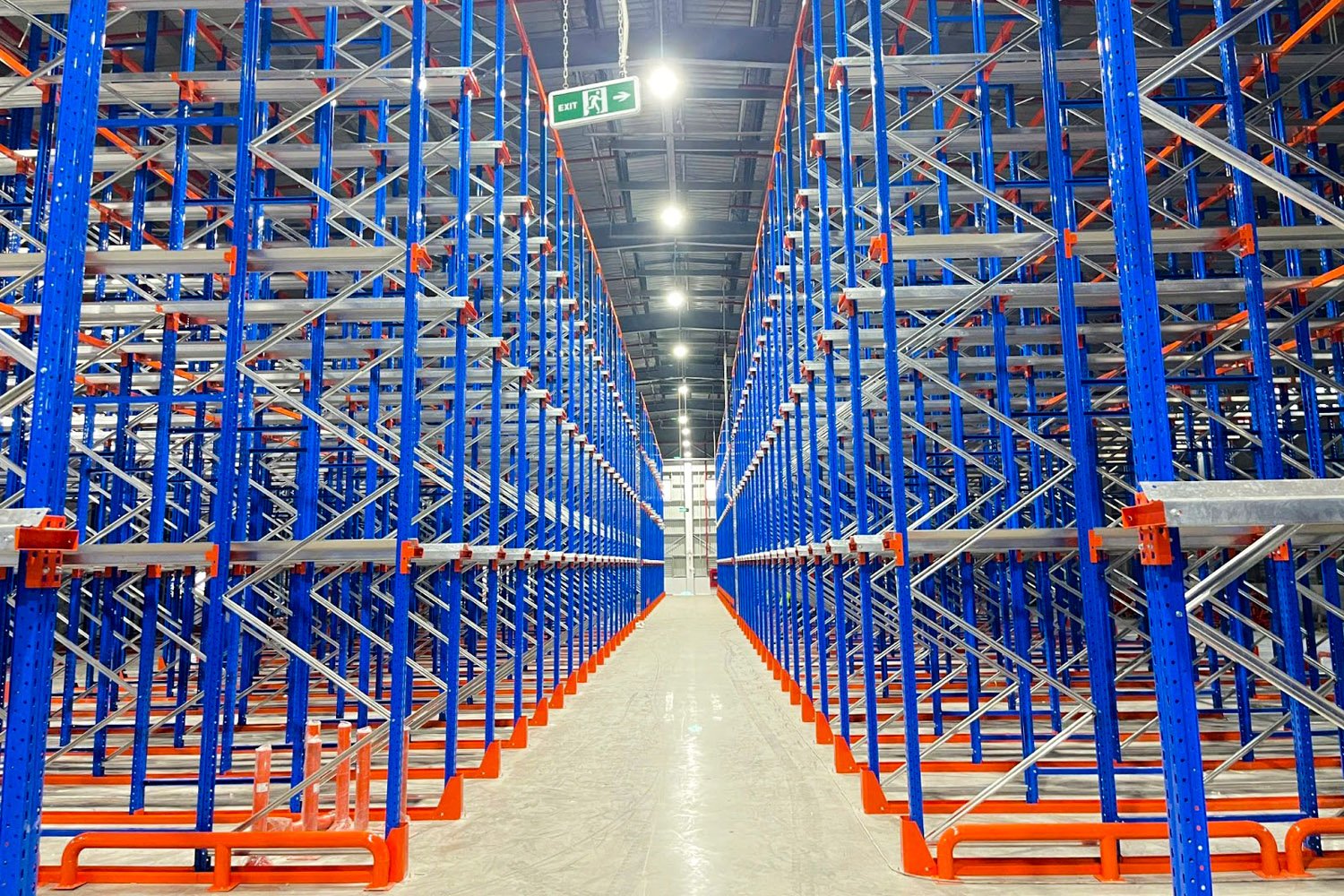
The primary advantage of drive-in pallet racking is its ability to dramatically increase usable storage space by eliminating multiple forklift aisles. Forklifts travel directly into the racking lanes, allowing pallets to be stored deeper and closer together than in traditional selective racking systems.
This high-density layout can increase storage capacity by up to 70%, making it especially valuable for cold storage, food & beverage, and bulk inventory warehouses where floor area and cubic volume are critical cost factors.
Cost-Efficient High-Density Storage
With more pallets stored per square foot, drive-in pallet racking helps warehouses delay or avoid costly facility expansions. Reducing the overall footprint also lowers energy consumption, particularly in temperature-controlled environments, resulting in long-term operational savings.
At the same time, the simplified aisle structure improves return on investment by maximizing storage output from existing space, making drive-in pallet racking a cost-effective solution for high-volume operations.
Robust and Durable Design
Drive-in pallet racking is engineered to handle frequent forklift entry, deep-lane loading, and heavy pallet weights. Structural components such as uprights, guide rails, and bracing systems are designed to absorb impact and maintain stability during daily operations.
Applications of Drive-in and Drive Through Racking
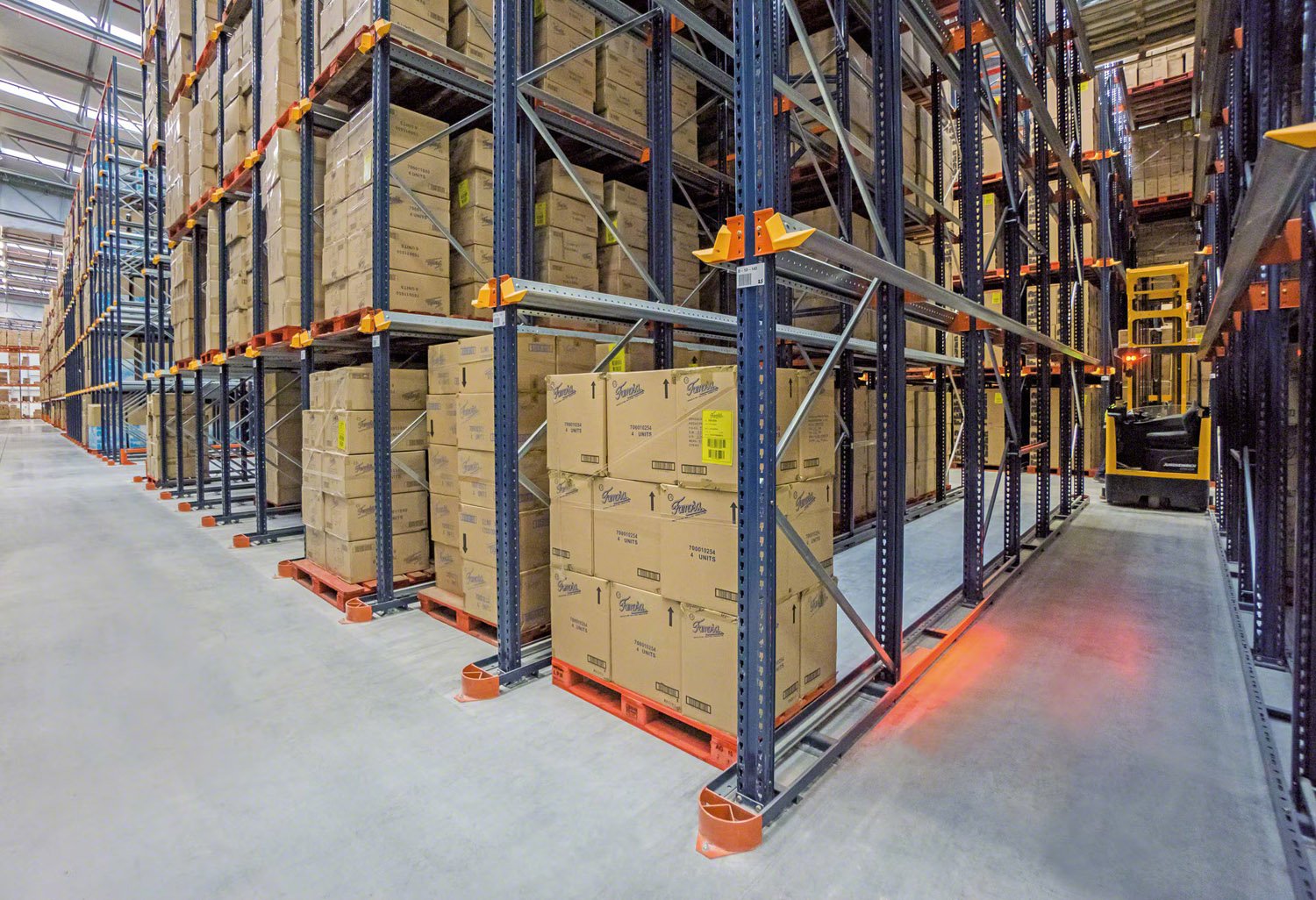
Thanks to their high-density design and operational flexibility, drive-in racking and drive through racking are widely used across industries that manage large pallet volumes with consistent SKUs. Below are the most common application scenarios where these systems deliver the greatest value.
- Cold Storage and Frozen Food Facilities: allow operators to maximize pallet positions within temperature-controlled environments while minimizing aisle space.
- Beverage and Bottling Plants: ideal for staging finished goods before distribution, while drive through racking supports FIFO flow for products with shelf-life requirements.
- Manufacturing Storage: provides an efficient way to store raw materials, semi-finished goods, or finished products in bulk, ensuring smooth material flow while reducing congestion around production lines.
- 3PL Warehouses: allow 3PL providers to offer high-density storage solutions that maximize warehouse capacity while maintaining efficient forklift operations.
- Seasonal or Bulk SKU Storage: enable businesses to store large quantities of the same product for extended periods, then efficiently retrieve them when demand rises, all while keeping storage costs under control.
Upgrade Your Warehouse with Drive-in Racking
If your warehouse handles high volumes of similar pallets and space efficiency is a priority, drive-in racking is the smart investment. Contact Vinatech United States today to explore a high-density storage solution that delivers performance, safety, and long-term value. Our team provides:
- Custom-engineered drive-in racking layouts
- Compliance with U.S. safety and load standards
- Integration with forklifts and warehouse workflows
- End-to-end support from design to installation
Reviews
There are no reviews yet.