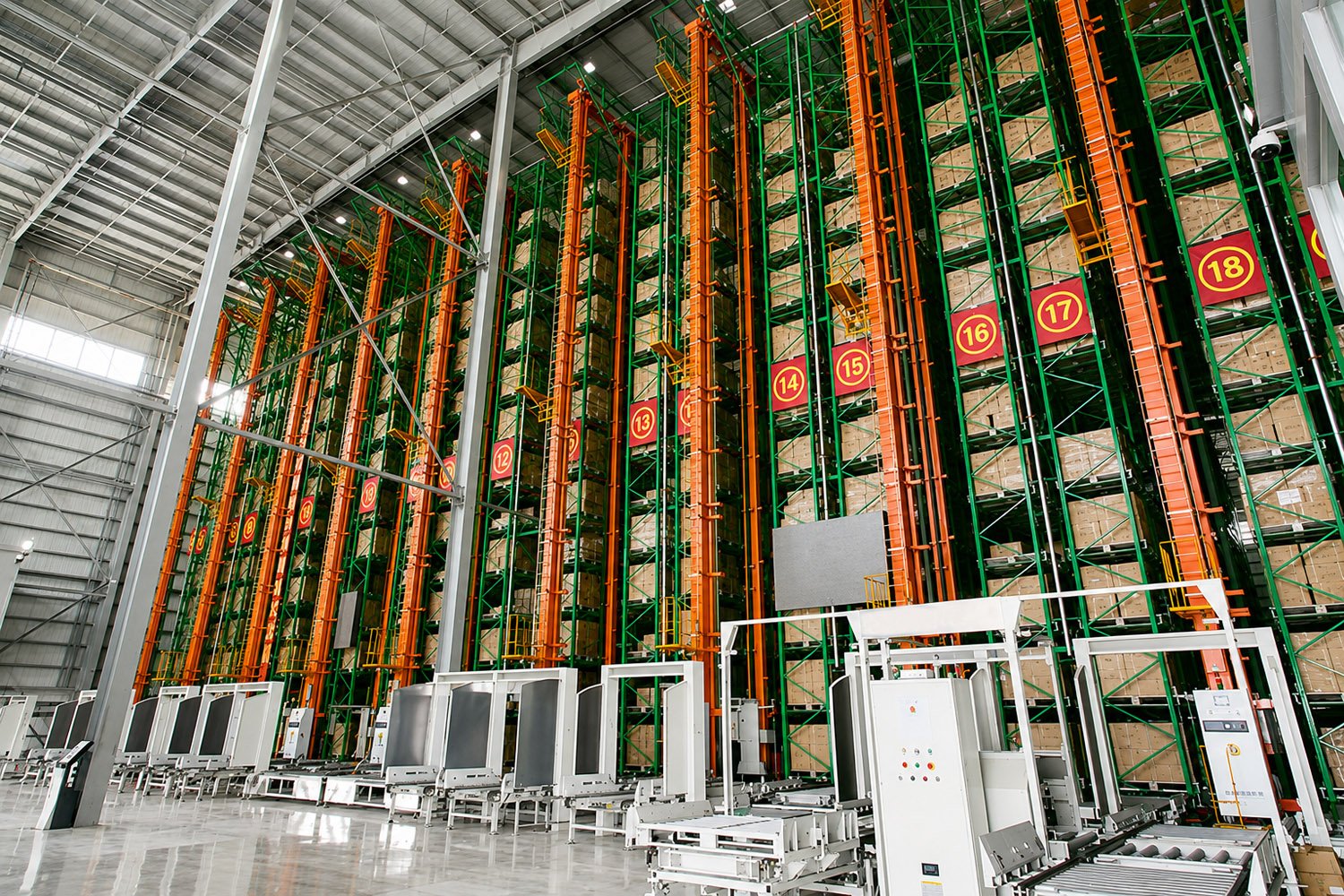
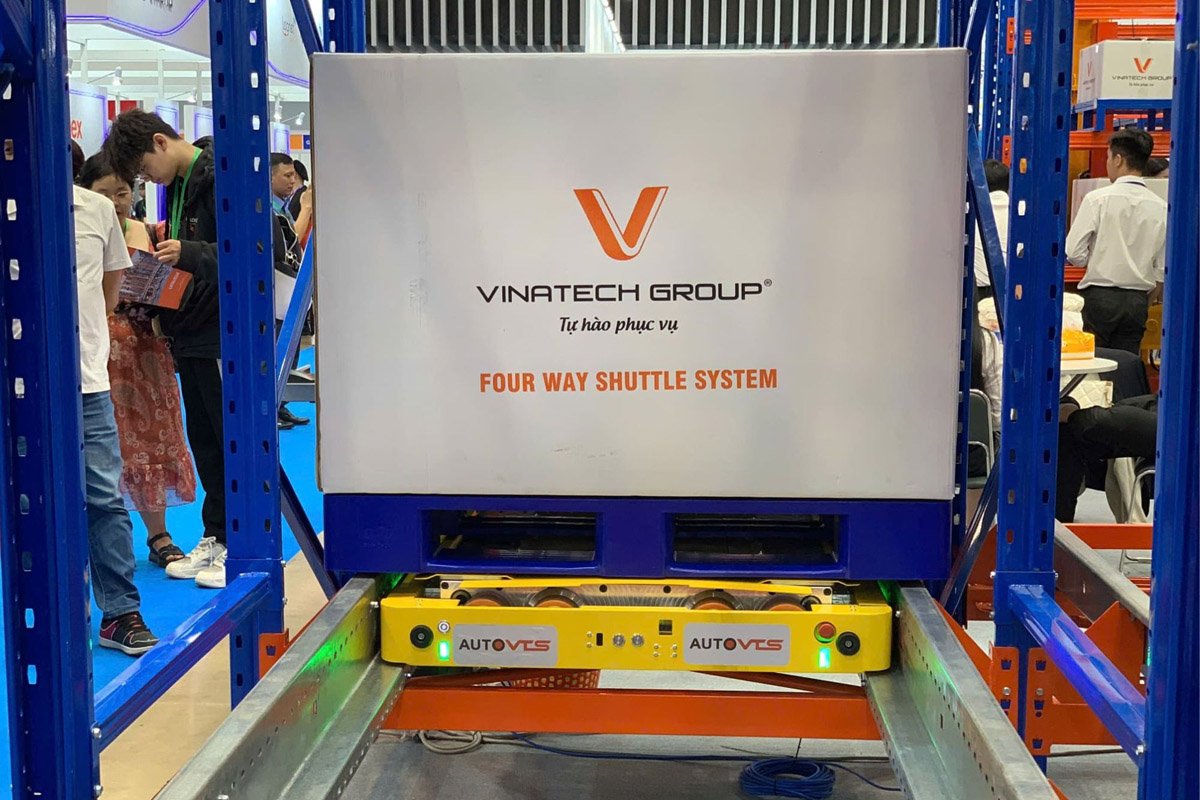
Pallet Shuttle Racking System is an advanced high-density storage solution designed for modern warehouses handling large pallet volumes. By combining semi-automation with deep-lane storage, the system optimizes space utilization while increasing inbound and outbound productivity.
Pallet Shuttle Racking System is a semi-automated, high-density pallet storage solution designed to maximize warehouse space in both depth and height while improving pallet handling efficiency in modern logistics operations. This system is especially well suited for warehouses that store large pallet volumes, require continuous material flow, and place a strong emphasis on operational safety.
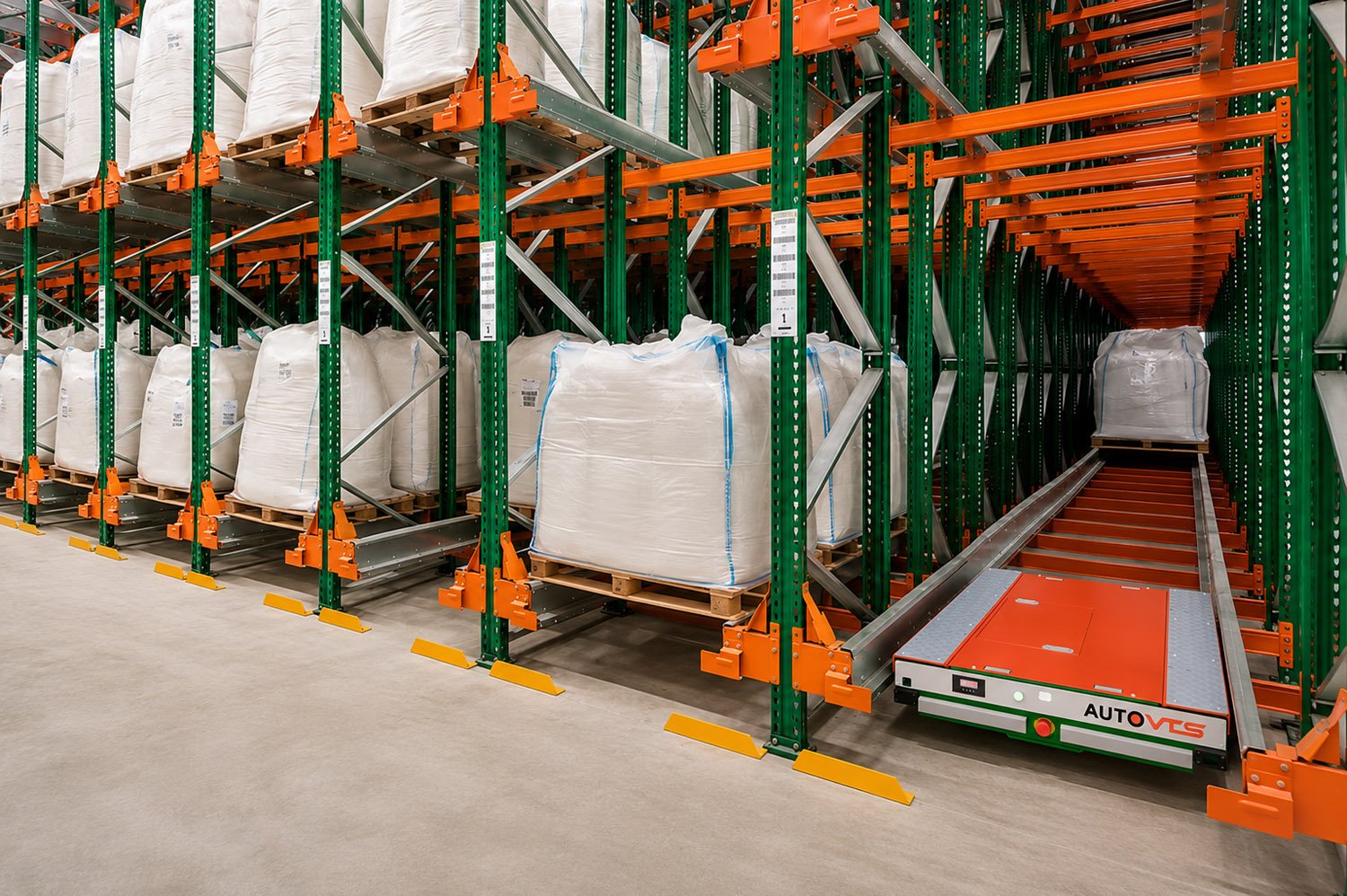
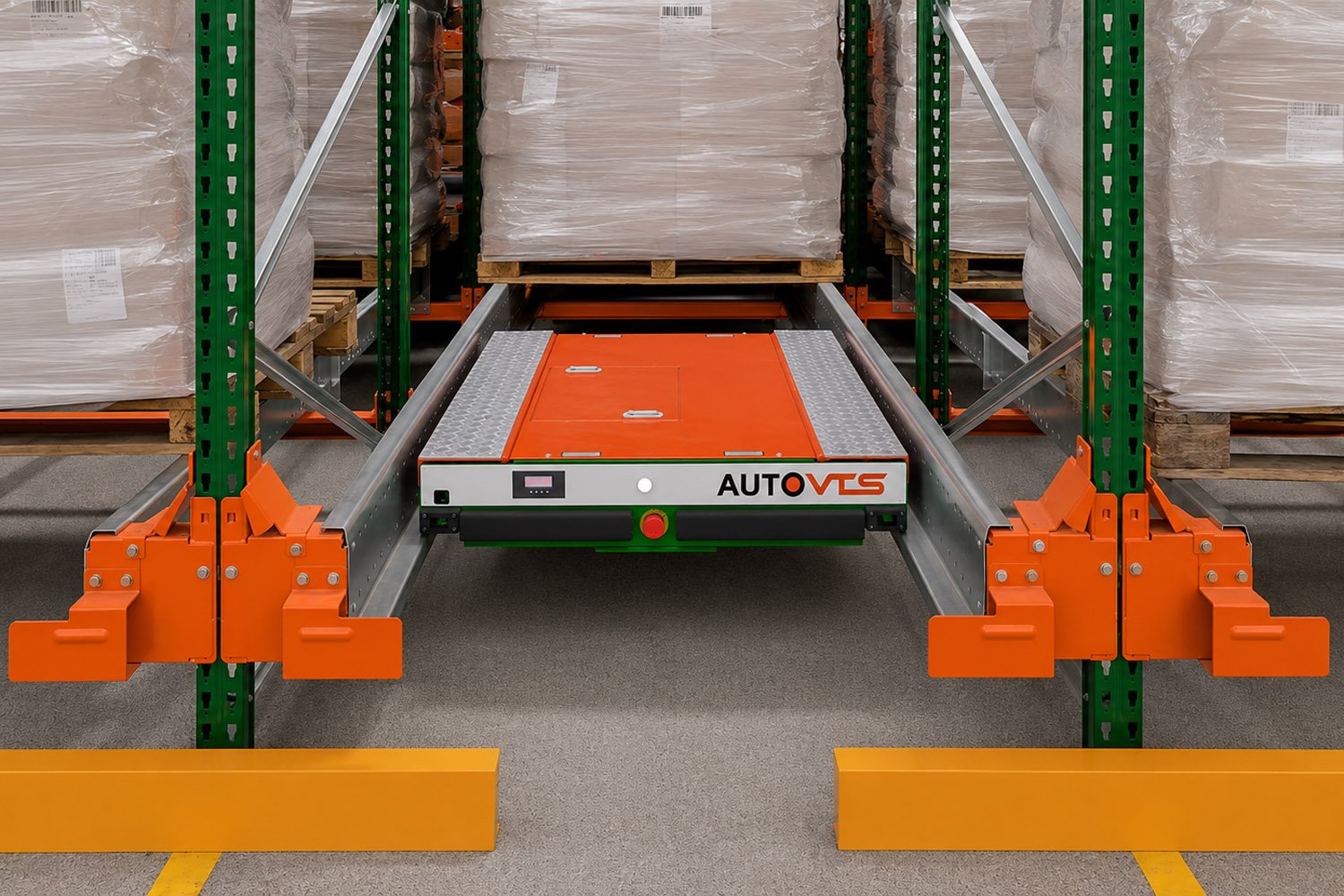
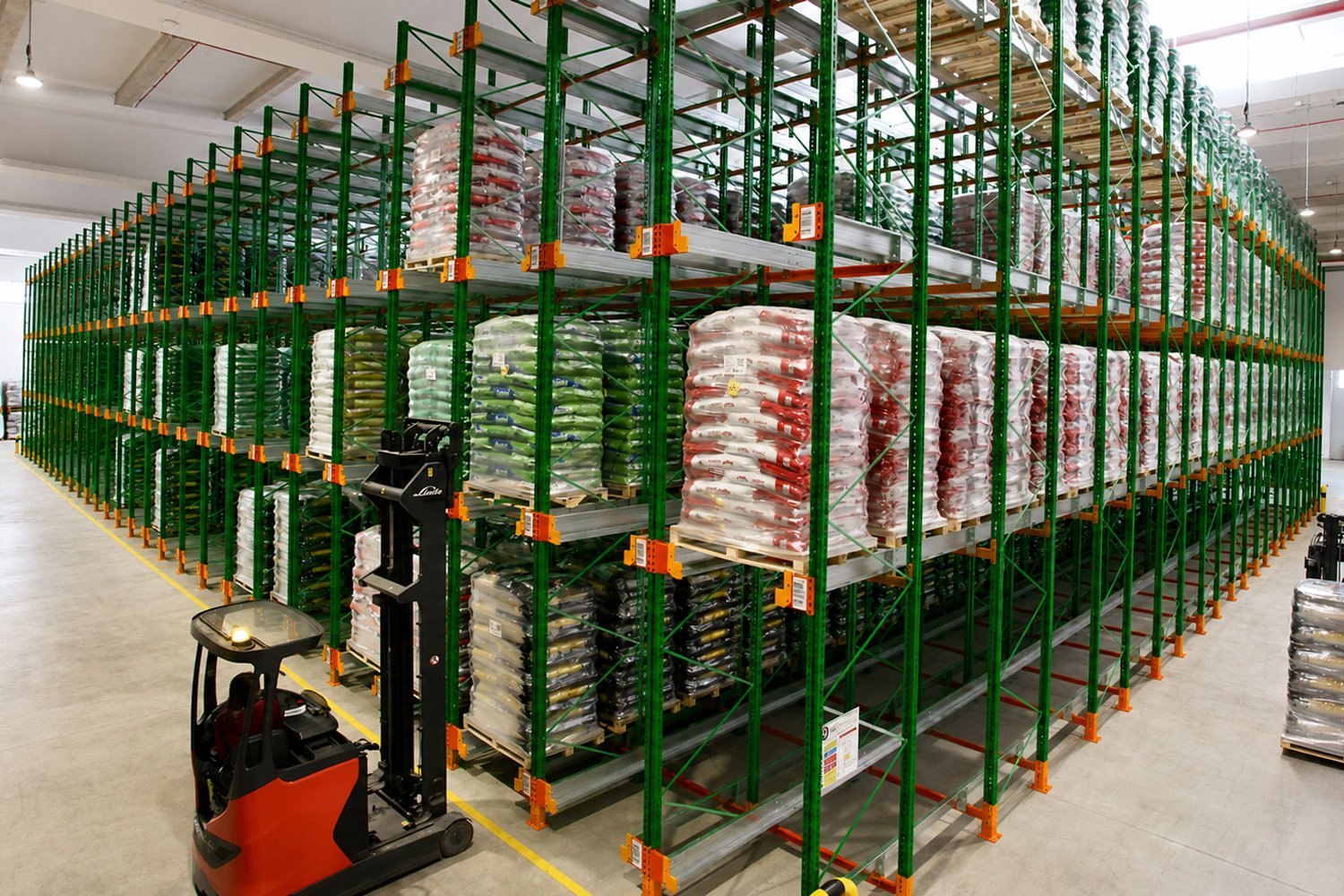
Instead of forklifts driving deep into the racking structure, as in traditional drive-in systems, pallet shuttle racking uses an automated shuttle that runs on guided rails to move pallets inside each storage lane. Forklifts operate only at the front of the lane, loading and unloading pallets, which significantly reduces travel distance, shortens cycle times, and minimizes the risk of collisions.
Thanks to its deep-lane design and semi-automated operation, shuttle racking delivers several key benefits:
Significantly higher storage density compared to selective pallet racking.
Increased inbound and outbound throughput, especially in warehouses with repetitive pallet flows.
Improved workplace safety, since forklifts no longer enter the racking lanes.
Lower operating costs by optimizing forklift utilization and labor efficiency.
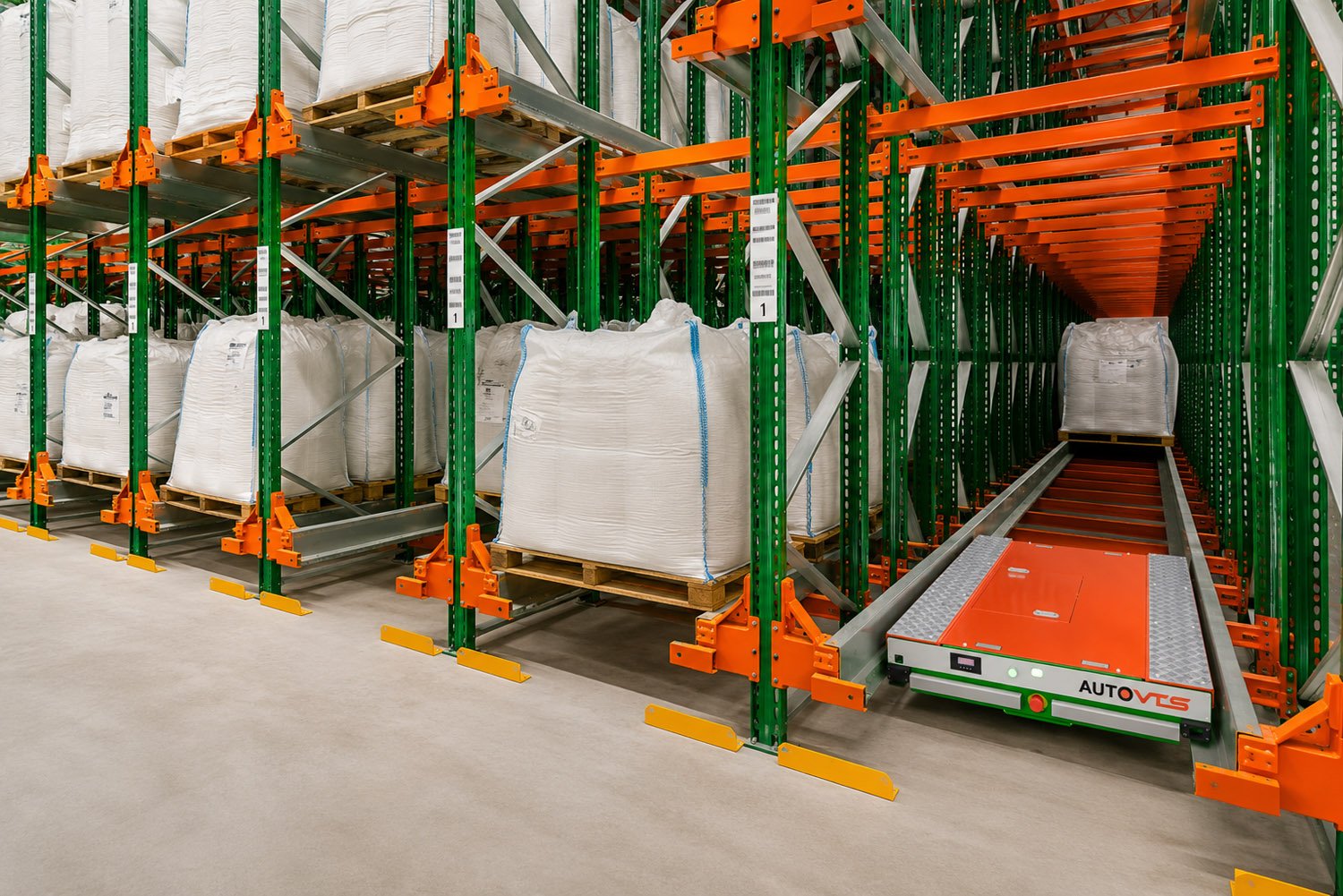
Pallet Shuttle Racking is a high-density semi-automated storage system that uses an electric-powered robot (shuttle) to independently move and retrieve pallets inside deep storage lanes
In daily operation, pallets are placed into the first available empty position within a lane until the lane is full. During retrieval, the shuttle gradually moves pallets toward the front of the lane, allowing the forklift to collect them easily, until the entire lane is emptied. This workflow makes pallet shuttle racking highly efficient for high-volume storage environments.
Unlike ASRS systems (which are fully automated), Shuttle Racking Systems still require a forklift to place goods onto pallets.
The basic operating process includes:
A forklift places the shuttle into the required storage lane.
Pallets are loaded one by one by the forklift at the lane entrance.
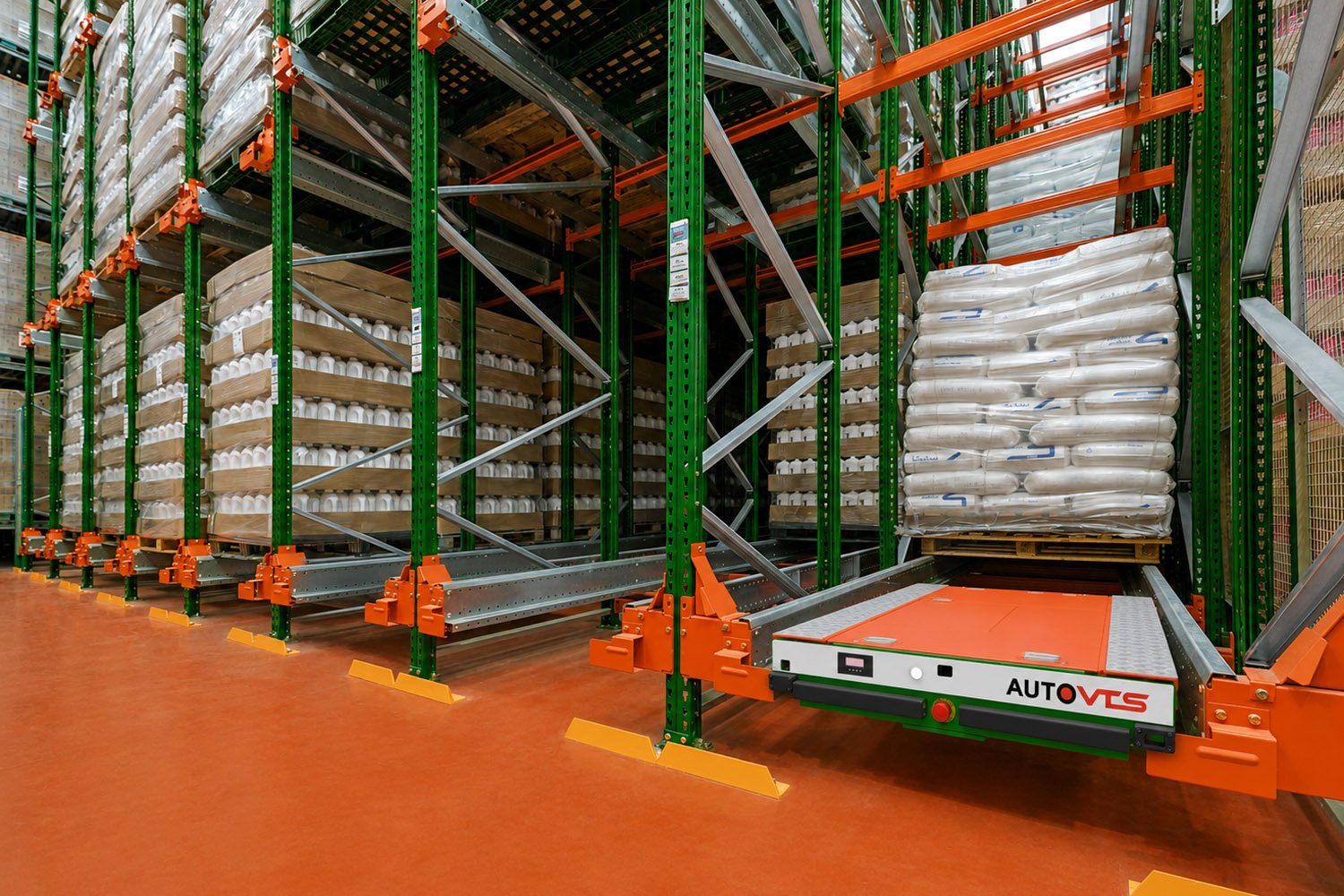
The shuttle lifts each pallet, travels along the guide rails to the first available position, and sets the pallet down.
Once completed, the shuttle automatically returns to the front of the lane, ready for the next operating cycle.
The operating principle of the Pallet Shuttle Racking System is to automatically move pallets, minimizing the distance forklifts have to travel
The shuttle racking system supports two inventory management methods:
LIFO (Last In – First Out)
The most commonly used configuration.
Requires access from only one aisle for both loading and unloading.
Maximizes space utilization and reduces infrastructure investment.
FIFO (First In – First Out)
Requires forklift access to both ends of the racking block.
Pallets are retrieved from the opposite end of where they are loaded, ensuring first-in pallets are first out.
Before loading the final pallets in a lane, the shuttle must be relocated to another lane to complete the FIFO cycle correctly.
Shuttle Racking System hỗ trợ hai phương pháp quản lý kho là LIFO và FIFO
Read more: 2-Way Shuttle: Benefits, System Design, and Efficiency Gains
Structure of the Pallet Shuttle Racking System
A pallet shuttle racking installation consists of multiple integrated components engineered to ensure mechanical stability, continuous operation, and safe performance in high-density warehouse environments.
The main system components include:
Beams & uprights: The core load-bearing structure, designed according to pallet weight and warehouse height standards to ensure stability in deep-lane storage.
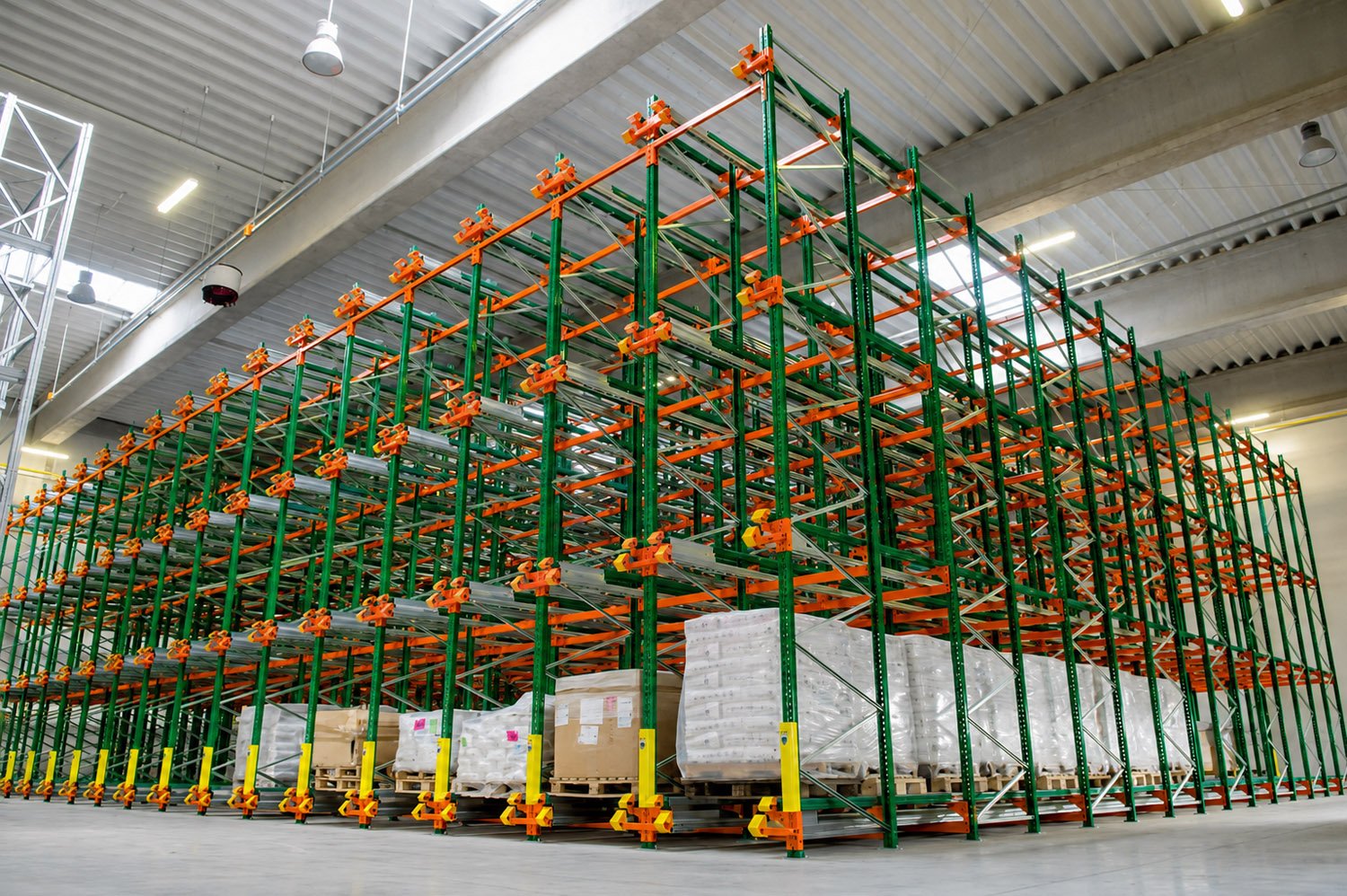
Racking frame & storage channels: Steel frames composed of beams, uprights, and rails that form the storage lanes through which the shuttle travels.
Shuttle rails: Precision-guided tracks that ensure accurate and stable shuttle movement inside each lane.
Pallet shuttle: A battery-powered shuttle that transports pallets within the lane, lifting and lowering loads, positioning pallets in empty locations, and delivering them back to the lane entrance on command.
Pallet supports: Components that securely support pallets once the shuttle has completed the storage operation.
Control and safety systems: Including remote controls, position sensors, load sensors, emergency stop functions, and other safety mechanisms.
Forklift: Used only to place pallets and position the shuttle at the lane entrance, without entering the racking structure itself.
With its coordinated structural design, pallet shuttle racking creates deep, stable, and flexible storage channels that can be expanded in height, depth, or number of lanes. This makes shuttle racking systems an effective and scalable solution for modern warehouses seeking higher storage capacity and smoother pallet flow.
Integrated structure: engineered for stable, safe, high-density pallet storage
Advantages of the Shuttle Racking System
Pallet shuttle racking is widely recognized as a highly efficient storage solution thanks to its ability to strike a strong balance between automation, capital investment, and operational performance.
Optimized Warehouse Storage Density
Shuttle racking enables deep-lane pallet storage, significantly reducing the number of aisles required for forklift operation. With automated pallet shuttles handling internal movements, pallets can be stored deep within the racking structure without the need for access aisles, maximizing overall storage capacity.
In addition, semi-automated pallet movement optimizes the use of available space while ensuring smooth access and continuous material flow. This streamlined handling process supports faster loading and unloading operations, while also helping reduce both time and operating costs across the warehouse.
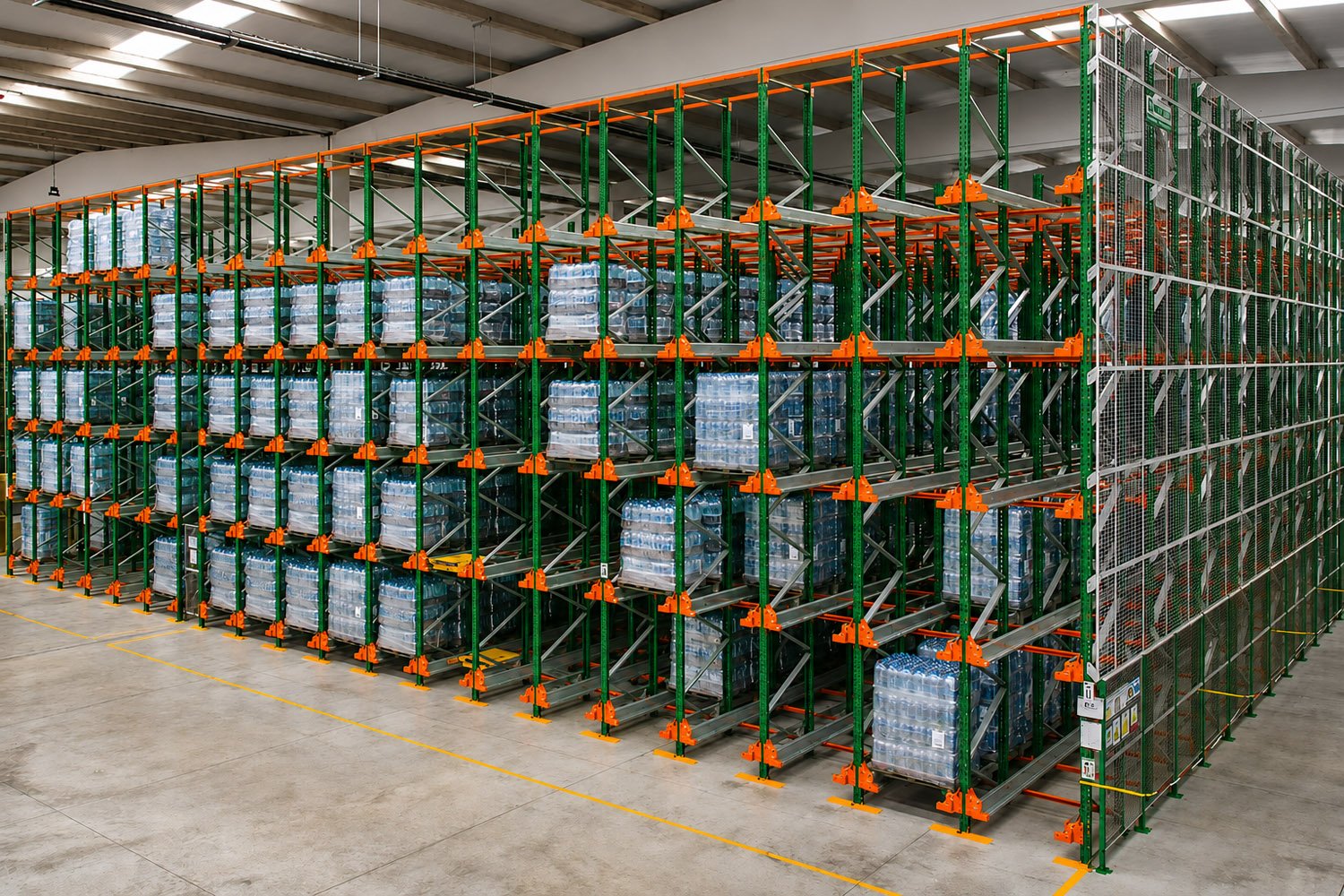
Shuttle Racking Systems optimize warehouse storage density.
Increased Inbound and Outbound Productivity
The system can be easily integrated with other storage solutions and adapted to changing operational needs, making it ideal for fast-growing companies.
The shuttle performs all pallet movements inside the lane, while forklifts operate only at the lane entrance. This separation of tasks shortens cycle times, reduces forklift travel distances, and significantly increases pallet throughput, especially in environments with repetitive pallet flows.
Enhanced Operational Safety
Implementing pallet shuttle racking improves warehouse safety by minimizing the need for operators to work in confined spaces alongside moving forklifts. By reducing forklift traffic within the racking structure, the risk of accidents is substantially lowered, creating a safer working environment.
Because forklifts no longer need to enter deep lanes, the likelihood of collisions with the racking structure is greatly reduced. This not only protects personnel but also extends the service life of both racking and handling equipment.
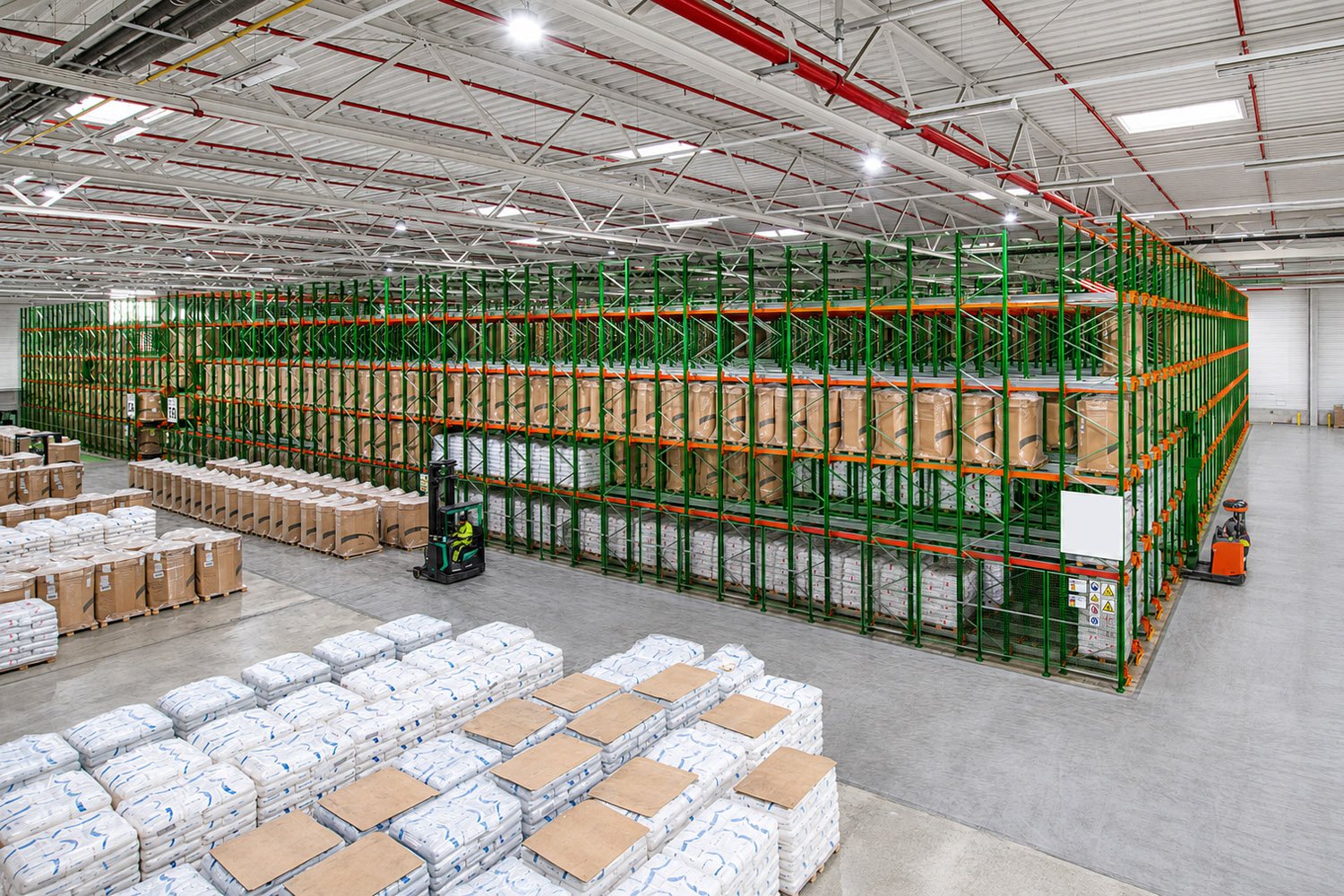
Shuttle Racking Systems enable safe operation and prevent workplace accidents
Pallet Shuttle System applications
Pallet shuttle racking is widely applied across various warehouse models and industries, particularly in operations that require high-density storage, repetitive pallet flows, and stable inbound-outbound performance.
Typical applications of the shuttle racking system include:
FMCG warehouses: Improves inbound and outbound speed while reducing forklift congestion during peak operating hours.
Cold storages: Maximizes storage volume, minimizes refrigerated space requirements, and significantly lowers energy consumption.
F&B: Ensures consistent material flow and is especially suitable for finished goods warehouses, buffer storage, and distribution facilities.
Distribution Centers: Efficiently handles large pallet volumes and optimizes storage space behind picking zones or cross-docking areas.
Ideal for high-density warehouses with steady pallet flow
A Pallet Shuttle Racking System is an advanced high-density storage solution that combines pallet racking with automated shuttle technology to maximise warehouse capacity and improve operational efficiency. Whether you’re looking to optimise warehouse space, improve throughput, or prepare for future automation, Vinatech Australia can provide customised pallet shuttle racking solutions designed to meet your operational requirements and long-term growth objectives.
Vinatech USA Automated Warehouses & Pallet Racking Solutions
A Shuttle Racking System is a high-density, semi-automated storage solution that uses a battery-powered shuttle cart to transport pallets deep into storage lanes. The shuttle is placed inside the rack lane by a forklift, and operators control it via a remote control or Warehouse Management System (WMS). The shuttle moves pallets to the desired depth, significantly reducing forklift travel time and increasing storage density compared to traditional selective racking.
The key benefits of a Shuttle Racking System include dramatically increased storage density (up to 4x compared to selective racking), reduced forklift traffic inside the warehouse, faster loading and unloading cycles, lower labor costs, minimized product damage, and improved safety. It is especially advantageous for warehouses handling large quantities of the same SKU, such as food and beverage, cold storage, and distribution centers across the US.
While both systems offer high-density storage, a Shuttle Racking System uses a motorized cart to autonomously move pallets deep into lanes, allowing for much greater lane depths (up to 40+ pallet positions). Push Back Racks rely on gravity and a manual push mechanism, typically limited to 2–6 pallet positions deep. The shuttle system also supports both FIFO and LIFO inventory modes, while Push Back Racks are strictly LIFO.
Yes, a Shuttle Racking System supports both FIFO (First In, First Out) and LIFO (Last In, First Out) inventory management. When configured with double-entry lanes (loading from one end, unloading from the other), it operates as a FIFO system — ideal for perishable goods, pharmaceuticals, and food products. Single-entry lane configurations support LIFO operations, making it versatile for a wide range of industries in the US market.
Shuttle Racking Systems in the US are typically compatible with standard GMA (Grocery Manufacturers Association) pallets measuring 48″ x 40″, as well as custom pallet sizes upon request. The shuttle cart is designed to match specific pallet dimensions, so it is important to specify your pallet type — whether wood, plastic, or corrugated — during the system design phase to ensure proper fit and smooth operation.
A standard Shuttle Racking System can handle pallet loads ranging from 2,200 lbs (1,000 kg) up to 3,300 lbs (1,500 kg) per pallet position, depending on the structural design and configuration. The shuttle cart itself typically supports loads up to 3,300 lbs. For heavy-duty industrial applications, custom-engineered systems can accommodate higher capacities. All load ratings comply with ANSI/RMI MH16.1 standards for industrial steel storage racks in the US.
One of the greatest advantages of a Shuttle Racking System is its virtually unlimited lane depth. Unlike Drive-In racks (limited to 20–30 pallets deep) or Push Back racks (2–6 pallets), shuttle lanes can extend to 40, 60, or even more pallet positions deep. This makes it ideal for large-scale US distribution centers and cold storage facilities where maximizing floor space utilization is a top priority.
Yes, Shuttle Racking Systems are an excellent choice for cold storage and freezer warehouses operating at temperatures as low as -22°F (-30°C). The shuttle carts are engineered with components rated for low-temperature environments, including cold-resistant batteries, lubrication, and electronics. By minimizing the time workers and forklifts spend inside freezer zones, the system also improves workplace safety and reduces energy costs — a major advantage for US cold chain operations.
The shuttle cart is powered by a rechargeable lithium-ion or lead-acid battery, typically offering 8–10 hours of continuous operation on a single charge. Operators control the shuttle via a handheld remote control, tablet, or integrated Warehouse Management System (WMS). Advanced models feature Wi-Fi or Bluetooth connectivity, real-time status monitoring, and automatic charging stations mounted within the rack system for uninterrupted 24/7 operation.
Shuttle Racking Systems are equipped with multiple safety features, including anti-drop sensors that detect missing or damaged pallets, overload protection to prevent exceeding rated capacity, end-of-lane stoppers to prevent the cart from exiting the rack, emergency stop functions on the remote control, and LED status indicators. The overall rack structure is designed and tested in accordance with ANSI/RMI MH16.1 and OSHA warehouse safety regulations applicable in the United States.
Standard US configurations for Shuttle Racking Systems typically feature beam levels spaced at 60″–72″ vertically to accommodate standard pallet heights, bay widths of 106″–112″ to fit 48″ x 40″ GMA pallets with clearance, and rack heights ranging from 20 ft to 40 ft depending on building clear height. Upright depths vary based on lane configuration. Custom dimensions are available to match specific facility layouts, column grids, and pallet specifications.
A Shuttle Racking System can reduce aisle space by up to 80% compared to selective racking by consolidating multiple pallet positions into deep lanes with only one operating aisle required per rack block. This high-density configuration allows warehouses to store up to 4 times more pallets in the same footprint, translating directly into lower cost per pallet position, reduced real estate requirements, and improved ROI — critical advantages in high-cost US warehouse markets.
Yes, modern Shuttle Racking Systems are fully compatible with leading Warehouse Management Systems (WMS) and warehouse control software. Through API integration or direct PLC communication, the WMS can assign tasks to the shuttle cart, track inventory locations in real time, manage FIFO/LIFO sequencing, and generate performance reports. This level of automation makes shuttle systems an ideal component of smart warehouse and Industry 4.0 strategies adopted by US distribution and logistics operations.
Installation of a Shuttle Racking System is carried out by certified racking installation teams and typically follows a detailed engineering layout plan. The process includes anchor bolt installation per ANSI/RMI specifications, rack assembly, shuttle cart commissioning, and operator training. Routine maintenance involves periodic inspection of rack uprights and beams per ANSI/RMI MH16.1 guidelines, battery maintenance for shuttle carts, sensor calibration, and lubrication of moving parts — typically recommended every 6–12 months depending on usage intensity.
Yes, Shuttle Racking Systems supplied for the US market are designed and manufactured in compliance with ANSI/RMI MH16.1 — the American National Standard for the Design, Testing, and Utilization of Industrial Steel Storage Racks — as well as relevant OSHA regulations for warehouse safety (29 CFR 1910). Seismic design considerations per IBC (International Building Code) are also applied for facilities located in earthquake-prone zones across the US, such as California and the Pacific Northwest.